
This article is bilingual! Scroll down for the English translation.
Antes que nada debo confesar algo: escribo estas líneas desde el restaurante del hotel, a última hora, como buen mexicano que deja todo para el final. No porque me guste trabajar bajo presión, sino porque necesitaba vivir esta experiencia antes de intentar escribir sobre ella. Quería observar, escuchar y sentir profundamente, sin distracciones ni la presión de tomar notas a cada instante.
Quiero agradecer al equipo de Inatai Foundation, quienes me invitaron y apoyaron para asistir a la 2026 Indigenous Media Conference, celebrada del 22 al 24 de julio en el Hotel Marriott de Portland, Oregón.
Debo admitir, con la honestidad que procuro mantener en todas mis conversaciones y escritos, que llegué con expectativas moderadas.
Esperaba encontrar otra conferencia de medios como tantas a las que he asistido durante los últimos años, tanto en espacios estadounidenses como hispanos: lugares donde, con frecuencia, se alimentan egos construidos alrededor del prestigio y del reconocimiento profesional; donde abundan pequeños grupos que terminan viéndose unos a otros como simples conexiones necesarias para ascender un escalón más dentro de la industria.
Y lo entiendo. Así funciona, muchas veces, el negocio de los medios de comunicación.
Sin embargo, esta vez fue diferente.
Todo comenzó con la ceremonia inaugural.
Fue una ceremonia respetuosa, sencilla y profundamente humana.
Antonia Gonzales, integrante de la Nación Navajo, abrió el encuentro con una bendición pronunciada en su lengua ancestral. No entendí cada una de sus palabras, pero comprendí perfectamente el significado de aquel momento.
Su discurso fue una invitación a recordar que el periodismo también tiene la responsabilidad de preservar la memoria de los pueblos.
Después intervino Gerald Skelton, Tribal Government Relations Manager de la ciudad de Portland, quien compartió un mensaje profundo sobre la relación entre los medios de comunicación, el liderazgo comunitario y la responsabilidad política que implica ejercer ambos.
Miraba a mi alrededor y veía muchos rostros desconocidos. Probablemente era uno de los pocos asistentes que llegaban por primera vez a esta conferencia. Sin embargo, nunca me sentí un extraño.
Como ocurre en casi todas las conferencias, había un pequeño problema: demasiadas conversaciones interesantes al mismo tiempo y la obligación de elegir solamente una.
Las primeras opciones eran realmente difíciles: What Journalism Schools Need to Learn from Indigenous Newsrooms o AI Reporting Tools for Journalists.
Dos temas fundamentales para el presente y el futuro del periodismo. Por un momento dudé. La inteligencia artificial representa una herramienta indispensable para las nuevas generaciones de periodistas, pero decidí seguir mi intuición.
Quería escuchar qué pensaban periodistas y académicos indígenas sobre la formación de los futuros comunicadores. Hoy puedo decir que fue una de las mejores decisiones del viaje.
Este artículo tendrá una segunda parte dedicada exclusivamente a los días siguientes de la Indigenous Media Conference, porque lo vivido durante estas jornadas merece contarse con calma y con el respeto que cada historia exige.
Los videos completos estarán disponibles próximamente a través de IMC y de la Indigenous Journalists Association, por lo que únicamente compartiré algunas de las reflexiones que más resonaron conmigo.
Lo que las escuelas de periodismo deben aprender de las redacciones indígenas
El panel estuvo integrado por:
Jelani Cobb, Ph.D, Decano de la Graduate School of Journalism de Columbia University; Charles Whitaker, Decano de la Medill School of Journalism de Northwestern University; Melissa Greene-Blye, Ph.D, de la Miami Tribe of Oklahoma y profesora de la William Allen White School of Journalism de la University of Kansas, yTristan Ahtone, periodista Kiowa y Editor-at-Large de Grist.
Más allá de los nombres y los cargos, encontré algo mucho más importante.
Encontré personas dispuestas a cuestionar la forma en que tradicionalmente hemos entendido el periodismo. Muchas de las ideas compartidas durante la conversación me dieron tranquilidad.
Vivimos una época en la que los grandes medios de comunicación enfrentan enormes presiones económicas y políticas. En ocasiones, esas presiones terminan moldeando la agenda informativa y debilitando la confianza del público.
Frente a ese panorama, el periodismo comunitario y los medios independientes representan algo profundamente valioso No porque sean perfectos; sino, porque todavía conservan la posibilidad de colocar a las personas por encima de los intereses económicos.
Mientras escuchaba a los panelistas comprendí una diferencia que jamás había logrado expresar con tanta claridad: Hay periodistas que trabajan para mantener funcionando una industria. Y hay periodistas que trabajan para fortalecer una comunidad.
No siempre son lo mismo.
Los medios independientes, especialmente aquellos impulsados por comunidades indígenas, migrantes o minoritarias, están demostrando que todavía es posible ejercer un periodismo comprometido con la dignidad humana, con la memoria colectiva y con el derecho de las personas a comprender el mundo desde múltiples perspectivas.
En una sociedad donde gran parte de la comunicación gira alrededor de la producción de capital, estos espacios representan una resistencia silenciosa, pero profundamente necesaria.
Son lugares donde todavía se defiende el derecho a una información rigurosa, honesta y científicamente sustentada.
Si desean conocer más sobre la conferencia, las ponencias y el material disponible, pueden visitar: https://indigenousjournalists.org/2026/06/imc26-program-schedule
HULA, cuando una cultura se niega a desaparecer
Al finalizar la primera jornada de la conferencia todavía quedaban varias actividades por escoger. Como sucede en este tipo de encuentros, el tiempo nunca alcanza para asistir a todo.
Sin embargo, quienes me conocen saben que tengo una debilidad por los documentales. No lo pensé demasiado.
Entré a la proyección especial de HULA, seguida de una conversación con sus realizadores. Hoy puedo decir que fue una de las decisiones más acertadas del viaje.
Antes de continuar, debo advertirles algo.
La presentación estuvo encabezada por Duy Linh Tu, productor ejecutivo, y por los directores Farhod Family y Andy Lampard, quienes compartieron con nosotros el largo proceso creativo detrás del documental.
Uno de ellos dijo algo que todavía resuena en mi cabeza: “Empezamos este proyecto antes de la pandemia de COVID-19… y todavía no termina.”
Ocho años documentando una historia. Ocho años de paciencia. Ocho años entendiendo que algunas historias no pueden apresurarse.
Cuando pensamos en Hawái, la mayoría imaginamos playas, volcanes, paisajes paradisíacos y una imagen turística que el mundo ha consumido durante décadas.
Pero existe otro Hawái. Un Hawái que rara vez aparece en las postales. Un Hawái donde las comunidades originarias siguen luchando por conservar su identidad. El hula es parte de esa resistencia.
Muchos creemos conocerlo porque alguna vez vimos una película de Elvis Presley, Lilo & Stitch o cualquier otra representación comercial de la cultura hawaiana. Sin embargo, descubrí que aquello apenas roza la superficie.
El verdadero hula nació mucho antes de la colonización.
Es una tradición milenaria que vive en la memoria colectiva del pueblo hawaiano.
Cada movimiento tiene un significado. Cada gesto cuenta una historia. Cada danza transmite conocimientos que han sobrevivido generación tras generación.
Como describe la propia producción del documental:
Filmado a lo largo de ocho turbulentos años en Hawái, HULA: Becoming Kumu es un documental de larga duración, en estilo cinéma vérité, que sigue el extraordinario recorrido de Laʻakea Perry, un Kumu Hula (maestro y guía de hula), mientras él y su hālau, integrado exclusivamente por hombres, en Waiʻanae, Oʻahu, luchan por mantener viva una forma única de practicar y transmitir el hula. Es una historia sobre lo que significa heredar algo sagrado y lo que cuesta mantenerlo vivo.
Si tienen oportunidad, les recomiendo ver el avance oficial: https://www.hulaproject.com
Pero debo ser honesto. Ningún avance logra transmitir lo que sentí durante la proyección.
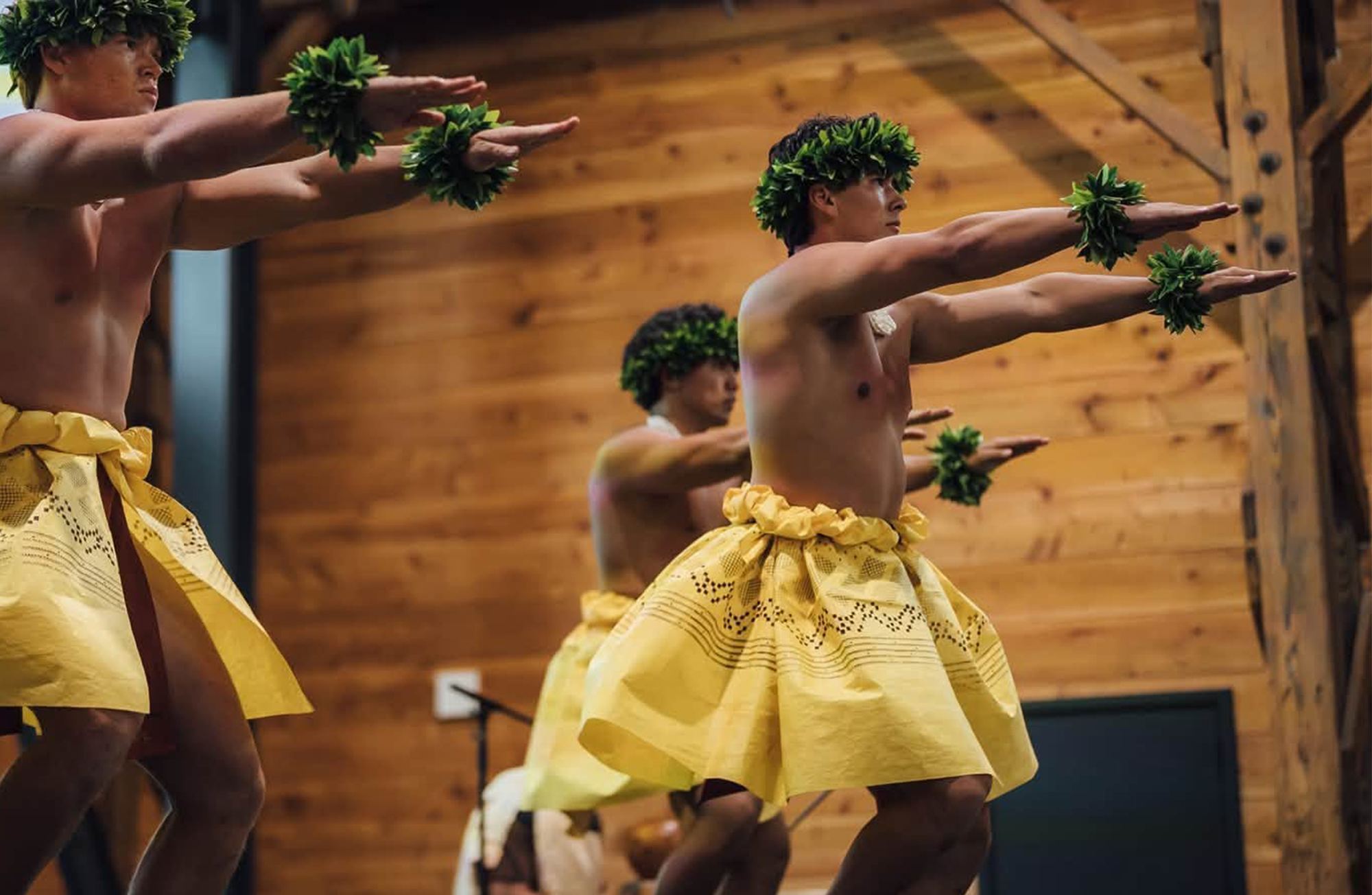
Al terminar la presentación ocurrió algo que nadie esperaba. Los protagonistas del documental ofrecieron una demostración en vivo del hula tradicional.
No fue un espectáculo.
No fue coreografía.
Fue una ceremonia.
Mi corazón comenzó a resonar con una fuerza difícil de explicar. Aprendí algo que jamás imaginé encontrar en un salón de conferencias. Mientras observaba aquella danza, recordé las historias de los antiguos pueblos que leía cuando era niño. Pensé en los guerreros que, antes de emprender grandes travesías, realizaban ceremonias para fortalecer el espíritu y recordar quiénes eran.
Por un instante comprendí que aquellas historias nunca desaparecieron.
Simplemente siguen vivas — en otros pueblos, en otras lenguas, en otras danzas.
El documental de HULA no solo muestra una tradición hawaiana. También habla de identidad. De pertenencia. De resistencia. Y de la enorme responsabilidad de quienes documentan una cultura sin apropiarse de ella. Nos recuerda que la fortaleza no siempre se expresa mediante la violencia. A veces se manifiesta a través de la disciplina, la memoria y el respeto.
Los protagonistas insistieron constantemente en una idea que considero fundamental. Para preservar una cultura primero hay que respetarla. Después hay que dignificarla. Y, finalmente, transmitirla a quienes vienen detrás.
Mientras los escuchaba comprendí que ese mismo principio debería aplicarse al periodismo. Nuestro trabajo no consiste únicamente en informar.
También consiste en cuidar las historias que recibimos para entregarlas, intactas, a la siguiente generación. ¿Cuál será el desenlace de este documental?
Todavía no lo sabemos. Pero estoy convencido de que, cuando finalmente concluya, dejará un legado mucho más profundo que una simple película. Será un testimonio sobre la resistencia de un pueblo y sobre el poder que tiene el cine documental para preservar la memoria colectiva.
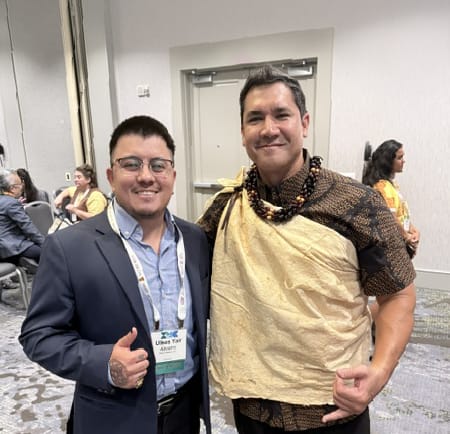
Al terminar la jornada tuve la oportunidad de conversar con Kekaio Kahiki, uno de esos seres humanos cuya sola presencia transmite serenidad. Fue un honor conocer a alguien que dedica su vida a mantener viva la cultura de la tierra donde nació. Ese momento me recordó que las personas más sabias casi nunca son las que más hablan. Son las que viven de acuerdo con aquello que enseñan.
Antes de despedirme quiero compartir las palabras que escribí inmediatamente después de salir de aquella sala. No son un análisis. Son simplemente lo que quedó en mi corazón.
Tres palabras
Tres palabras tocaron mi alma:
Poder. Belleza. Fuerza.
No eran solamente movimientos.
Eran raíces danzando.
Era la memoria negándose a desaparecer.
Era un pueblo respirando a través de sus cuerpos.
Comprendí que una cultura nunca muere mientras alguien siga dispuesto a bailarla, cantarla o contarla. Quizá esa sea también la misión del periodismo.
No solo informar.
Sino impedir que el olvido gane.
Amigos y amigas…
Mahalo nui loa.
Hasta el primer día de esta conferencia puedo decir algo con absoluta certeza: me he sentido más cerca de casa que en muchos otros lugares donde he estado.
Quizá porque aquí descubrí algo que compartimos todos los pueblos originarios y todas las comunidades que han tenido que luchar por conservar su identidad: la importancia de la memoria.
Mientras termino de escribir estas líneas, vuelvo a sentarme en el restaurante del hotel. A mi alrededor continúan las conversaciones entre periodistas, cineastas, líderes comunitarios y representantes de distintas naciones Indígenas.
Cada mesa es un intercambio de historias.
Cada saludo es un recordatorio de que, aunque vengamos de culturas distintas, compartimos una misma necesidad: preservar nuestra identidad y contar nuestras propias historias.
Regreso a casa con más preguntas que respuestas, y eso, para un periodista, siempre es una buena señal.
En la próxima entrega compartiré lo aprendido junto a representantes de las naciones Samoana, Chamorra, Filipina, Apache, Colville, Navajo y Yakama, entre muchas otras comunidades que me enseñaron algo profundamente sencillo: que la diversidad no nos separa; nos fortalece.
Porque todavía queda mucho por aprender. Y, sobre todo, mucho por abrazar.
ENGLISH TRANSLATION
Before anything else, I have to confess something.
I’m writing these lines from the hotel restaurant, at the very last minute — like a true Mexican, leaving everything until the end. Not because I enjoy working under pressure, but because I needed to experience this journey before trying to write about it. I wanted to observe, listen, and absorb everything without the distraction of constantly thinking about how I would tell the story later.
Some experiences deserve to be lived before they are written.
First, I want to thank Inatai Foundation for making it possible for me to attend the 2026 Indigenous Media Conference, held from July 22 through July 24 in Portland, Oregon.
This invitation became an opportunity to rethink many of my assumptions about journalism, community, and the responsibility we carry as storytellers.
I must admit — with the honesty I try to bring to everything I write — that I arrived with fairly modest expectations. I’ve worked in media for a long time, and I thought it would probably be like so many other media conferences I have attended over the years, both in mainstream American journalism and within Hispanic media circles.
Too often, these gatherings become places where professional prestige overshadows authentic conversation. Rooms filled with impressive résumés, carefully polished reputations, and networks built as much for career advancement as for meaningful collaboration.
I don’t say that with bitterness; it’s simply the reality of the industry.
Media has become a business, and like every business, relationships are often measured by opportunity. That’s what I expected.
I was wrong.
Everything changed during the opening ceremony.
The ceremony itself was remarkably simple. Respectful. Human.
Antonia Gonzales, a member of the Navajo Nation, welcomed us with a traditional blessing delivered in her Native language.
I didn’t understand every word she spoke. But I didn’t need to. Some messages speak directly to the heart long before they reach the mind.
Gonzales’ opening reminded us that journalism is not only about informing people; it is also about protecting memory. About preserving the stories of nations that have survived despite centuries of attempts to silence them.
Later, Gerald Skelton, Tribal Government Relations Manager for the City of Portland, shared a powerful reflection on the relationship between Indigenous leadership, public service, and the role of journalism in strengthening democracy. His words carried both political awareness and moral responsibility.
Looking around the room, I recognized almost no one.
I was probably one of the few newcomers attending this conference for the first time, yet I never felt like an outsider.
That, perhaps, was the first lesson.
Like every conference, the schedule immediately forced us to make difficult choices. There were too many fascinating conversations happening simultaneously.
One session was titled: What Journalism Schools Need to Learn from Indigenous Newsrooms. And another scheduled at the same time was called: AI Reporting Tools for Journalists.
Both represented the future of journalism in different ways. Artificial intelligence is undoubtedly transforming our profession, but my curiosity pulled me in the other direction. I wanted to hear what Indigenous journalists and scholars believe journalism schools still fail to teach. Looking back now, I know I made the right choice.
Before I continue, I should mention that this reflection is only one chapter of a much larger experience. The Indigenous Media Conference deserves more than a single article. What unfolded over these days requires time, reflection, and the respect every meaningful story deserves.
The full discussion will eventually be available through the Indigenous Journalists Association, so rather than summarize every presentation, I’d rather share the major points that stayed with me.
What Journalism Schools Need to Learn from Indigenous Newsrooms
The panel featured an extraordinary group of educators and journalists:
Jelani Cobb, Ph.D, Dean of Columbia Journalism School; Charles Whitaker, Dean of Northwestern University’s Medill School of Journalism; Melissa Greene-Blye, Ph.D, assistant professor at the University of Kansas and member of the Miami Tribe of Oklahoma; and Tristan Ahtone, a Kiowa journalist and Editor-at-Large at Grist.
Their credentials were impressive. But what truly mattered wasn’t who they were, it was what they were willing to question.
For years, journalism has largely been taught through institutions that often present one dominant way of seeing the world. Listening to their presentation and the conversations that followed reminded me that there are many ways to tell the truth. Many ways to report. Many ways to serve a community.
I left that room with an unexpected sense of hope.
Today’s media landscape is under enormous economic and political pressure. Too often, news organizations become dependent on funding structures that inevitably shape editorial priorities. Independent journalism exists within that same reality.
But community journalism still possesses something incredibly valuable — its first loyalty is not to shareholders; it is to people.
While listening to the panelists, I realized something I had struggled to articulate for years: Some journalists work primarily to sustain an industry; others work to strengthen a community.
Those are not always the same mission.
Independent media — particularly Indigenous, immigrant, and community-based outlets — are becoming essential voices in resisting the growing concentration of media power.
In a society where nearly everything revolves around the production of capital, these spaces remain some of the few places still committed to protecting objective reporting, scientific truth, historical memory, and human dignity.
If you’d like to learn more about the conference, its sessions, and the educational resources available, I encourage you to visit: https://indigenousjournalists.org/2026/06/imc26-program-schedule
HULA: When a Culture Refuses to Disappear
By the end of the conference’s first day, there were still several sessions competing for our attention. As is often the case at gatherings like this, there is never enough time to experience everything.
Anyone who knows me understands one thing about me: I have a weakness for documentaries. So the choice of 2:00 panels was an easy one.
I walked into the special screening of HULA, followed by a conversation with its filmmakers. Looking back now, I can honestly say it was one of the most impactful presentations I have ever been to.
The discussion featured Executive Producer Duy Linh Tu, alongside directors Farhod Family and Andy Lampard, who spoke candidly about the long journey behind the film.
One sentence has remained with me ever since: “We started this project before COVID… and we’re still not finished.”
Eight years documenting one story. Eight years of patience. Eight years learning that some stories cannot — and should not — be rushed.
When most people think about Hawaiʻi, they imagine turquoise beaches, volcanic landscapes, and postcard-perfect sunsets shaped by decades of tourism campaigns.
But there is another Hawaiʻi. One that rarely appears on postcards. A Hawaiʻi where Native communities continue fighting to preserve their language, traditions, and identity. Hula is part of that resistance.
Many of us think we already know hula because we’ve seen it in Hollywood films, Elvis movies, or Disney’s Lilo & Stitch. But those images barely scratch the surface.
Traditional hula predates Western contact.
It is far more than dance.
It is history. It is language. It is prayer. It is genealogy.
It is a living archive carried through movement, memory, and generations of cultural knowledge. Every gesture tells a story. Every movement carries meaning. Every performance becomes an act of remembrance.
As the filmmakers describe it:
Filmed over the course of eight turbulent years in Hawaiʻi, HULA: Becoming Kumu is a feature-length cinéma vérité documentary following Laʻakea Perry, a Kumu Hula (master teacher), and his all-male hālau from Waiʻanae, Oʻahu, as they struggle to preserve their unique tradition of hula. It is a story about what it means to inherit something sacred, and what it costs to keep it alive.
If you have the opportunity, I highly recommend watching the trailer: https://www.hulaproject.com
But I have to be honest. No trailer can prepare you for what this documentary makes you feel.
When the screening ended, something extraordinary happened. The cultural practitioners featured in the film stepped forward and performed traditional hula live.
It wasn’t entertainment.
It wasn’t choreography.
It was ceremony.
Something shifted inside me. For a few moments, I stopped thinking like a journalist.
I simply watched. I listened. I felt.
My heartbeat seemed to move with the rhythm unfolding before me. Watching them, I found myself remembering the stories I had read as a child about ancient peoples preparing for great journeys — communities gathering to strengthen their spirit before facing the unknown.
And then it struck me. Those traditions never disappeared!
They survived — in another language; within another people; through another dance.
HULA is not simply a documentary about Hawaiian culture. It is a film about identity. About belonging. About resilience. About the profound responsibility of documenting a culture without claiming ownership over it. It reminds us that strength is not always expressed through force. Sometimes strength is discipline, memory, respect.
Again and again, the filmmakers and cultural practitioners returned to one essential truth: Before a culture can be preserved, it must first be respected, and it must be honored. Only then can it be passed on to the next generation.
As I listened, I realized the very same principle applies to journalism.
Our responsibility is not merely to report what happens. It is to safeguard stories so they can continue speaking long after we are gone.
Will this documentary accomplish everything its creators hope it will?
None of us can know yet. But I am convinced it will become something greater than a film. It will stand as a testament to cultural resilience and to documentary filmmaking’s extraordinary ability to preserve collective memory.
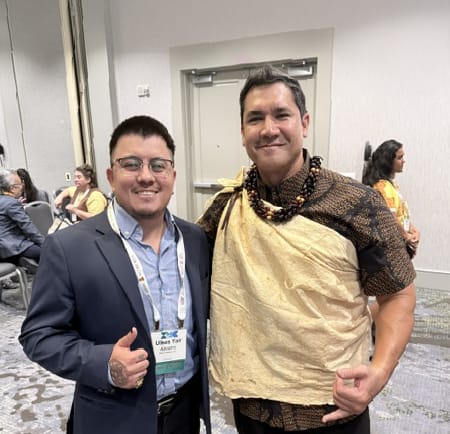
After the session, I had the privilege of speaking with Kekaio Kahiki, one of those rare human beings whose presence alone radiates calm. Meeting someone so deeply committed to protecting the culture of his homeland reminded me that the wisest people are rarely the loudest. They simply live what they teach.
Before I close, I would like to share the words I jotted down immediately after leaving that room. They are not analysis, they are simply what was in my heart.
Three Words
Three words touched my soul:
Power, Beauty, Strength.
They were never merely movements.
They were roots in motion.
Memory refusing to disappear.
A people breathing through their own bodies.
In that moment, I understood that a culture never truly dies as long as someone is still willing to dance it, sing it, or tell its story.
Perhaps that is journalism’s highest calling.
Not merely to inform.
But to keep memory alive.
Amigos y amigas…
Mahalo nui loa.
After only one day at the Indigenous Media Conference, I can already say something with complete certainty: I have rarely felt more at home.
Perhaps because, here, I recognize memories and experiences shared by Indigenous peoples and marginalized communities across the world.
As I finish writing these lines from the hotel restaurant, conversations continue around me. Journalists, filmmakers, community leaders, and representatives from Indigenous nations gather around tables, exchanging stories, laughter, and hard-earned wisdom.
Every conversation feels like an exchange of memory.
Every introduction reminds me that although our cultures may be different, we share the same responsibility: To protect our identities, to tell our own stories, and to ensure that future generations inherit more than facts — they inherit memory.
I leave this first day with more questions than answers. For a journalist, that is always a good sign.
In my next reflection, I’ll share what I learned from members of the Samoan, Chamorro, Filipino, Apache, Colville, Navajo, Yakama, and many other Indigenous communities who reminded me of something profoundly simple:
Diversity does not divide us. It teaches us how deeply connected we have always been.
Ulises Navarro es el director de operaciones de Alcon Media, LLC, donde combina su pasión por las operaciones de los medios con su dedicación a la justicia social, el folklore y el periodismo independiente. También es el presidente de klaindastino kors. Originario de Guadalajara, México, es un filósofo y escritor autodidacta que emigró a los Estados Unidos a la edad de 21 años, trabajando inicialmente como agricultor en los campos de Washington y Oregón. Fue allí donde nació su deseo de lucha social por los derechos de los migrantes. Ulises recibió el premio BFT del Salón de la Fama del Transporte Público por su informe “Sobre la inclusión en el transporte público”. Ahora trabaja en muchos proyectos informativos y educativos, incluido El Centro de la Dignidad.
Ulises Navarro is the Chief Operating Officer of Alcon Media, LLC, where he combines his passion for media operations with his dedication to social justice, folklore, and independent journalism. He is also the president of klaindastino kors. Originally from Guadalajara, Mexico, he is a self-taught philosopher and writer who migrated to the United States at the age of 21, working initially as a farmer in the fields of Washington and Oregon. It was there where his desire for social struggle for the rights of migrants was born. Ulises received the BFT Public Transportation Hall of Fame Award for his reporting “On Inclusion in Public Transportation”. He now works on many informational and educational projects, including El Centro de la Dignidad.
