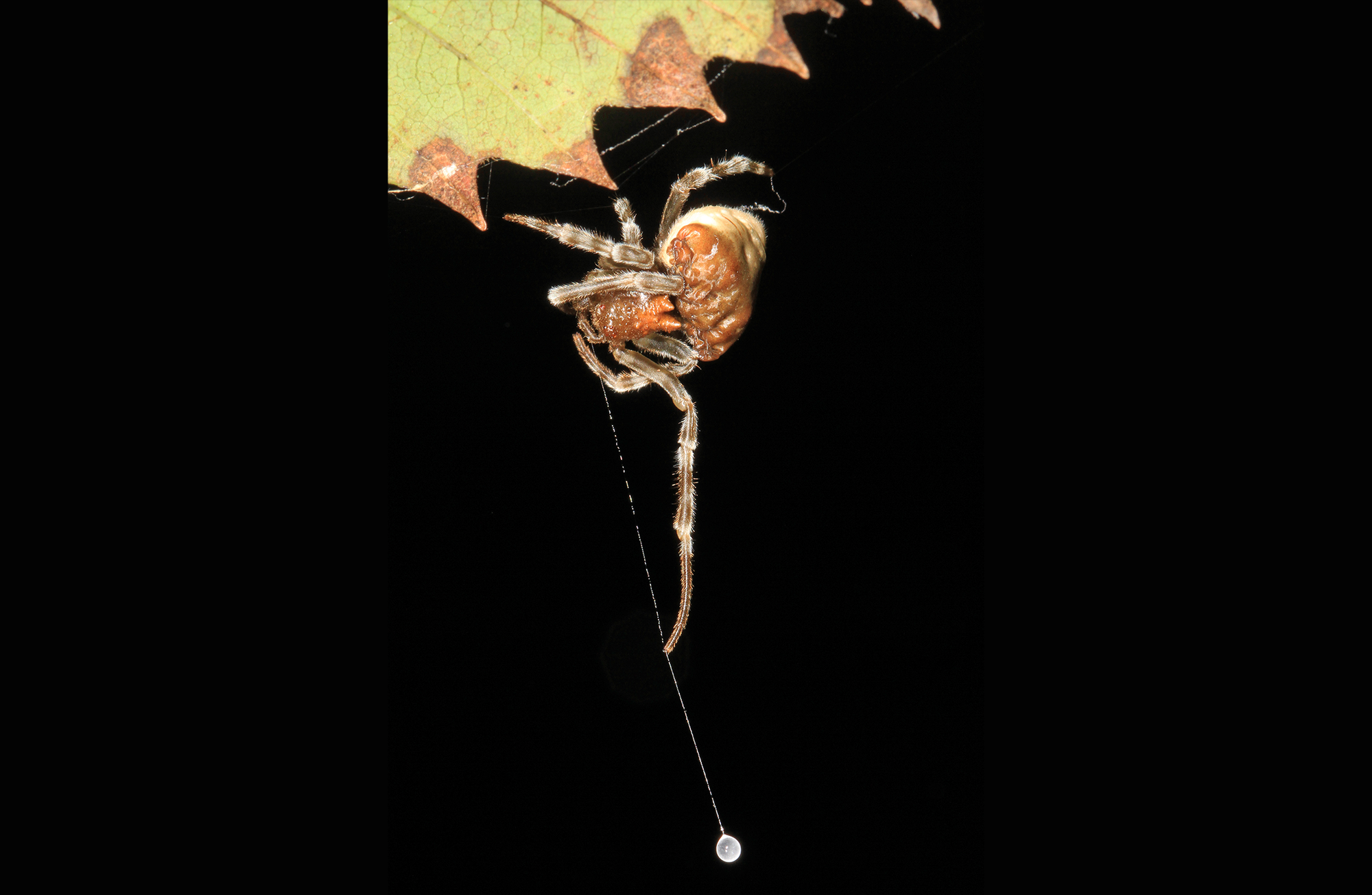
Bolas spider / Photo by Judy Gallagher, CC BY 2.0
Welcome to CREATURE CORNER! Our world is full of strange and unique animals, but an overwhelming number of them go unheard of due to lack of education and negative reputations. I’m here to teach you about the creepy and the crawly, and shed some light on critters that could use a bit more love! Today, we’ll be learning about some oddball arachnids!
When you think of spiders, I’ll bet a specific image comes to mind — eight spindly legs; a large, smooth abdomen; beady little eyes; sharp, venomous fangs; catching prey in a web. Maybe you imagine some with hair, or bumps on the abdomen. Most likely, you don’t think of swinging silk weaponry, or underwater houses, or ants.
Today’s first subject is the bolas spider! The males are reddish-brown, and a fraction of the size of the females. Females are large and fat, and their white and brown coloration heavily resembles bird droppings, which plays a key part in their camouflage.
Bolas spiders are most famous for the way their females hunt. These spiders are typically found on top of leaves, where the female spins a mat of silk, and sits on it with her legs tucked closely to her body. The bird poop mimicry makes them unthreatening to prey, and undesirable to predators. This gives them a distinct advantage when they are ready to hunt.
Bolas spiders hang from a line of silk between leaves, and extend a limb with their weapon of choice — a long, sticky strand of web that they dangle and wait for prey. This is where they derive their name from; a bolas is a hunting weapon made of rope and rocks that’s thrown to tangle around the legs of animals.
This way of hunting isn’t just a game of patience. Female bolas spiders feed exclusively on male moths, and they do this by secreting pheromones that are almost identical to those put out by female moths. Once the moth is close enough, the spider swings the sticky silk at him, and he is quickly caught. Male and juvenile bolas spiders, who are too small to capture moths, prey on moth flies instead. While males don’t use these silk weapons, they do use the same chemical luring to lure in flies looking for a mate.
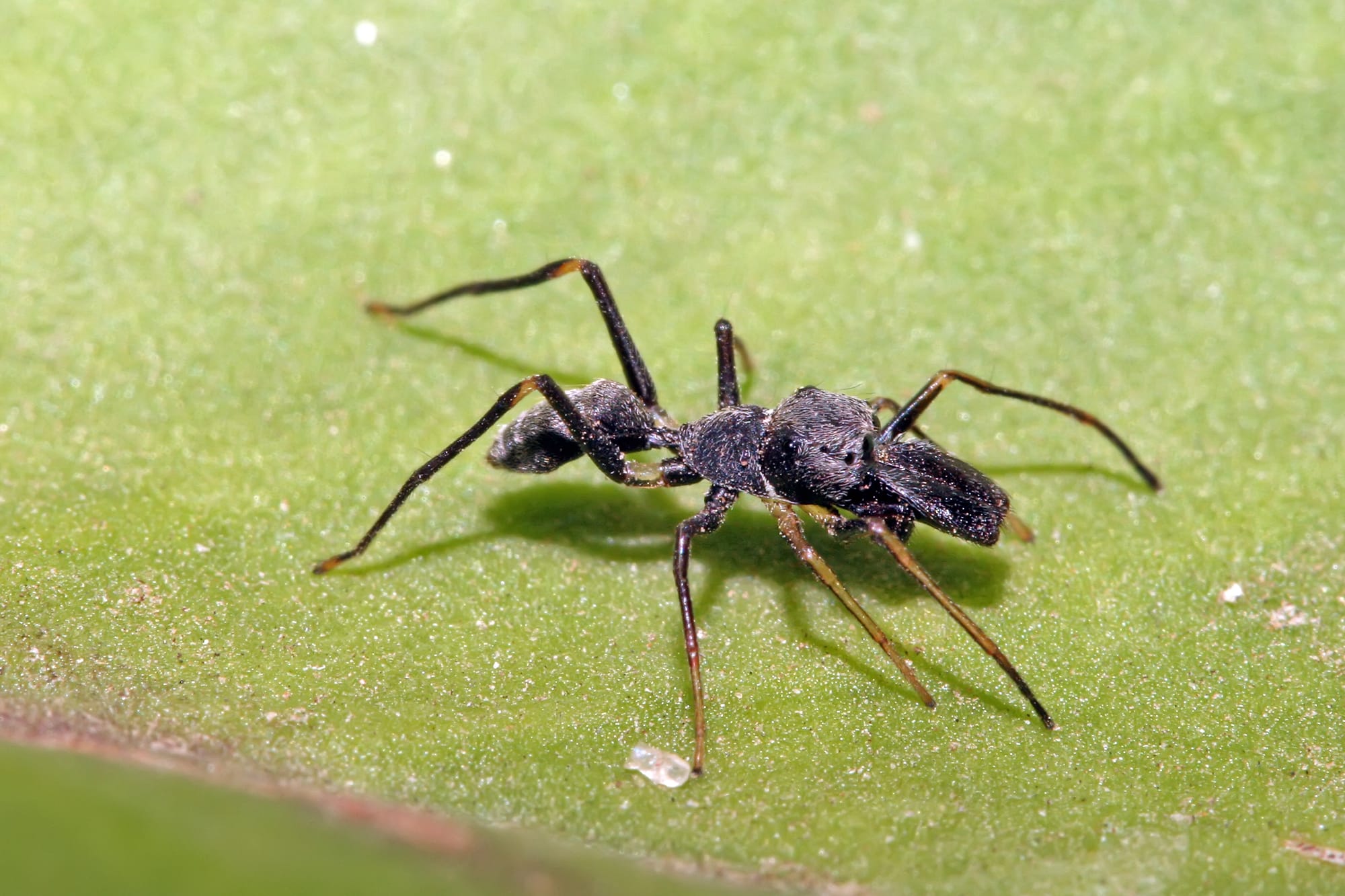
In the world of mimicry, there are many ways this strategy can be used. While most of the time, camouflage and mimicry is used to hide, it can also be used to blend in with the very prey you are hunting. This is precisely the modus operandi of the ant-mimic jumping spider!
When you spot some ants, take a closer look, because one of them might just be a spider in disguise! Ant-mimic jumping spiders appear identical to true ants at a glance, but upon closer inspection, you can see where they differ from the colony they’ve gone undercover inside. Their abdomen and cephalothorax are very different from the average spider, as they have to copy the appearance of an insect with three distinct body segments.
They even go as far as to imitate the way ants walk! While they walk on eight legs, they take frequent pauses in their steps to wiggle around their front legs like an ant using their antennae to follow a pheromone trail.
So, how is it that these sneaky spiders catch their meals?
While some ant-mimicking spiders may eat small arthropods or the eggs of other spiders, what they are best known for is their infiltration of ant colonies. Some ant mimics will sneak into a nest using their appearance, and feast upon the larvae. In doing this, they pick up the scent of that colony of ants, so they fly even further under the radar. They truly are masters of disguise!
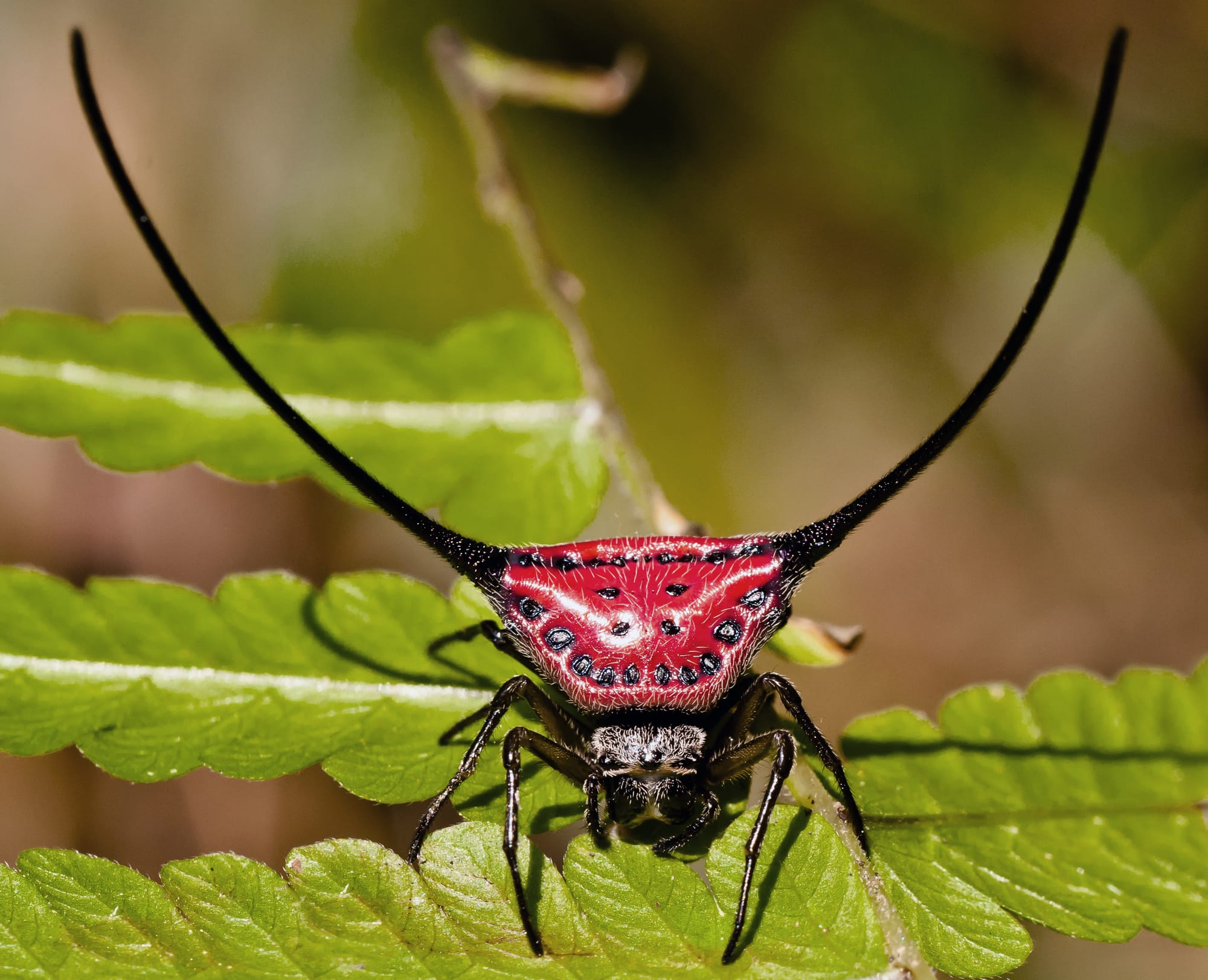
Next up is the long-horned orb weaver. No matter how strange the spiders you’ve seen before, I promise you they pale in comparison to the massive pronged spines of this spider! They are primarily black, but their abdomen ranges from red, orange, and yellow, to a near white. Males look similar to females, but are much smaller, and have far less extravagant horns.
Long-horned orb weavers do not sit and wait for their meals in their web. Rather, they find a hidden spot nearby, and wait until they pick up the vibrations of a caught insect. This way, prey is not put off by the brightly colored, spiny spider in the web, and the spider stays hidden from the eyes of predators.
What’s most interesting is that nobody knows exactly what the purpose of these giant spikes is! They don’t seem to deter birds, and they aren’t used for attracting mates; so the best guess arachnologists have had is that they may be used to pick up vibrations. Regardless of their purpose, however, these spiders are an absolute treat for anyone partial to the invertebrate world.
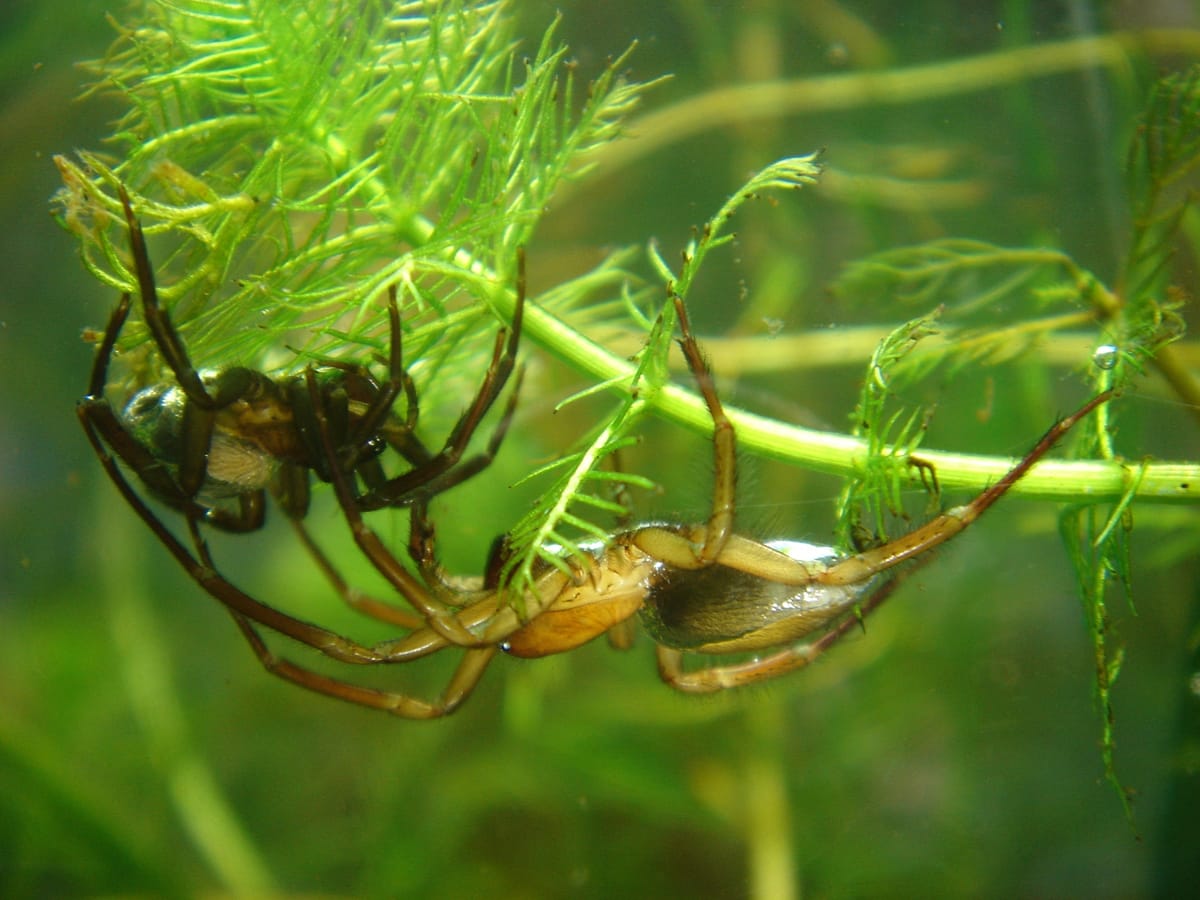
Even amongst spider lovers, there are plenty of people who don’t know about aquatic spiders! There are a few kinds of spiders that prefer the water, but by far the most unique is the diving bell spider. Diving bell spiders spend almost their entire life underwater — even their nest is made below the surface!
They’re solid brown, and not particularly eye-catching, but the way they live their lives is incredible. Their webs are made between submerged plants, rocks, and other objects, and function as a safe haven for the spider that lives inside. The silk keeps water from getting in, and keeps the inside of the nest protected and dry. Females have much larger nests (known as slings) to accommodate hatchlings, but the males are larger than the females, which is quite unusual.
My favorite part is how they create these breathable nests. Like many arachnids, diving bell spiders have a thin layer of hair coating their body. These spiders swim to the surface and trap a bubble of air around their abdomen with these hairs. Then, they swim back down and place the trapped air inside their nest, inflating it and allowing them to stay underwater without suffocating. The nest functions like a gill, extracting oxygen from the surrounding water, but it still deflates over time. They replenish the air inside it about once per day.
These hairs are also what allow them to hunt. Diving bell spiders don’t use webs or snares to catch prey; they are hunters in the way that jumping spiders are. The bubble of air around their abdomen functions as scuba gear while they stalk prey like mosquito larvae, water boatmen, and even small fish!
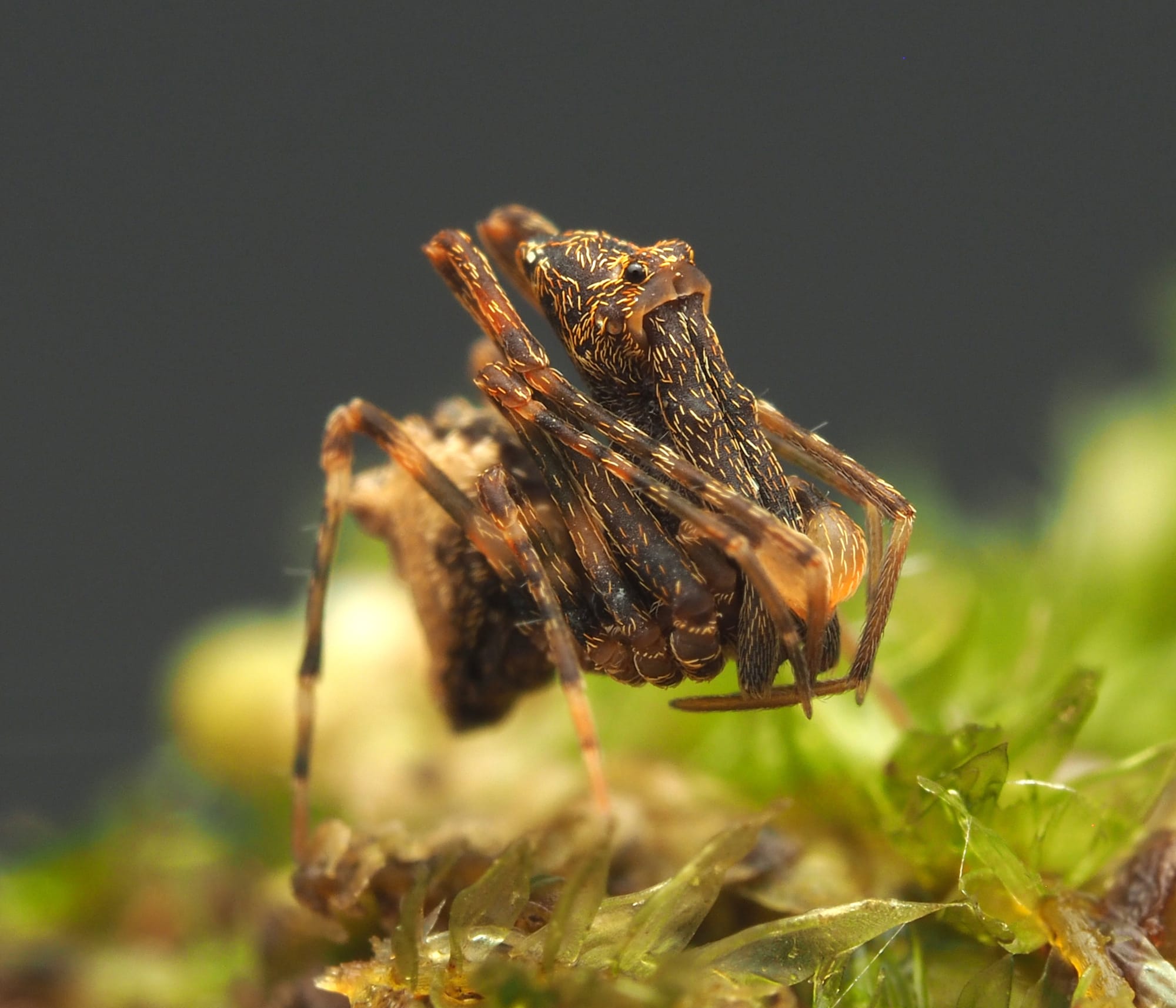
The pelican spider has one of the most bizarre appearances in the arachnid world — a short, humped abdomen and a specialized cephalothorax that truly makes them stand out. While most spiders have a flat cephalothorax, the pelican spider’s is stretched out to look like a long neck, ending in a large, domed head. Their chelicerae are almost the same length as this ‘neck’, and this odd adaptation is for good reason!
Pelican spiders are arachnophagous, which means they exclusively feed on other arachnids. This has earned them the nickname of assassin spiders. These spiders are hunters, and don’t rely on a web to help them catch their prey. As you probably know, the majority of spiders are venomous, which makes catching their meals a dangerous task for pelican spiders.
The specialized chelicerae of the pelican spider means that they can inject other spiders with venom from a distance, and the other spider cannot bite back, letting the pelican spider sit back in safety until they can go in for their meal. They can even be bold enough to poke the webs of other spiders to lure them out and ambush them! This is all even more impressive when you know that most pelican spiders don’t get much bigger than a grain of rice.
Something really cool about pelican spiders is that they are classed as both a living fossil and a Lazarus taxon (species or populations that were mistakenly thought to be extinct)! They are nearly identical to the fossils of specimens from millions of years ago, and were presumed extinct. However, after being rediscovered in Madagascar, they have been added to the list of Lazarus taxa animals!
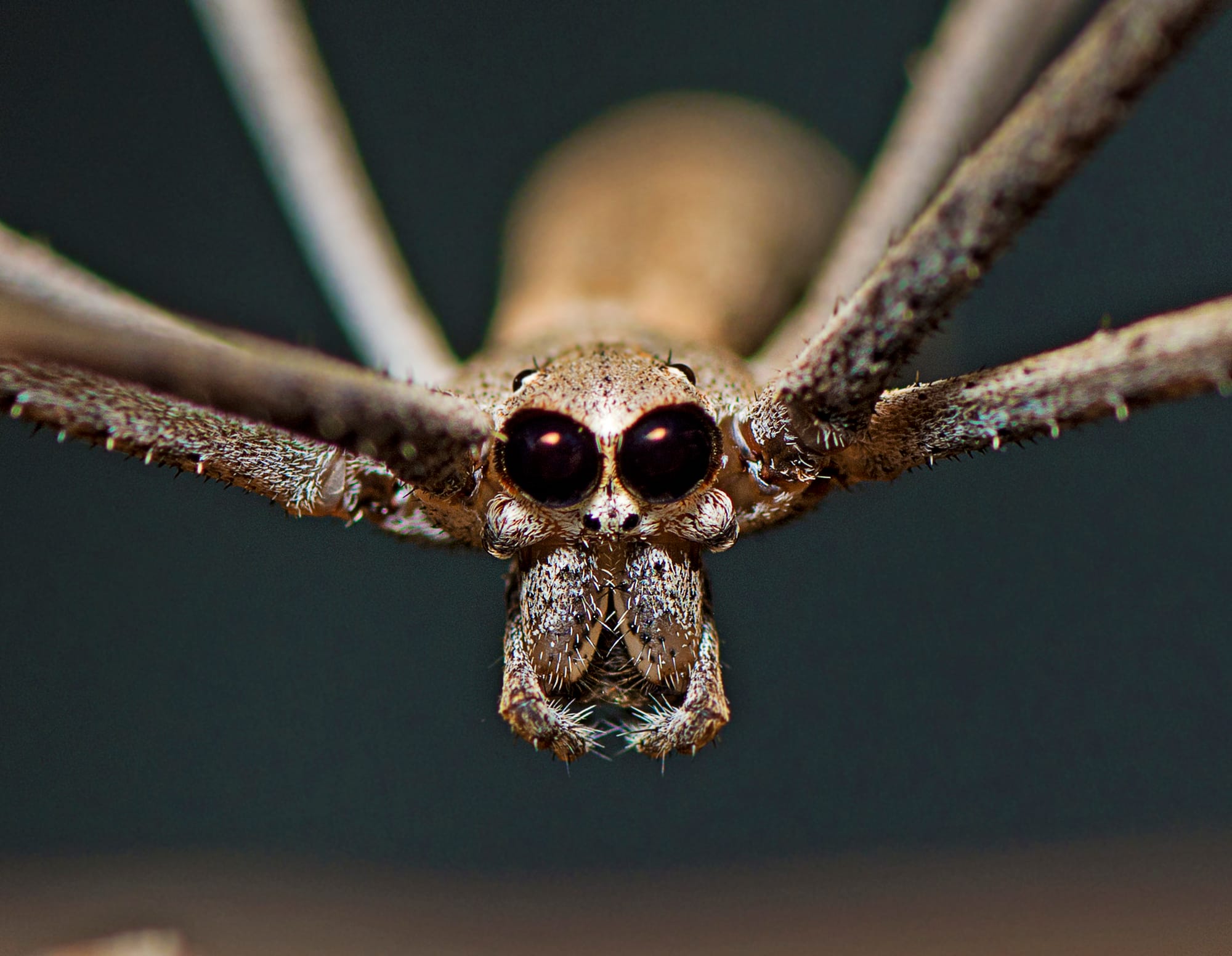
Circling back to more traditional ideas of spiders, the ogre-faced spider does make use of webs in catching a bite to eat, but not in the way you would think. Like the bolas spider, this ingenious arachnid has a more hands-on approach — ensnaring unlucky bugs with a web-net from above!
The most notable feature of the ogre-faced spider is their eyes. The eyes of the ogre-faced spider, not counting their chelicerae, take up nearly half of their face. They are front-facing, and specialized for taking in light. In fact, their eyes are two thousand times more sensitive to light than ours!
What’s so mind-blowing about these eyes, though, is that parts of them regrow every single night! Ogre-faced spiders don’t have a tapetum lucidum, which is the reflective tissue behind the retina that many vertebrates have to improve their night vision. But these nocturnal spiders rely on their vision to hunt; so to get around this issue, they have a biological trick up their sleeves.
Every night, the ogre-faced spider grows a light-sensitive membrane to help them see in the dark. These membranes are too weak to withstand the light of the sun, so when morning comes around, they are destroyed. Ogre-faced spiders regrow this membrane every evening when the sun goes down. Additionally, despite not having ears, their hairs and receptors are so sensitive that they can pick up on sounds from two meters away!
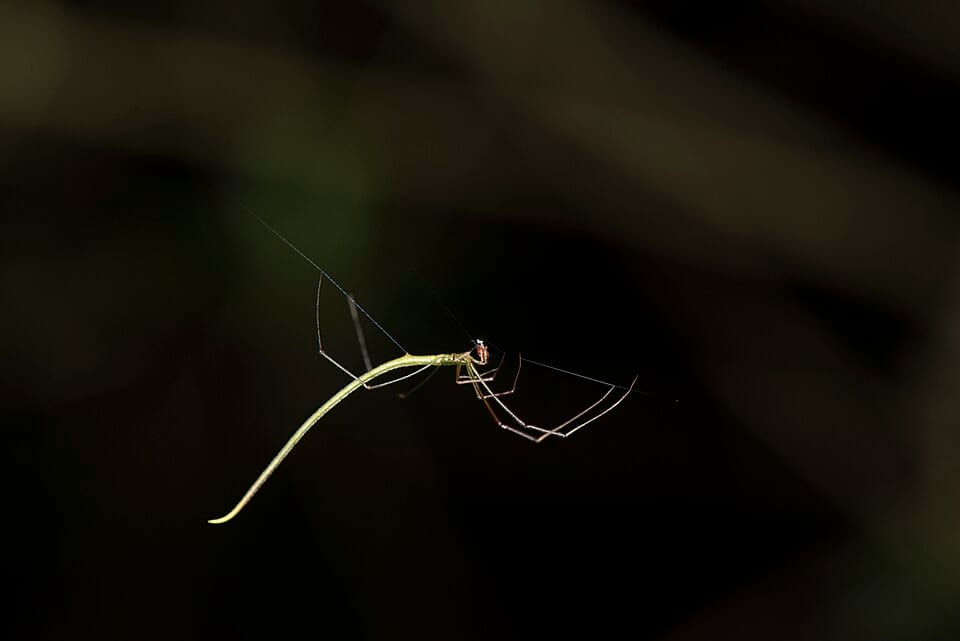
Some spiders don’t really look like spiders at all! Ariamnes cylindrogaster is a little-known species that more resembles stick insects than other arachnids. They may be green or brown, and their strangest feature, like the pelican spider, is the shape of their body.
The cylindrogaster spider has long, spindly legs, and an elongated abdomen that blends in so well with their cephalothorax, it looks like more of a tail than an abdomen! If you’ve ever seen Ridley Scott’s Alien, these spiders bear an uncanny resemblance to the facehuggers of the film.
They are an arboreal species with very simple webs, and they prey primarily upon other spiders. Their egg sacs are similarly elongated, and resemble the bang-snaps people toss at the ground on holidays. Not much else is known about these spiders; and I, for one, am on the edge of my seat for more information!
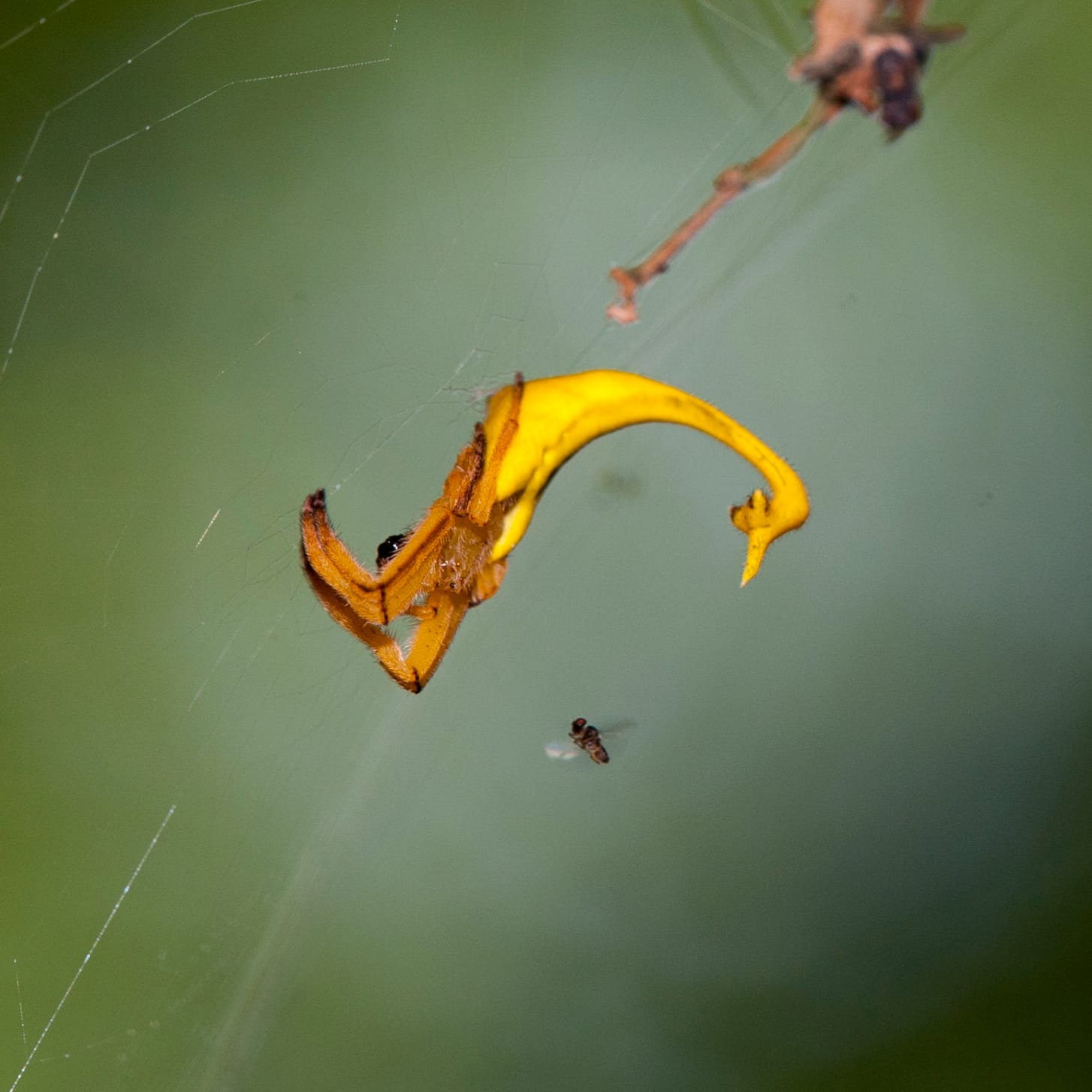
Our last subject for the day is the scorpion-tailed spider, which looks similar to the cylindrogaster, just shorter and fatter. These spiders range from red, orange, and yellow to dull green, brown, and even black — blending in with leaf litter in webs close to the ground.
Only the females possess their signature scorpion-tailed abdomen, with two horn-like protrusions at the front. When threatened, they will curl in the end like a scorpion posing to strike, but they don’t have the stinging tip of a real scorpion.
Spiders are a wonderfully diverse category of animal, and criminally underappreciated! Even the average house spider displays amazing craftsmanship in building their webs, and many have beautiful, unique patterns on their bodies.
I will likely spend my whole life working to end the stigma around these creatures! Very few spiders have venom potent enough to be medically significant, and even those that do deserve a place in our world to live safely. Such an enormous chunk of the planet's biodiversity goes overlooked due to animals like spiders being seen as unpalatable, creepy, or dirty. To deny the beauty of arachnids is to deny yourself the beauty of their little lives.
So next time you find a spider in your house, be kind. Scoop them up with a cup and paper and bring them outside! If you’re brave enough, do your research — if their venom is harmless, give them space and let them stay to keep the flies under control. Every creature deserves love, compassion, and a safe space to call home.
Love yourself, love others, and love all the lives we share the planet with!
kawanyanya is an artist that loves all things queer, creepy, and crawly. If you like their work and want to know where to find more, you can follow their social links at https://kawanyanya.carrd.co.
References:
- “Bolas Spiders: Masters of Deception.” Spiderbytes, 17 Mar. 2015: spiderbytes.org/2015/03/17/bolas-spiders-masters-of-deception
- “Ogre-Faced Spiders.” SciTechDaily, 31 Oct. 2020: scitechdaily.com/ogre-faced-spiders-these-spiders-can-hear-even-though-they-have-no-ears
- “Long-Horned Orb Weaver.” Our Breathing Planet, 24 Nov. 2021: ourbreathingplanet.com/long-horned-orb-weaver
- “Pelican Spiders: Slow, Safe Assassins.” Science News, Mar. 2019: www.sciencenews.org/article/pelican-spiders-slow-safe-assassins
- “Jumping Ant Spider.” Encyclopædia Britannica, 20 Feb. 2025: www.britannica.com/animal/jumping-ant-spider
- “Scientists Discover 18 New Spider-Hunting Pelican Spiders in Madagascar.” Si.edu, 2018: si.edu/newsdesk/releases/scientists-discover-18-new-spider-hunting-pelican-spiders-madagascar
- “Nocturnal Foraging Enhanced by Enlarged Secondary Eyes in a Net-Casting Spider.” Biology Letters, vol. 12, no. 5, May 2016: doi.org/10.1098/rsbl.2016.0152
- “Water Spider | Arachnid.” Encyclopædia Britannica, 3 Apr. 2017: britannica.com/animal/water-spider
- “Pelican Spider.” Encyclopædia Britannica, 16 Apr. 2025, www.britannica.com/animal/archaeid
- “Arachnura.” Wikipedia, 27 Mar. 2026: wikipedia.org/wiki/Arachnura
- “Arachnura Higginsi.” Wikipedia, 9 Oct. 2025: wikipedia.org/wiki/Arachnura_higginsi
- “Ariamnes Cylindrogaster.” Wikipedia, 20 Mar. 2026: wikipedia.org/wiki/Ariamnes_cylindrogaster
- “Deinopis.” Wikipedia, 8 Feb. 2026: wikipedia.org/wiki/Deinopis
- “Macracantha.” Wikipedia, 5 Sept. 2025: wikipedia.org/wiki/Macracantha
- “Tapetum Lucidum.” Wikipedia, 21 Oct. 2019: wikipedia.org/wiki/Tapetum_lucidum
