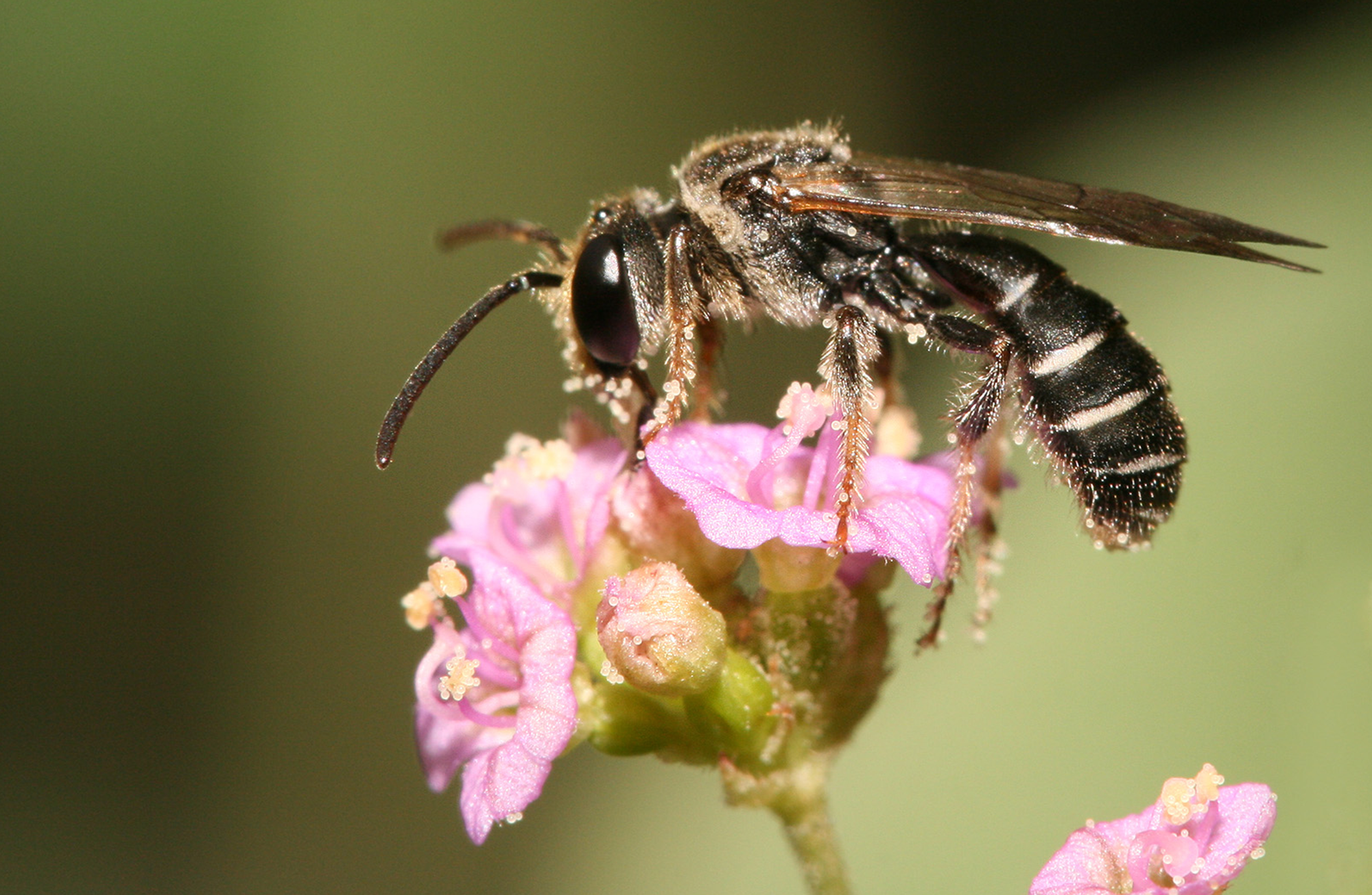
A Sweat Bee (Lipotriches) pollinating flowers / Muhammad Mahdi / GFDL 1.2
Welcome to CREATURE CORNER! Our world is full of strange and unique animals. Sadly, an overwhelming number of them are unknown or misunderstood by the general population, due to lack of education and negative reputations. I want to teach you about the creepy and the crawly, and shed more light onto critters that could use a bit more love. Today, we’ll be talking about pollinators!
If you’ve been outside in the summer months, there’s a decent chance you know about bees. Honey bees, bumble bees, solitary bees — regardless of the species, everyone knows what a bee is! However, when people talk about conservation and protecting pollinators, they are almost always talking about honey bees. And while yes, of course honey bees are important, there are many more pollinators who do the majority of the heavy lifting.
Honey bees are without a doubt the most famous kind of bees — a social, docile species of bee best known for their honey production. However, in terms of overall diversity, social bees are in the minority! In fact, more than ninety percent of wild bees are solitary, and live on their own rather than in a hive with their sisters.
Another well-known and beloved social bee is the bumble bee. Their colonies are a bit smaller than the honey bee’s — a honey bee colony can have thousands of workers, while bumble bees typically have a few hundred at most. They also build their colonies in different places; honey bees usually build their nests in trees and other sheltered, elevated areas, while bumble bees generally nest underground. Bumble bees are also often mistaken for carpenter bees (a solitary species), but if you know what to look for, it’s quite easy to tell them apart! Both species are bulky and fat, but where bumblebees have densely furred, striped abdomens, carpenter bees have shiny, bald abdomens and thick fur on their legs.
Solitary bees are the most undiscussed variety of bee. Most people think of busy, buzzing hives when they think of bees, so imagining them living alone might be a bit odd, but they are just as fascinating and important as social bees. Mining bees are the largest group of solitary bees. As the name suggests, they dig holes in the ground to build their nests where they live and lay their eggs. Cuckoo bees, flower bees, leaf-cutter bees, and mason bees (who build their nests out of mud!) are some more examples, and there are tens of thousands of other solitary bee species in the US!
Another helpful pollinator, frequently mistaken as bees, are wasps — a very broad term, usually referring to social wasps, although there are also many solitary species of wasp. To the untrained eye, paper wasps, yellowjackets, and hornets may be perceived as the same insect. And while, yes, these are all types of wasp, not all wasps are yellowjackets, and not all wasps are hornets!
Most people consider wasps to be pests due to their reputation for aggression, and their habit of building nests close to homes. However, all wasp stings are the result of provocation, and they do not attack if they are left alone. Some species are more vigilant than others, and you may not realize that what you’re doing is threatening. If you become aware of a wasp nest, give them more space than you would bees — do not run, swat at them, or scream. Do not crush the nest, and keep food and drinks away from them. If you need their nest relocated, contact a professional (like beeteamtricities.com).
While wasps are not active pollinators, they transfer pollen from flower to flower while searching for food. Adult wasps feed on sugars from flower nectar, honeydew from aphids and their larvae, and scavenged food from humans. Many wasps are natural predators of insects that humans find a nuisance, and they feed their prey to their larvae. Yellowjackets in particular are prolific in their meat consumption, and will scavenge food from humans and trash cans, earning them the nickname ‘meat bees’.
So, what insects pollinate besides bees and wasps? Well, I’ll tell you! Butterflies and moths both feed on nectar, and their furry bodies and large wings get pollen stuck to them. This makes them even more effective at pollination than wasps.
In the same way, many ants feed on nectar, and while they don’t transfer much pollen, they still contribute to the process. Some ants secrete natural antibiotics from their body that protect them from fungal infection and bacteria, which kills the pollen, and makes them ineffective pollinators. (Don’t go hating on ants, though, they have plenty of other jobs to do!)
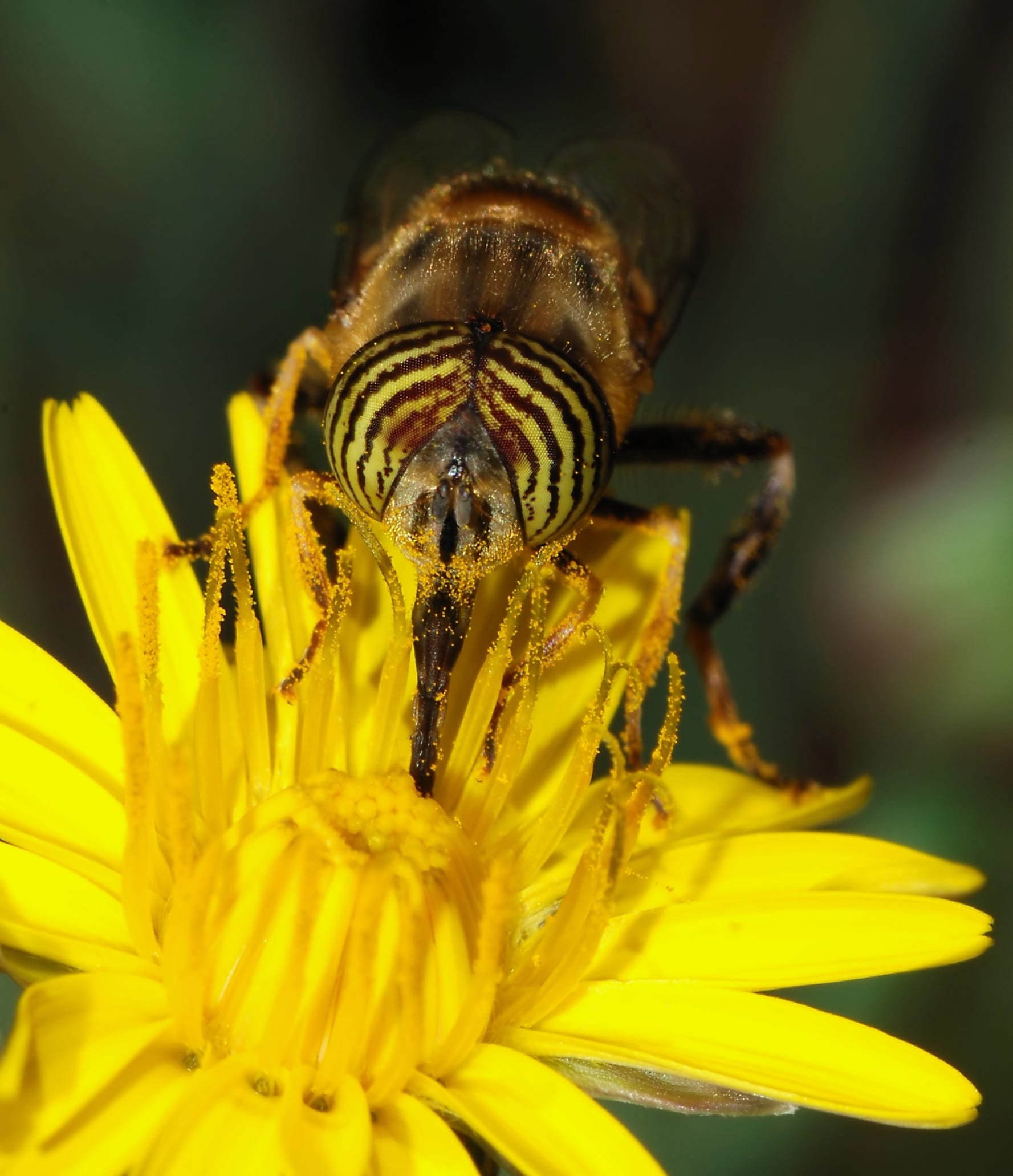
Believe it or not, flies are pollinators, too! Hoverflies are drawn to flowers for nectar and a place to lay their eggs — hoverfly maggots are predatory and aphids are their favorite food. These are especially important to fruit pollination, being attracted to the sweet smelling blooms. The more typical fly, like that annoying one buzzing around your face while you try to nap on a summer day, is much more interested in foul smelling flowers, like the pawpaw blossom. Midge flies are the sole pollinator for cacao trees and their beans! How cool is that? Imagine a world without chocolate and I think most of us would quickly get on board with protecting midge flies!
Possibly even more surprising, mosquitos also pollinate! While mosquitos are infamous for their blood-sucking females, they only do this to lay healthy eggs. Male mosquitoes and unmated females rely on sugar from flower nectar, and transfer pollen much like flies and wasps.
One of the most effective pollinators are beetles — many of them feed on nectar and aphids, and reproduce on and around flowers. Unfortunately, many also eat the plants they pollinate, and they are messy eaters, leading to many farmers trying to control them with poison. However, they occupy an irreplaceable niche in plant reproduction, and finding other ways to protect your cabbages can help to build a healthy, diverse ecosystem.There are more insects than you can imagine that help keep our plants growing and producing fruit. Even spiders can contribute via pest control and incidental pollination! But, as with so many other animals on our planet, they are under a lot of pressure from habitat loss, chemical use, and climate change.
So, how can you help?
Well, there are a few different ways! Educate yourself about flowers native to your area — many of these insects rely on specific plants, and losing them means losing a vital source of food and means of reproduction. Allowing your grass to grow wilder is helpful, but if you’re unable to do this, create safe spaces for little lives in your yard: untreated wood, leaf litter, plenty of stones and access to both food and water are all wonderful ways to help. Avoid raking or leaf blowing, and if you find a small hole in the ground, leave it be.
Synthetic pesticides and pollution are an incredible detriment to the livelihood of these creatures. Not only do pesticides kill insects, but they poison small animals that eat them and the plants they’re applied to. Good alternatives include companion plants, encouraging natural predators of pests, and homemade, natural insecticides. There are many ways of making safe insecticides at home, and most of them can be made with things you likely have in your kitchen! The Peace Corps website has some simple recipes at peacecorps.gov/educators-and-students/educators/resources/making-natural-pest-controls. Go for eco-friendly alternatives, and keep trash and chemicals far away from invertebrate friends.
Donating to organizations working to protect pollinators is a great way to pitch in if you can afford to! There are many organizations working around the country, with different methods and goals. Before giving money to any of them, it is important to research them and ensure they are reputable, and working for the interests of the environment without shady corporate intervention.
In the last twenty years, there has been a near seventy percent decrease in insect populations. As their habitats decline, and the use of harmful farming practices continue, we lose more and more of them, and without these animals, we will lose the ability to produce many fruits, crops, and flowers. Now more than ever, it is critical that we work together to protect them, and the incredible biodiversity that depends on their existence.
For those in Washington state, more information on native plants can be found at https://www.cbwnps.org/projectsresources, and https://www.hgcd.info.
Love yourself, love others, and love all the lives we share the planet with!
kawanyanya is an artist that loves all things queer, creepy, and crawly. If you like their work and want to know where to find more, you can follow their social links at https://kawanyanya.carrd.co.
References:
- “Ant Pollination.” US Forest Service, 9 May 2023, www.fs.usda.gov/managing-land/wildflowers/pollinators/who-are-the-pollinators/ants\
- Askham, Beth, and Lisa Hendry. “Seven Insect Heroes of Pollination.” Www.nhm.ac.uk, www.nhm.ac.uk/discover/insect-pollination.html
- DURHAMMASTERGARDENERS. “Pollinator Insects Other than Bees and Butterflies.” Extension Master Gardener Volunteers of Durham County, 18 Sept. 2019, durhammastergardeners.com/2019/09/18/pollinator-insects-other-than-bees-and-butterflies
- Irvine, Stephanie. “Meet the Solitary Bees.” The Orchard Project, 7 June 2023, www.theorchardproject.org.uk/blog/meet-the-solitary-bees
- Jones, Calley. “Even Untouched Ecosystems Are Losing Insects at Alarming Rates - College of Arts and Sciences.” College of Arts and Sciences, 11 Sept. 2025, college.unc.edu/2025/09/untouched-ecosystems-insects
- Osterloff, Emily. “What Do Wasps Do?” Nhm.ac.uk, 2018, www.nhm.ac.uk/discover/what-do-wasps-do.html
- Saravia, Christian. “Insects Matter. Why Are We Wiping Them Out?” Earth.org, 20 May 2025, earth.org/insects-matter-so-why-are-we-wiping-them-out
- Shipman, Matt. “4 of North Carolina’s Oddest Pollinators (They Aren’t Bees) | NC State News.” NC State News, 12 June 2018, news.ncsu.edu/2018/06/odd-pollinators-of-nc
- “Social Wasps: Yellowjackets, Hornets, and Paper Wasps | University of Maryland Extension.” Umd.edu, University of Maryland Extension, 2024, extension.umd.edu/resource/social-wasps-yellowjackets-hornets-and-paper-wasps
- “Species Profiles: At-Risk Invertebrates.” Xerces Society, xerces.org/endangered-species/species-profiles
- Statman-Weil, Zoe. “Aedes Communis: The Pollinating Mosquito.” Www.fs.usda.gov, www.fs.usda.gov/wildflowers/pollinators/pollinator-of-the-month/aedes_communis.shtml
- “The Miracle Process of Cacao Pollination.” The Chocolate Journalist, 20 Nov. 2022, www.thechocolatejournalist.com/blog/cacao-pollination
- Xerces Society. “About Bumble Bees.” Xerces Society, 2014, xerces.org/bumble-bees/about
- “Who Are the Pollinators?” | Xerces Society, www.xerces.org/pollinator-conservation/about-pollinators
- “Wild Bee Conservation.” Xerces Society, www.xerces.org/endangered-species/wild-bees
