We tend to think of environmental health and hazards as something measured in data, like air quality indices, contaminant levels, and exposure thresholds. And while those metrics are essential, they only tell part of the story. The rest lives in daily experience: the smell of smoke in late summer, the taste of tap water, the dust that settles after a windy afternoon, how we interact with the places where we live, work, and spend time.
For the first time, Benton and Franklin counties are bridging the gap, bringing the two worlds of data and real-world experience together. The Benton-Franklin Health District has been working to better understand environmental health across the region, beginning with an analysis of environmental health indicators as part of its 2025 Community Health Assessment (CHA). That data provides important insight into patterns of exposure and risk. But during conversations with local environmental health experts, another theme surfaced just as strongly as any dataset: the need to listen more closely to the community.
Environmental health has changed dramatically over time. In the early days of public health, we focused on fighting infectious diseases through sanitation, clean water, and food safety. Those interventions were wildly successful, saving countless lives and laying the groundwork for modern society. Today, we still build on that foundation, but our understanding has expanded: how we design, clean, and protect our surroundings is deeply tied to both physical and social health outcomes.
Ultimately, environmental health isn’t an abstract concept; it’s the backdrop for how we learn, work, travel, play, and thrive. Clean schools help children show up and succeed; safe restaurants, pools, and community spaces invite us out into our communities; green spaces and thoughtful transportation design boost mobility, reduce pollution, and strengthen mental and physical wellbeing. All of these elements together form the infrastructure of a healthy, resilient community where people can flourish.
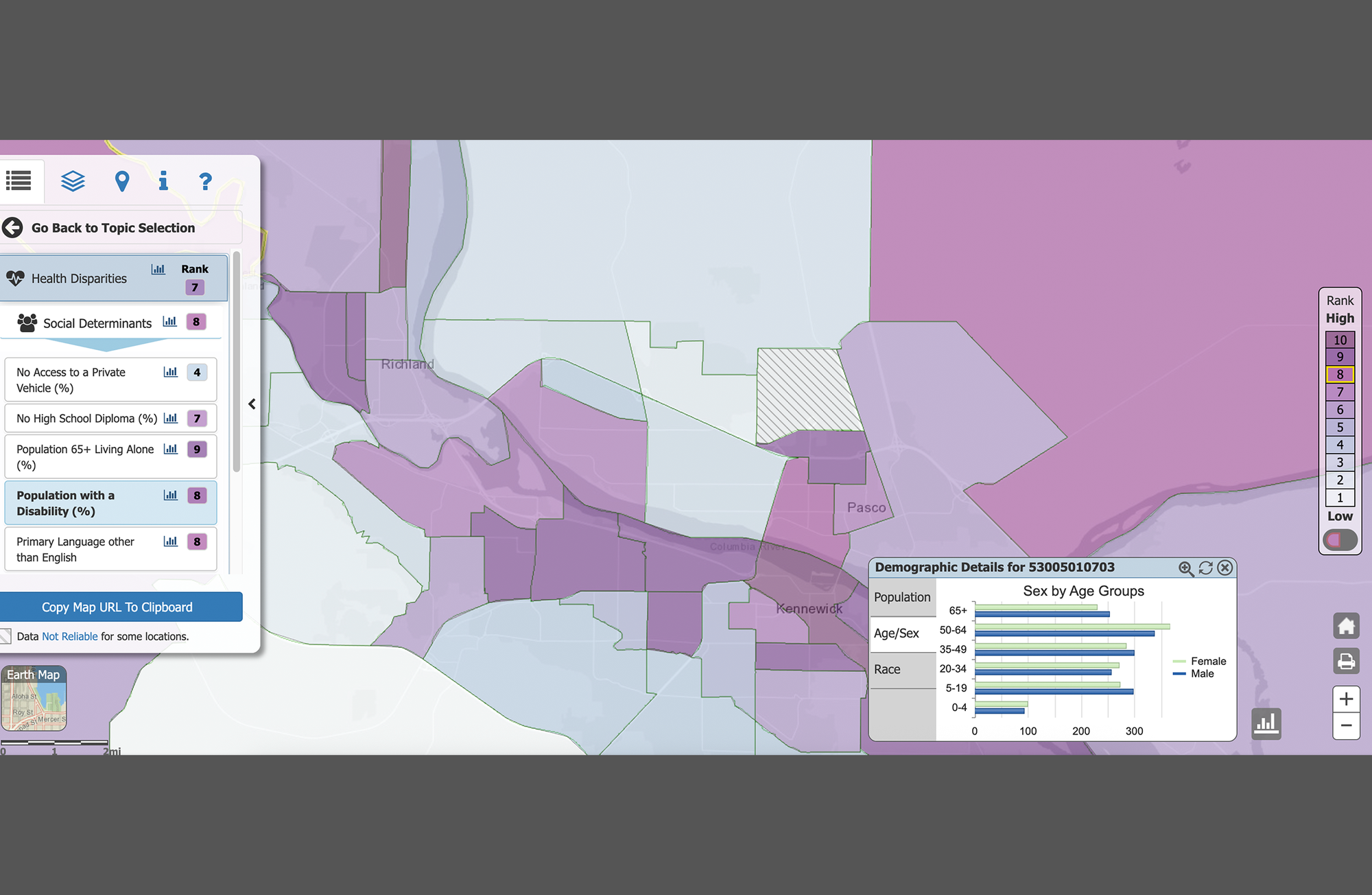
These risks are not distributed evenly. Tools like the Washington Tracking Network’s Environmental Health Disparities Map reveal that some communities experience significantly higher environmental burdens than others, reflecting a complex mix of geography, infrastructure, and historical patterns of development (https://fortress.wa.gov/doh/wtn/WTNIBL).
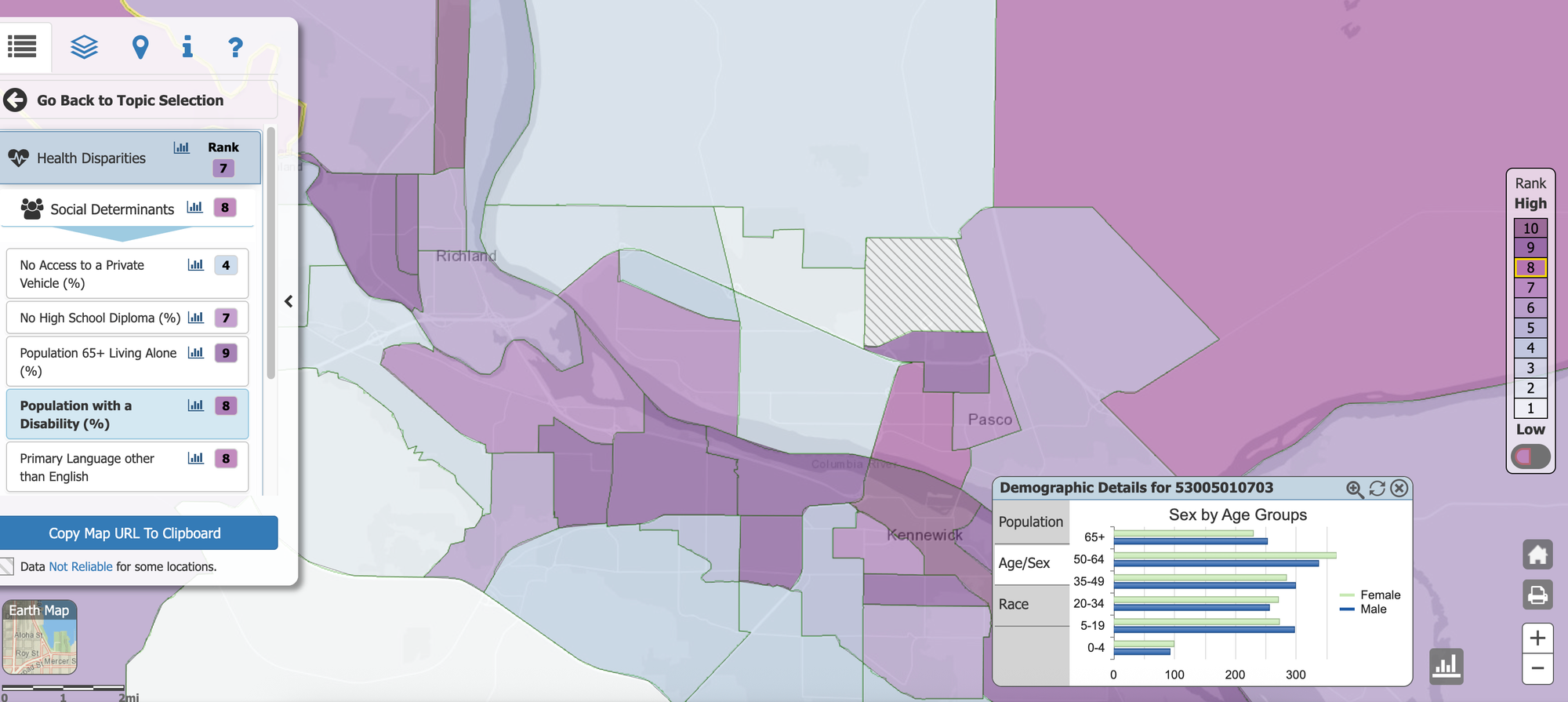
Understanding those disparities requires more than data alone. It requires context, lived experience, and a willingness to ask deeper questions about how environmental conditions are felt on the ground.
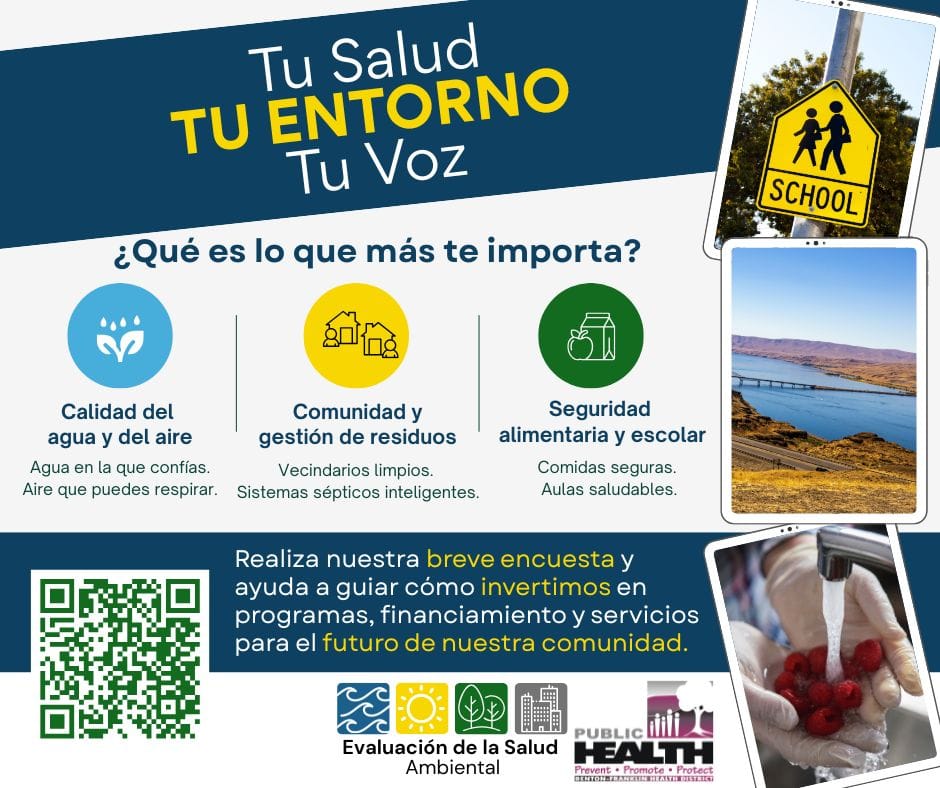
That is the goal of the Health District’s next phase of work. In 2026, a community-wide environmental health survey is being launched to gather input directly from residents. The survey invites people to share their perspectives on issues ranging from air quality and drinking water to climate impacts, waste systems, and the environments where they spend their time. It is designed to capture not just what is measurable, but what is noticeable in everyday life.
By combining environmental health data with community input, we hope to develop a more complete and nuanced understanding of local conditions. The results will be compiled into a report in late 2026, which will inform future actions and priorities.
For those who follow environmental science, sustainability, or public health, this effort represents an opportunity to contribute to a more grounded and community-informed dataset. Public health data can tell us what is happening at a population level, but it often lacks the granularity of lived experience. Community input helps bridge that gap, adding depth and meaning to the numbers.
The survey is now open through July 2026, and participation from across the community will be essential. By sharing observations and concerns, residents can help shape a clearer picture of environmental health in the region and contribute to decisions that will influence its future.
Erin Hockaday is the Director for Surveillance and Investigation at the Benton-Franklin Health District.
Take the Environmental Health Assessment Survey!
Scan the QR code or go to: https://rc.bfhd.wa.gov/redcap/surveys/?s=39TWMFLYYT7YR4PN
NOTE: If you get an error message before taking the survey, please click “cancel” on PC and click “deny” on mobile.
For more information, visit: https://www.bfhd.wa.gov/cms/one.aspx?portalId=10766056&pageId=21248057
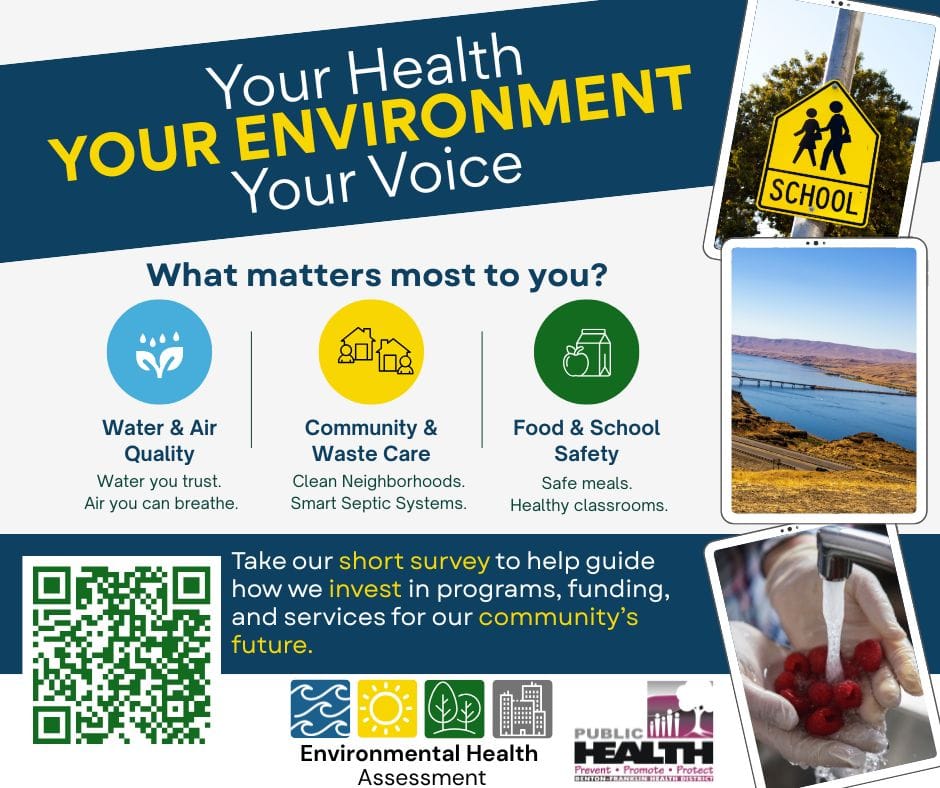
¡Realice la Encuesta de Evaluación de Salud Ambiental!
Escanee el código QR o visite: https://rc.bfhd.wa.gov/redcap/surveys/?s=39TWMFLYYT7YR4PN
AVISO: Si recibe un mensaje de error antes de realizar la encuesta, haga clic en “cancelar” en la computadora y en “rechazar” en el móvil.
Para más información, visite: https://www.bfhd.wa.gov/cms/one.aspx?portalId=10766056&pageId=21248057