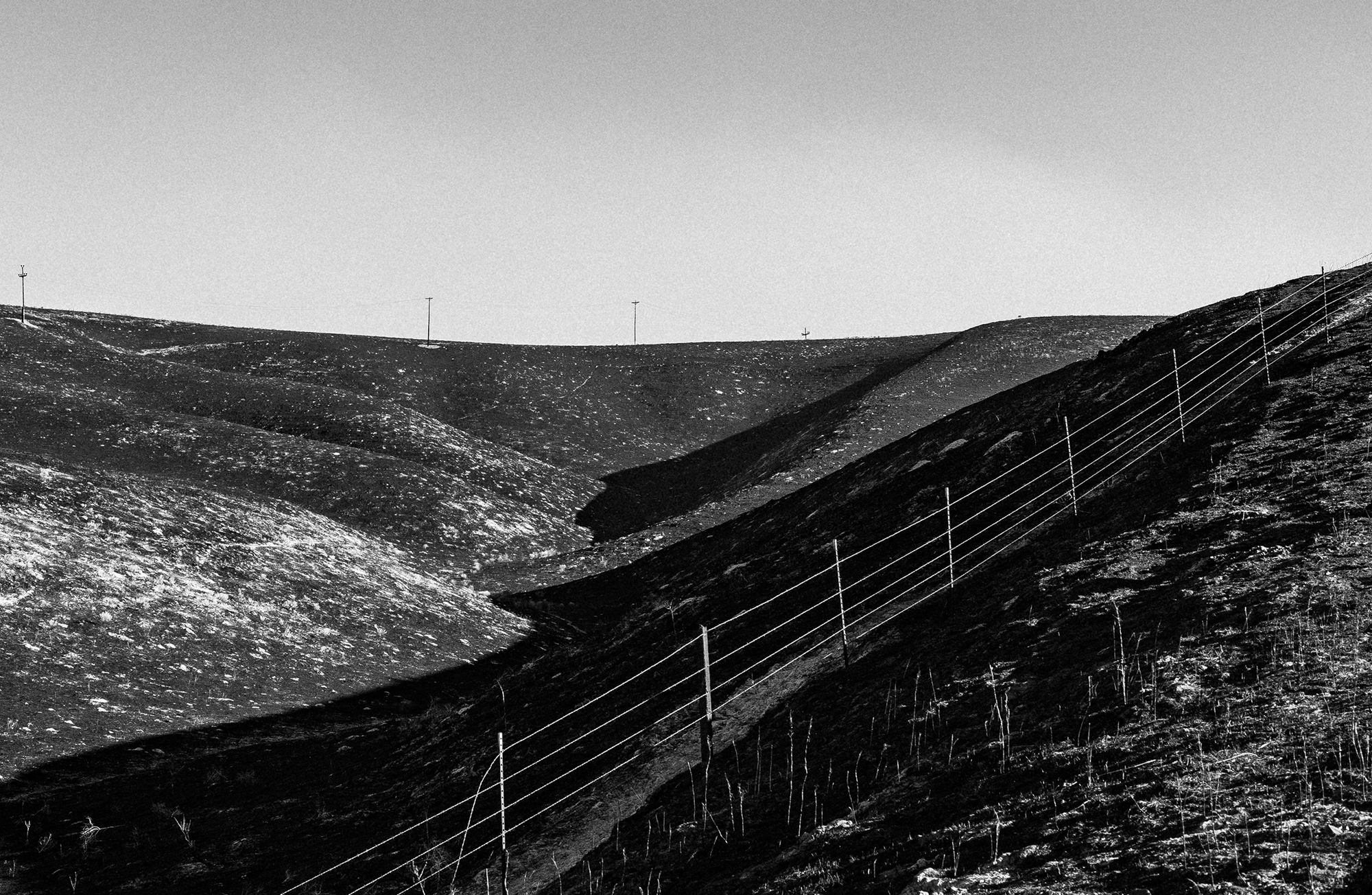
Fireside, Kennewick / 'E'
East of the Hanford Site, back in town, Dallas Road intersects with Kennedy Road, creating an awkward crosshair. The irony, seemingly lost on all residents, thickens as Dallas Road continues, becoming Bombing Range Road. I’ve always wondered if whoever named it was being humorous, or just foolish.
…
It’s incredibly unassuming. Some say it’s the best-kept open secret. 300,000 people call this place home, and it’s just… there.
I can see it from the windscreen of my car, where I park, next to Adam’s garage. The setting sun shines on the hills. Green dots, indicating crops of Great Basin sage, dull the glow into an unimpressive beige. It’s silent, dry, and dead-looking, but it’s teeming with life. Here, I smoke.
I tamp a bowl to perfection, adjust my posture, and light up. It crackles under the intense focus of the lighter. Maybe my lungs will melt.
Inhale.
Exhale.
When I’m high, the mountains seem to part for optimal viewing. Beyond the scattered farmland, vineyards, and rural community lies the oldest kind of death:
Sacrifice.
The transmission lines walk, procession-like, onto the plateau, then void. There are no houses, buildings, or farmland. This zone has been sacrificed.
SR 240 races along the perimeter. Wildlife refuge to the left, and 30-foot-wide sandy trenches, flanked by short, barbed fences to the right. You’re not welcome to observe the ‘here’ closer than they want you to. This zone, all five hundred eighty-six square miles of it, has been sacrificed.
I’d like you to observe what’s there.
Observe what the sacrifice was and will be for millennia to come.
The sun burns into the horizon, obscuring the plateau in darkness. Nature would prefer this creation to stay deconstructed. Consigned to the sand, soil, and sage.
When households hid their spent razor blades in the cavities of their walls, they followed suit, burying their heat in the cavity of the Earth — a wicked heat that festers in the soil, blows across the plains, and rolls in the tumbleweeds; a buried, bloody sacrifice, waiting for someone to expose it to open air.
Men and women of meaning and order gathered to forge the heat, hotter than a TV tower. They were told, as the builders, they would be spared; the risk was manageable.
They were wrong. Just like the concrete that nurtured the wicked heat around them, they, too, would be sacrificed.
The people and land gave themselves to the sacrifice. They had been promised prosperity, assured that “it would be maintained.” They continued to cultivate as they had done before the sacrifice.
Time was the real killer.
Given enough time, the concrete burial vaults begin to decay, the dust blows away, and the sacrifice begins. The first to be sacrificed are the unknowing and innocent. Procedural, expected. They shouted; funerals were held; the sacrifice continued.
The builders, given tools and told to manage, were next. They screamed; their corpses were exiled to administrative hell; the sacrifice continued.
Finally, the land: the water, soil, and earth. She howls, long and low into the night; no one listens; the sacrifice continues.
The tumbleweeds were carried long and far to tell about the sacrifice. They remain, stuck in the barbed wire fences, in the hills, or in the grill of someone's vehicle.
The same breeze draws the thick, tan smoke from the cab of my car. I watch the void, behind the mountains. It waits for some greater mother to console its cries.
I know smoking will kill me one day. But the earth below me smolders like a coal fire, and no one listens.
Kennedy was here once. He assured us it was “possible for us to find a more peaceful world,” now that we had “changed history.”
History only transcends us if we’re able to carry it.
The land is here. I can feel it burn, scarred forever. The heat and earth will transcend me, too. The zone — then, now, and forever — sacrificed.
Arlyn Kiterberg grew up between Hanford and the Tri. He’s passionate about knowing the history of where one is from, and being engaged with the greater context it's a part of, especially on stolen land. He believes that good faith awareness is a very small but necessary act of radicalism.
