
Narrated by JM Wood
Now, BIGGER Brother is watching.
By now, most folks are aware that law enforcement in their cities are using technology to remotely police the streets. Tumbleweird reported on the issues with Flock camera systems in two different stories in 2025.1
The first story, (‘Local law enforcement leaves the door wide open for ICE’) was about the issues with the Richland Police Department and the Benton County Sheriff’s Office (along with other agencies across the state and country) allowing access to sensitive data as U.S. Border Patrol illegally accessed Flock systems across the country.
After that initial reporting, our follow-up story revealed that Richland City Council was only alerted to these security issues after reading our article (‘Richland Officials Respond to ICE data breach’).
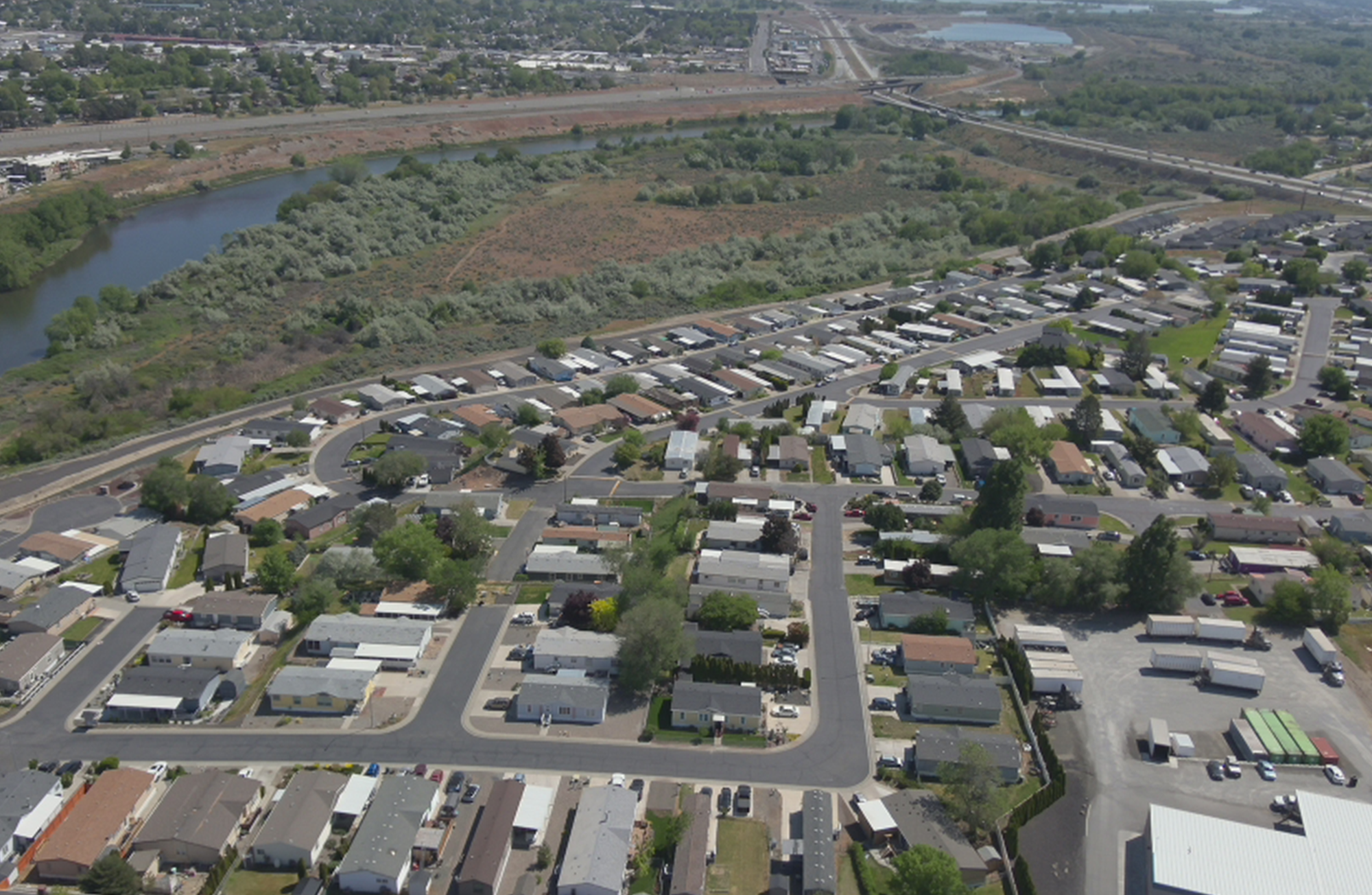
Now, we have learned that the City of Richland has plans in the works to add new technology to monitor the streets. These technologies include drones, body cams, cameras on existing light poles, and the use of homeowners’ and businesses’ private video monitoring systems.
Integrated monitoring
On October 7, 2025, the City Council approved a $2.6 contract with Axon.2 Axon’s “LIGHTPOST WITH TAP” is included in a package that has body cams, drones, and storage. These integrated technologies work together to record, transmit, and store information.
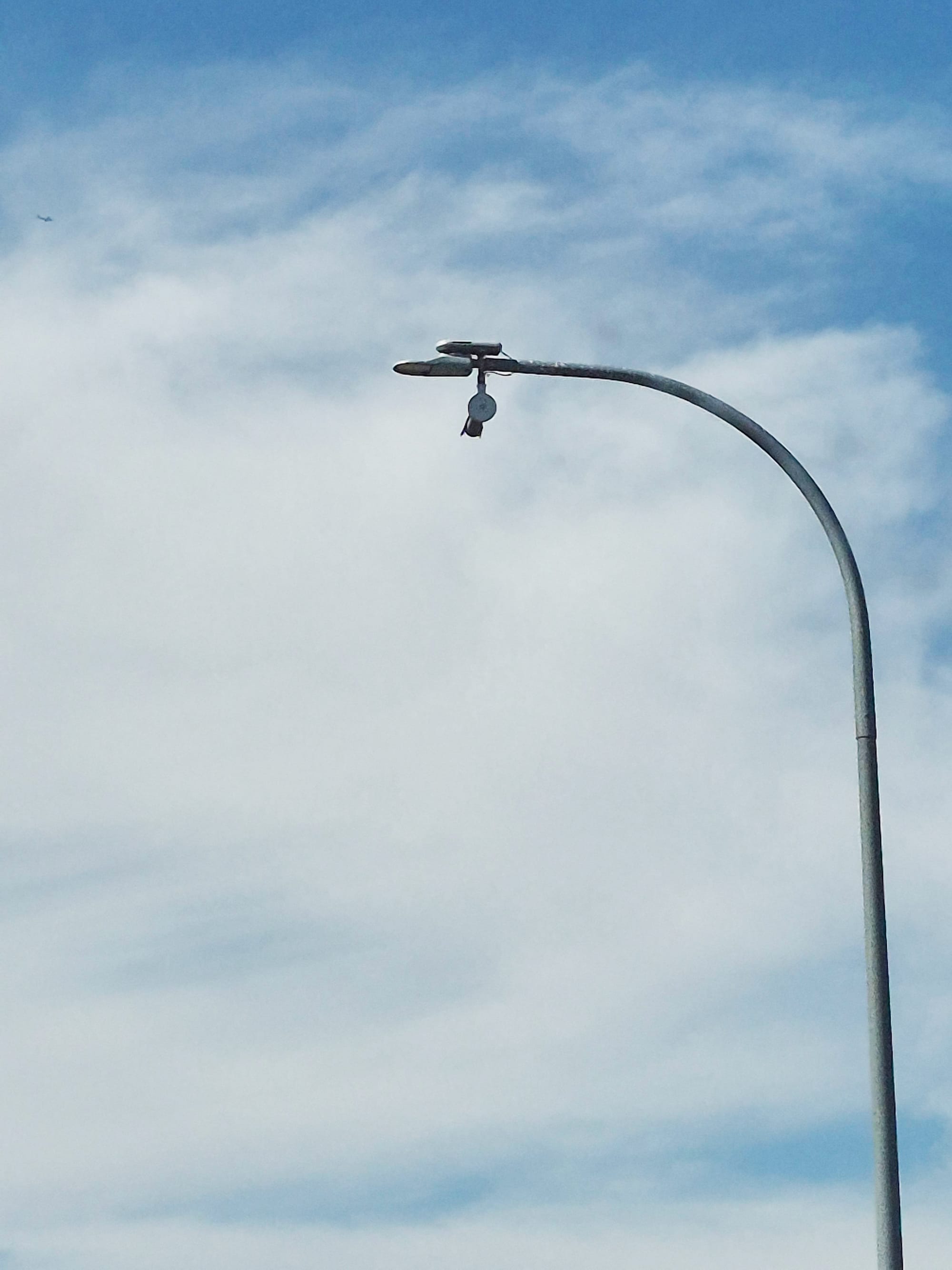
According to Axon, “Axon Lightpost combines ALPR [Automatic License Plate Reader], livestreaming, and vehicle attribute recognition in a fast-to-deploy form factor, expanding coverage without new poles, trenching, or delays.” The design of the ALPR uses an existing lightpole to mount the camera. The ‘tap’ refers to the way the ALPR “taps” into the existing electrical infrastructure.3
This photo was taken on August 19th, 2026. It appears to show the exact ALPR that is in the Axon advertisements.
It was in June of this year that ten Flock cameras were removed from the City of Richland, but those have now been replaced with Axon cameras. From the coversheet of the City Council agenda on October 7, 2025, it was not clear that new cameras were going to be installed. It was passed as part of the consent agenda.
The consent agenda is part of the meeting that is meant to deal with routine business items in a group. Unless a councilmember asks to pull one of these items for discussion, all items in the group almost inevitably pass without comment. Since no one flagged the Axon cameras on the agenda, the public was not made aware that there were new cameras being installed.
It wasn’t until nearly a year later, at the August 18, 2026 City Council meeting,4 that councilmember Kurt Maier made a comment regarding the Axon cameras, and expressed a desire to fully understand how sensitive data would be protected better than it was with Flock. Maier said (in part):
Our contract with Flock has ended, and the Flock cameras, as far as I know, have been removed. But we have automated license plate reader service from a different company called Axon, and that’s a pretty big difference. Axon has a much different data protection and data access methodology than Flock does … but I think that might be worth a brief presentation about specifically Axon LPR data protections. Just because I know, even though we have moved on from Flock and they have taken their cameras back, a lot of people are still wary of that technology in general. I’d like for as much information about how we protect the information generated by these devices as we can get.
Chief Pilcher’s report
On August 25, Richland Police Department (RPD) Chief Martin Pilcher gave a presentation to the City Council during their regular workshop, which we received via public records request.5 Pilcher’s presentation included a map of the locations of the Axon Lightpost cameras.
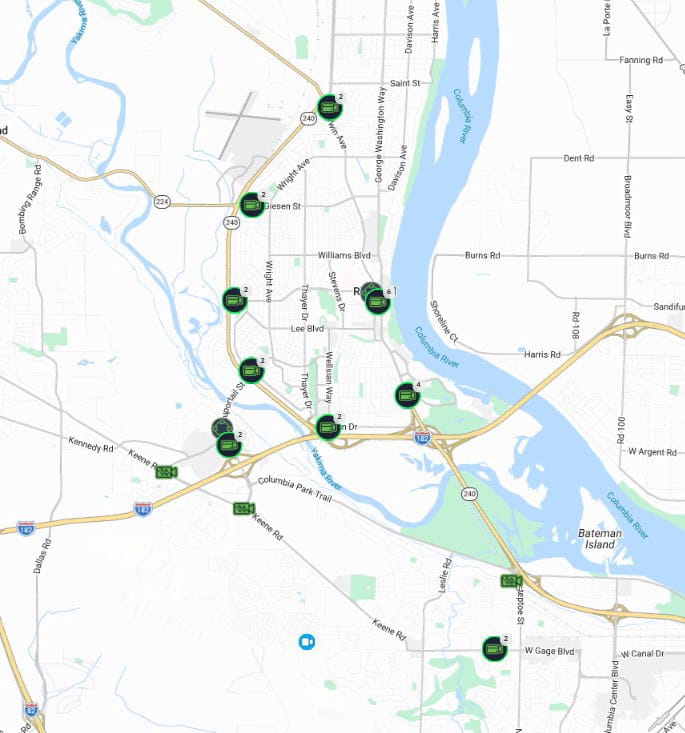
Pilcher explained that the Axon Lightpost system will only collect limited data: plate image, vehicle context image, visible context of vehicle (color/make/type), and time and location. Pilcher also assured the council that the Axon system will have guardrails. From his presentation:
LIMITED COLLECTION • Only defined information is collected.
LIMITED RETENTION • Routine detections are automatically deleted after the applicable retention period, with Washington law establishing a maximum of 21 days for ordinary law-enforcement ALPR data.
LIMITED ACCESS • Role-based access and required training.
DOCUMENTED SEARCHES • Searches require a documented case/call number, purpose, and offense type.
HUMAN VERIFICATION • An ALPR alert is a lead, not an enforcement decision.
During the meeting, Councilmember Maier asked Pilcher several questions regarding storage of the data (21 days as per state law), and who monitors the records (in-house by the public records officer). Maier then asked about integrated systems:
One of the things Axon sells is a sort of integration thing with private video streams. What guardrails, as presented here, does Axon’s private stream integration [have]? Is that covered by the same rules as ALPRs, or is there a different set of laws covering streams that we essentially get donated to us by residents and local businesses?
Chief Pilcher replied:
We would only access those if there was a call for service at that location. Let’s say there was a store in town that allowed us access to their systems. They then call us and say there’s a robbery occurring at our location. If we have somebody in the real-time information center, they can access that, and … begin to provide information to responding officers.
{T]hat can reduce the chance of an untoward confrontation, provide us the ability to respond with the right resources, and better plan for a de-escalation if that occurs. That information can then be recorded at that point, and then would be stored in our system, and the same guardrails would be present. So an individual working at that cannot just turn on that camera and begin accessing a business.
Tumbleweird contacted Chief Pilcher to ask some followup questions regarding the new Axon system. We received a response on September 21 which reads (in part):
The Axon Fusus system is being implemented as a public-safety technology platform that can allow authorized personnel to view and manage certain video resources, subject to the type of camera, applicable policies, system permissions, and any applicable laws.
At this time, Richland Police Department has not established any standardized regional sharing agreements with other law enforcement agencies. We have discussed the potential for future mutual-aid or information-sharing arrangements, but no such agreements have been established at this time. Any future agreements would be evaluated individually and would be subject to applicable law, City policy, Department policy, and appropriate authorization.
There are also important distinctions between the different components of the system. The Fusus platform does not mean that Richland Police automatically has access to cameras throughout the region. Access to cameras owned or operated by another organization requires that organization’s participation and authorization. Similarly, participation by a private business or resident does not provide the Department with unrestricted access to all of that person’s cameras or systems.
Regarding safeguards, access to the system is controlled through user permissions and administrative controls. The Department will establish and maintain appropriate procedures governing who may access the system and under what circumstances. System activity can also be audited.
With respect to ALPR specifically, Richland Police is not currently using ALPR through the newly installed system. Any future use of ALPR would have to comply with Washington law and applicable Department policies and requirements. Washington law places specific restrictions on the collection, use, retention, sharing, and access to ALPR data.
Finally, regarding federal agencies, there is not blanket access to the City’s Fusus system simply because an agency requests it. Access to a particular camera or data source would depend on the type of information involved, the authority under which access is requested, applicable law, and the permissions established by the organization that owns or controls that resource.
Our objective is to use the technology to support public safety while maintaining appropriate controls over access, information sharing, privacy, and accountability. As policies and procedures are finalized, we will continue to provide information to the public through the City’s website.
Connect Richland… and Pasco
In August, The City of Richland sent letters to residents along with their utility statements requesting that they register their home security cameras with Connect Richland.6 The letters (and the website, which is copyrighted by Axon Enterprise) claim that registering your cameras is a way for police to know who has security cameras to assist them in investigations.
But the Connect Richland program invites residents to “take community security one step further by giving the Richland Police Department direct access to your camera feed in case of a nearby emergency.”
There is a federal law that allows companies like Ring to share recordings directly with law enforcement during urgent situations. The Stored Communications Act7 allows for an emergency exception clause. A governmental agency can request access, but Ring will only allow access if the governmental agency is working in “good faith” and believes that “imminent danger of death or serious physical injury” requires disclosure.
The Axon-run Connect Richland program does not have the same limitations.
As of September 19, the Connect Richland website claims to have 40 registered cameras and 190 integrated cameras.

On September 12, Pasco Police Department posted this on social media. It reads:
Something new is connecting Pasco.
A new partnership between the Pasco Police Department and our local business community is coming.
AXON CONNECT: Built around better information, stronger partnerships, and a safer Pasco.
Learn more: https://OnePasco.org8
The link leads you to another Axon website almost exactly like Richland’s, only with Pasco branding instead. As of September 19, they claim 69 registered cameras and 148 integrated cameras.
Privacy protections
Police departments across the country have had issues with their own officers exploiting Automatic License Plate Readers (ALPRs). The Washington Post published an article on August 19 about it: ‘Police departments weren’t looking for officers abusing Flock. We did it for them.’9
In the article, The Post reports, “At least 69 police officials have been accused, charged with or convicted of misusing Flock’s system or other license plate readers for unauthorized purposes.” The article said that their investigations showed that many police departments had not done basic oversight.
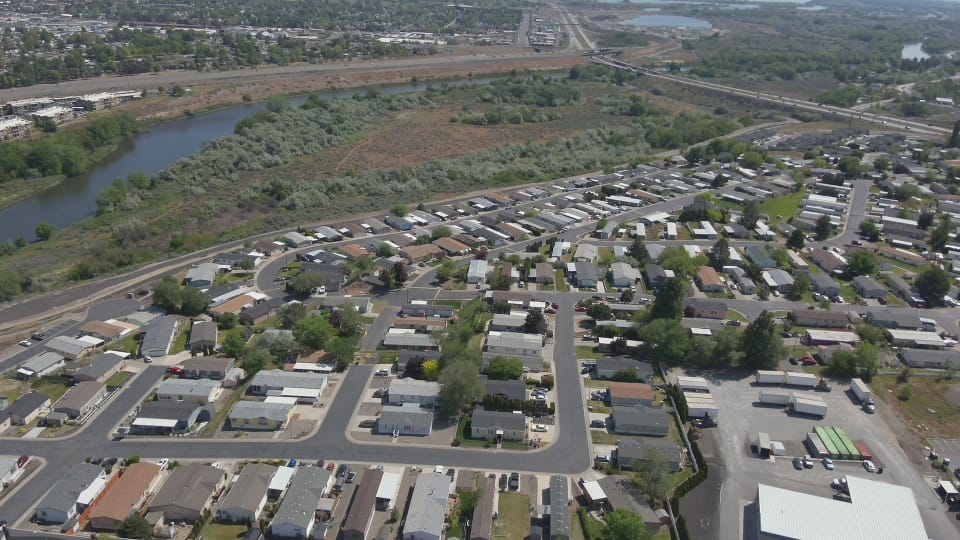
Right now, as the Axon system is being deployed across the Tri-Cities, residents are already noticing being surveillanced by drones. Police will fly drones through residential neighborhoods searching for suspects. Our own investigation turned up drone footage police officers uploaded to evidence.com, an Axon cloud-based platform.
In 2026, a new law was signed by Governor Bob Ferguson. Senate Bill 6002 (The Driver’s Privacy Act)10 regulates how police can use license plate readers (LPR). Police now can use LPR technology when they are investigating gross misdemeanors or felonies, looking for vehicles that are stolen or registered to people with arrest warrants. They can also be used to search for endangered people or people that are missing.
Part of the legislature’s findings read:
[T]he dramatic expansion of surveillance technology across the country has demonstrated the need to establish sensible guardrails on the use of surveillance data collected from monitoring the location and travel of individuals, without a warrant, to ensure its use by law enforcement and other government agencies must not come into conflict with existing protections for Washingtonians and ensure that it is not being used for purposes prohibited under state and federal law.
One important change in the new law is that the data from the LPRs can’t be shared except in court proceedings, and will need to be deleted after 21 days. Previously, the data was stored based on the Flock default national standard of 30 days.
For privacy advocates, the new law bans the use of the technology near sensitive locations like schools, immigration centers, food banks, and healthcare facilities. It also requires regular auditing and transparency reporting.
The ACLU in Washington says the new law falls short of what they were advocating for because the LPR technology data is still being shared between agencies, and jurisdictions are not holding the data long enough.11
Tee Sannon, technology policy program director for the ACLU of Washington, said, “The Driver Privacy Act is an important first step toward addressing the use of ALPRs, which have been used for far too long to monitor countless people in our state without any rules or meaningful opportunities for redress.”
An organization called The Policing Project has instituted a scorecard for states that measure how well they are using ALPRs.12 Concerns across the country include access to data, storage, policing protests, auditing, and other issues. Washington state thankfully received a score of 6 out of 7, with concerns raised about one important gap in legislation regarding the lack of an established “formal data sharing process to ensure that all sharing of ALPR data is authorized, lawful, and documented in writing.”
Washington State Patrol
The Richland Police Department (RPD) and the Washington State Patrol (WSP) are taking some steps to keep Washington State residents safe.
During the March 17, 2026 City Council meeting in Richland,13 the city adopted Resolution No. 2026-37.14 This is a data sharing agreement that RPD entered into with the WSP. One section of the agreement reads, in part:
Under Washington law, the WSP and its personnel are generally prohibited from enforcing federal immigration law. See RCW 10.93.160.15 Neither WSP nor any of its employees may contract in any way to provide civil immigration enforcement assistance. The purpose of this provision is to make clear that the Parties interpret this Agreement as consistent with Washington law, including RCW 10.93.160, and that the WSP and its personnel shall not engage in any acts prohibited by Washington law.
This is an important section in the agreement. Previously, RPD had allowed Border Patrol to access their Flock systems, which is against state law.
Flock was also used by a police agency to attempt to track down a woman that was accused of accessing a medical abortion. In May 2025, a Texas deputy accessed data from 83,000 Flock cameras to search for a woman accused by her boyfriend of having a medical abortion. Flock cameras in Washington state were also accessed in this case, even though abortion is legal in the state.16
When RPD signed the interagency agreement with WSP in March, another section of the agreement specifically dealt with health care rights:
Directive 22-12: Reproductive Health Care Rights
This Directive prohibits cooperation or assistance with out-of-state abortion and other reproductive health care investigations, prosecutions, or other legal actions.
Neither the WSP nor any of its employees or subdivisions may contract in any way to provide civil or criminal cooperation or assistance with abortion and other reproductive health care investigations, prosecutions or other legal actions, including through agreements for task force participation, mutual aid, data (Record) sharing, communications dispatch, or any other agreement that shares resources and/or provides Records as described herein. the WSP shall not use or share WSP resources, Records, or Confidential Information or other information ascertained by the WSP or its personnel, with any third parties to support or engage in abortion or other reproductive health care investigations, prosecutions, or other legal actions.
A lifelong resident of Eastern Washington, Dori enjoys the outdoors, her family, and making good trouble. She has worked for many years in broadcasting and reporting and believes in the value of the 4th estate. She is a true community advocate that loves Washington.
References:
- tumbleweird.org/leaving-the-door-wide-open, tumbleweird.org/update-ice-data-breach
- drive.google.com/file/d/1c2jxh18lL738_ZwTD5QDwDywwy8c-Lzx
- axon.com/help/lightpost/cameras-and-sensors/lightpost/get-to-know.htm
- youtube.com/watch?v=Z7LGbqPvL7E
- richlandwa.portal.civicclerk.com/event/6090/files/agenda/13812
- connect-richland-35b4f41d.netlify.app
- law.cornell.edu/uscode/text/18/2702
- OnePasco.org
- washingtonpost.com/technology/2026/08/19/we-found-cops-who-misused-flock-their-police-departments-didnt-know
- app.leg.wa.gov/billsummary/?BillNumber=6002&Initiative=false&Year=2025
- aclu-wa.org/press-releases/gov-ferguson-signs-sb-6002-the-driver-privacy-act-into-law
- alprscorecard.com
- richlandwa.portal.civicclerk.com/event/5558/files/agenda/13385
- drive.google.com/file/d/17fAnfu4iHDuFrEMvqiNKZym8tJWtALp7
- app.leg.wa.gov/RCW/default.aspx?cite=10.93.160
- 404media.co/texas-police-used-ai-to-write-report-about-using-flock-to-search-for-woman-who-had-abortion, yahoo.com/news/politics/articles/texas-deputy-searched-83-000-152212195.html
In August the City of Richland sent out with the utility statement the monthly information for residents. Included was a paragraph called:
Help Keep Richland Safe
