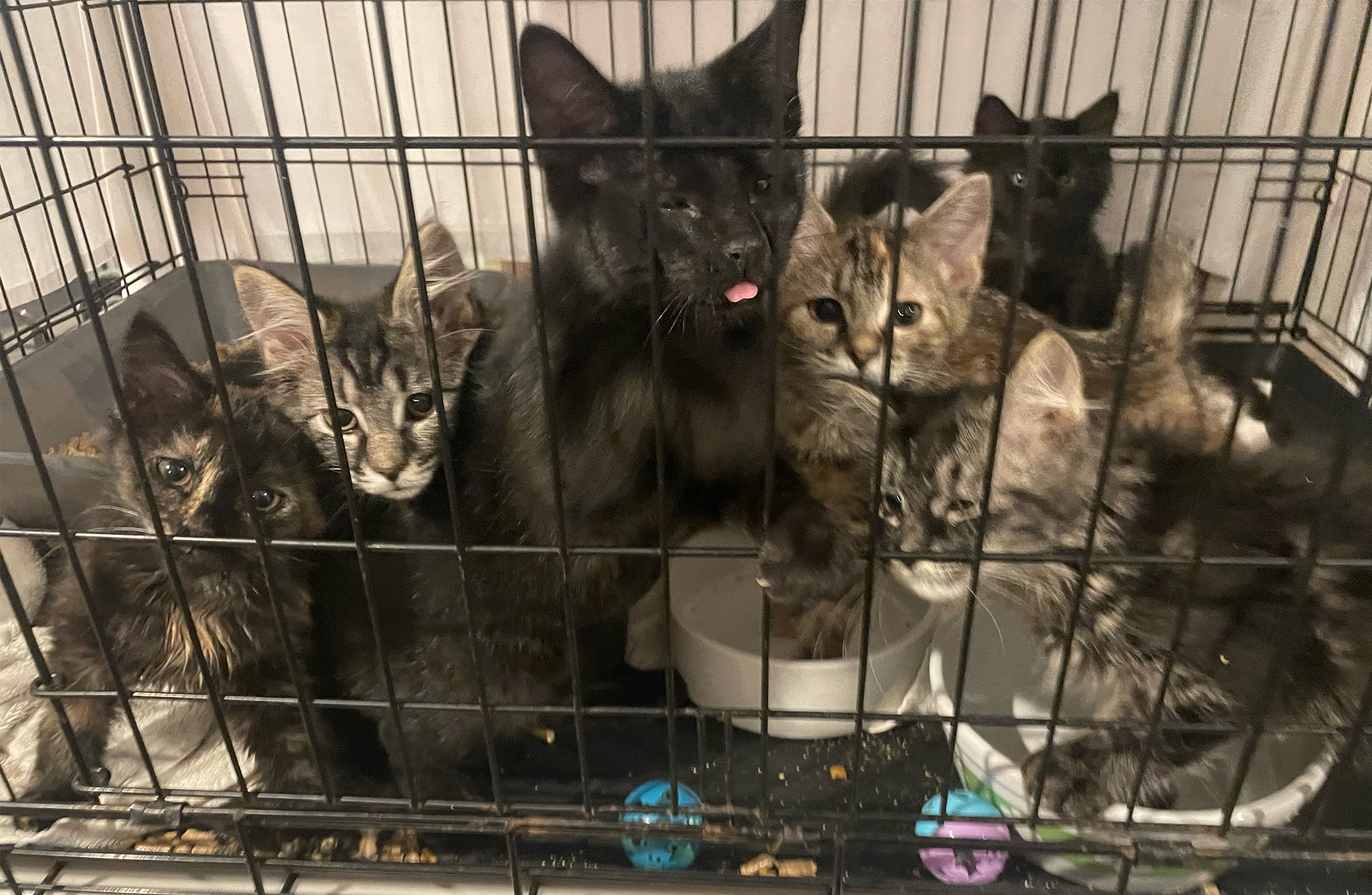
A litter of adoptable kittens awaits transport. Photo courtesy of Prevent Homeless Pets.
Prevent Homeless Pets (PHP) is a spay & neuter clinic located in Benton City. Their mission is in line with the Humane Alliance Model – conducting high volume, high quality (HVHQ) spays and neuters. Since incorporating in 2009 they have sterilized about 75,000 cats and over 10,000 dogs. Though they are not a shelter, their philosophy is to take ‘runners in the wild’, fix them, and help fill the shortage of adoptable cats/kittens in Seattle. They assist other rescues, TNR (trap-neuter-release) groups, and low income individuals. I became aware of their work three years ago when they assisted me with neutering my goldendoodle.
Earlier this year, I decided to switch careers from social work to animal care, and I applied to volunteer at the clinic — I met the team within that same week and learned more about what they do.
The facility director, Harriet, has been involved with the clinic since before it had a name! It began as a group of individuals who would trap around 50 cats and transport them to Seattle to be sterilized, before releasing them back at the trap site. It was volunteer-run, with virtually no funding; just a group of people trying to make a difference.
In 2009, they began to receive donations and apply for grants, and PHP was incorporated. In 2013 with a small group of dedicated individuals, they had arranged to use facilities at local veterinary clinics for surgeries. Simultaneously, Ahtanum Veterinary Clinic in Union Gap came on board, and PHP no longer needed to make the long trek over the mountains. In 2018 PHP received a bequest which allowed them to look for their own facility.
St. Johns Church in Benton City had a property that included a church (1950s barracks from Hanford), and fellowship hall (built in the mid-1990s). PHP purchased the property and began upgrades to turn the hall into a clinic with an assembly line setup: hold station, prep station, surgery table, recovery station.
Dr. Sheila Doyle had been working for two years at a practice in Seattle, and came on board as the resident veterinarian. The rest of the team includes a licensed vet tech, and two vet assistants. The clinic currently has a prep area, sanitation station, three surgery tables, and a recovery area. Further renovations over the years have included an exam room, kennel room, isolation zone, and maintenance areas.
While the clinic is able to apply for various grants to continue its work, one major challenge is funding adoptable kitten/cat transfers to Seattle. Harriet often receives calls from rescues, friends, acquaintances, and community members, but resources are severely limited! Kitten foster volunteers are needed (Harriet says “Volunteers are gold!”). PHP volunteers often step in to foster kittens until they are grown enough to get on transport to Seattle, which Harriet drives herself every Friday.
In 2025 PHP sterilized 4,274 cats and around 607 dogs. October is the beginning of their ‘Stitch-in-Time’ matching grant program, where the contributions they receive help them with another year of operation. These funds are strictly used for overhead costs. Surgeries, microchips and vaccinations are covered by program fees.
If you are able to assist in any capacity, whether it’s time or money, please do. The work PHP is doing is more important than most people realise. Countless animals are being saved from suffering, and people in need have access to a low-cost service that most vets charge hundreds of dollars to provide.
Their usual schedule is Monday to Thursday, 9am to 3pm, although their hours fluctuate, and they are sometimes open longer. Stop by for a chat with the front desk (preferably in the afternoon when the big rush is over), and experience the quiet warmth and efficiency of a well-oiled machine at work.
Find out more at https://www.preventhomelesspets.org/.
