
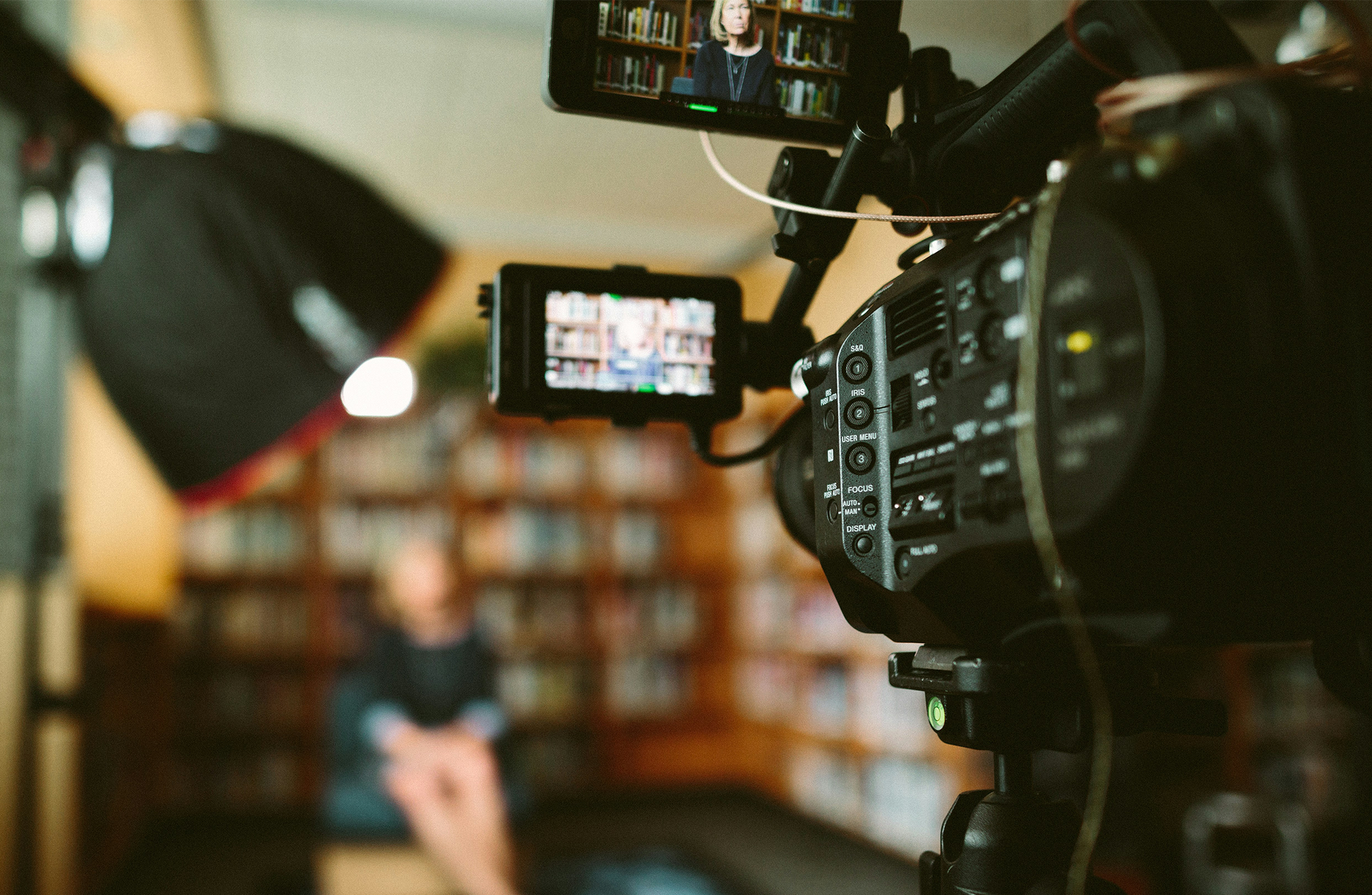
Photo by Sam McGhee on Unsplash
Narrated by Chad Fox
I got into this race because I have a problem with elections where nobody has a choice.
Having the conversation is part of the point. Elections are supposed to make us stop for a minute and ask where we are going. Can families find childcare? Can the next generation afford a house here? How should we handle giant data centers, energy, schools, public safety, and all the other things happening around us?
You do not have to agree with my answers.
Actually, that is kind of the point.
But none of this works very well if voters cannot hear from the people asking to represent them.
Which is how I somehow ended up learning federal broadcast law.
I am a pretty normal guy. I am a husband and a dad trying to get through work, family, bills, childcare, and all the normal stuff life throws at you. I did not spend years learning party politics or plotting a path to Olympia.
Lately, I have felt a little like Dungeon Crawler Carl (except my version has considerably fewer monsters and no Princess Donut). One minute I was living my regular life, and the next I had been dropped into a completely unfamiliar world with a bunch of rules nobody explained, and apparently my job is to figure them out as I go.
I’ve been awash in campaign finance reports, party dynamics, candidate questionnaires and, apparently, FCC regulations.
I filed because otherwise there was not going to be a race for this seat.
This really is not about me. It is about whether people have choices, whether they can hear from the people asking to represent them, and whether they have enough information to make up their own minds.
So what exactly are we voting for?
There are 49 Legislative Districts in Washington. Each one elects one state senator and two state representatives. Those people vote on the state budget and laws involving schools, housing, transportation, taxes, energy, healthcare, and a pile of other things that eventually find their way into our everyday lives.
The 16th Legislative District covers Walla Walla County and portions of Benton, Franklin, and Grant Counties. It stretches from Benton City; portions of West Richland, Richland, and Pasco; over to Walla Walla, and up to Connell.
It is also a district where one political party has been dominant for a long time.
I think that makes contested elections more important, not less.
When everybody assumes the outcome before an election even starts, it becomes awfully easy to stop asking questions.
That is one reason I was genuinely excited about participating in a League of Women Voters forum.
Put us in the same room.
I like the League of Women Voters.
The League is nonpartisan. It does not endorse candidates. Its mission is pretty much the whole point of this article: “Empowering voters. Defending democracy.” It provides election information, candidate forums, and VOTE411 to help people participate and make informed decisions.
That is what I want.
Put the candidates in the same room. Ask us the same questions. Give us the same amount of time.
Then let people make up their own minds.
The local League has partnered with Northwest Public Broadcasting to do exactly that. In 2024, the League of Women Voters of Benton and Franklin Counties and NWPB held a 16th Legislative District candidate forum at WSU Tri-Cities and put it on the air.
They planned to do it again this year, and I was looking forward to it.
Then I got an email saying the forum for my race was canceled due to “insufficient candidate participation.”
And it was not just my race. The Position 2 forum was canceled, too. Derek Sarley and I were both willing to participate, but with only one candidate signed up in each two-person race, neither forum could move forward as planned.
Two races. Same result.
The people who wanted to answer questions were told there would be no questions to answer.
When we asked why they could not simply go forward with whoever showed up, the League explained that NWPB was producing the forums for broadcast, which meant federal rules around political candidate appearances had to be considered.
My reaction was pretty simple: Fine. Put the candidates who showed up on camera.
But I learned that it is not quite that simple.
Apparently, Jimmy Kimmel and I have something in common.
That is a sentence I never expected to write.
Early in September, Jimmy Kimmel said that an interview he conducted with Texas U.S. Senate candidate James Talarico would be released online rather than broadcast on ABC amid a fight over the FCC’s equal-opportunity rules for political candidates.
About a week later, I found myself in my own considerably less glamorous version of that story.
To be clear: I am not Jimmy Kimmel. Nobody is waiting for my monologue.
I am just some guy from Richland running for the Washington House who wanted to sit down and answer some questions about childcare, housing, data centers, energy, and anything else the League wanted to ask me.
Yet, somehow, federal broadcast regulations reach all the way down to a state legislative race in southeastern Washington. That is kind of wild.
The law behind this is not new. Section 315 of the Communications Act contains an equal-opportunity requirement for legally qualified political candidates. There are also exemptions for bona fide news programs and events. In January, the FCC issued new guidance emphasizing enforcement of that requirement and how broadcasters determine whether programming qualifies for a news exemption.
So this is not as simple as saying that the FCC prohibits one candidate from appearing on TV. And I cannot tell you exactly where the legal line falls for this particular forum. I am not an FCC attorney, and I have no desire to become one.
What I can understand is why a public broadcaster operating in the current environment is being careful.
Which brings us to PBS.
Mr. Rogers did a pretty good job.
There is something particularly strange to me about public television getting caught up in all of this.
Public television is the world of Sesame Street, Arthur, Daniel Tiger, and Mister Rogers’ Neighborhood.
I grew up with Mr. Rogers. At the risk of sounding corny, I think Mr. Rogers taught me most of what I need to know about being a citizen.
Your neighbors matter.
Listen to people.
Be curious.
Try to understand somebody before deciding you hate them.
You do not have to agree with everyone to treat them like a human being.
That is a pretty decent civic education. But now, public broadcasting itself has been pulled into a much larger national political fight.
In May 2025, President Trump issued an executive order directing federal agencies and the Corporation for Public Broadcasting to end federal support for PBS and NPR to the maximum extent allowed by law. The administration argued that the organizations were biased. Then, in January 2026, the Corporation for Public Broadcasting’s board voted to dissolve after nearly six decades.
Whatever you think about that national fight, imagine being a local public broadcaster trying to navigate it. I understand the defensive posture.
The League volunteers are trying to put on a useful civic program without getting their broadcast partner into trouble. NWPB is trying to serve the community while navigating a national regulatory and political fight it did not create.
What I hate is the outcome.
The League wants to give voters information. The broadcaster wants to provide local civic programming. Many candidates want to participate. And somehow, voters can still end up with nothing.
That is a pretty bullshit outcome.
Obviously, I’m not saying this because I missed my big television debut. I promise America will recover.
It is a bad outcome because voters get less information.
The League loses an opportunity to do something it does well, public broadcasting loses a piece of local civic programming, and candidates who are willing to participate lose one of the few opportunities to answer questions publicly.
What about the candidates who don’t show up?
I would be lying if I said the question has not crossed my mind.
If you are running in a district where your party has historically done very well, what is the incentive to walk into a room, surrender control of the questions, and give your opponent the same microphone?
Is it the political version of ‘the prevent defense’?
Maybe.
Or maybe there were scheduling issues. Maybe there were other considerations I know nothing about. I do not know why the opposing candidates in my and Derek Sarley’s races chose not to participate, and I am not going to invent their reasons for them.
But this is the part that I think matters: A candidate deciding not to participate should not make it harder for voters to get information.
More normal people should do this.
The entire election experience has convinced me of something else. Running for office should not be something reserved for political insiders, the very wealthy, or people who have spent twenty years figuring out how the machinery works.
I am figuring plenty of this out as I go. That is probably obvious. But I actually think that’s okay.
I raised my hand because I thought there should be a race. Since then, I have answered questionnaires, gone to forums, talked to people I agree with and people I do not, and learned an impressive number of rules I did not know existed six months ago.
Maybe somebody reading this sees something happening in their school district, city, county, or state, and thinks, I could do something about that.
I hope they do.
Our democracy is better when ordinary people believe they are allowed to raise their hands, too.
This should be easier. People should not have to follow every candidate on social media, dig through old Facebook posts, track down six questionnaires, and become amateur opposition researchers just to figure out who wants to represent them.
Finding out what district you live in should be easy. Finding out who is running should be easy. Hearing those people answer questions should be easy.
Voting should be easy.
I’m not saying you have to like the candidates you find. You do not owe me your vote. You do not owe any candidate your vote.
But if people are asking for your vote, they had better be willing to give you enough information so you can make up your own mind.
I started this because I thought an uncontested election was a bad way to run a democracy. A few months later, I am learning FCC regulations, comparing notes with Jimmy Kimmel, and writing an article about public television.
Not where I expected this to go.
But I am still glad I raised my hand. And if somebody gives me another platform to answer questions?
I’ll show up.
EDITOR’S NOTE:
The League of Women Voters Benton-Franklin contacted us to let us know about forums they were able to hold in conjunction with Northwest Public Broadcasting. Watch them on the NWPB Vote playlist: youtube.com/playlist?list=PL6pHcbVJ2q0FBsPPWI3e-qEfNSdVVJwBc
Kyle Palmer is a Richland husband, dad, and normal guy who somehow ended up running for the Washington Legislature.
For information on local candidates, visit https://tricitiesvote.com
For voting links including registration information, drop box locations, and more, Indivisible Tri-Cities has put together a voter toolkit at http://linktr.ee/IndivisibleTriCitiesVoterTools
