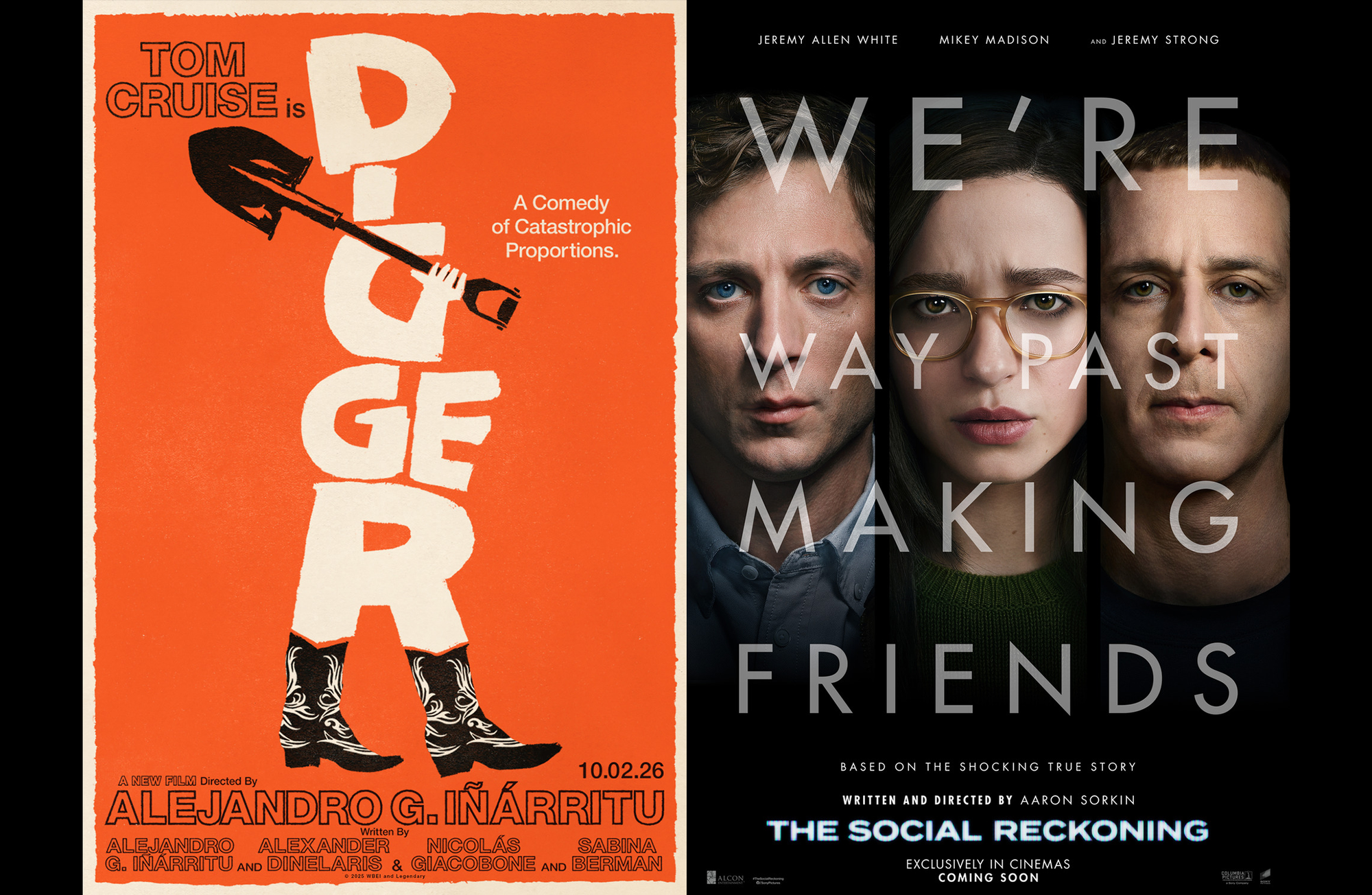
The Social Reckoning
Set the way-back machine to 2010: sixteen long, long years ago, when the internet was young, exciting, and idealistic, and social media was a brand new toy — a fully-democratized, global public square on every shiny new smartphone. Epitomized by the stratospherically-ascendant Facebook, here was the embodiment of the egalitarian ethos that drove the creation of the web in the first place: absolute freedom of expression, published globally, with universal access to all!
Or so we thought, sweet summer children that we were. 2010 also brought us a prescient and controversial movie, now generally recognized as one of the most significant films of the 21st century to date, The Social Network, in which writer Aaron Sorkin and director David Fincher painted a less-than-flattering portrait of Facebook’s creation, and its creator Mark Zuckerberg. At the time of the film’s release, Zuckerberg was fêted as a brilliant young tech innovator, but Fincher and Sorkin’s screenplay delved into his character, depicting him as a borderline-sociopathic frat boy with delusions of grandeur.
Looking back, it’s a warning we perhaps should have taken more seriously — a point stressed in The Social Reckoning, Aaron Sorkin’s coda to the Facebook story. The film opens with a distressing vignette in which a drunken white woman, standing next to an overheated car, films herself hurling a torrent of vile racist abuse at two traffic cops who had pulled over to help her, but instead ended up arresting her. The video is reposted on a Facebook hate speech group, where it goes viral. The movie then switches focus to Facebook headquarters, where idealistic young data engineer Frances Haugen (an endearingly nerdy Mikey Madison) is becoming increasingly alarmed by the company’s internal research, which demonstrates that their corporate strategy is prioritising user engagement at the expense of safety; the company doesn’t care if it’s enabling the spread of lies and hate speech as long as the sharing generates clicks.
Haugen reluctantly responds to Wall Street Journal investigative reporter Jeff Horwitz (played earnestly by The Bear’s Jeremy Allen White), who is working on an exposé of Facebook’s unethical practices. The film follows Horwitz’s efforts to coax Haugen into providing enough hard data to stand up to scrutiny, while cutting forward two years to January 2021, where Facebook CEO Zuckerberg (a robotic portrayal by Jeremy Strong) is being coached for his congressional hearing testimony. After bullishly defending his ‘free-speech absolutist’ position, Zuckerberg has to watch in horror as the now infamous events of the January 6th insurrection unfold at the U.S. Capitol, fuelled by real-time Facebook rage posting by the President.
The Social Reckoning is not so much a sequel as a cinematic ‘I told you so’, but that doesn’t detract from its efficacy in exploring the corporate cynicism which transformed social media into the open sewer of hate, rage bait, and disinformation that it is in 2026. Jeremy Allen White turns in a solid performance as the textbook Woodward-&-Bernstein-style ethical journalist, but Mikey Madison’s timid but fiercely smart Frances is the tremulous heart of the picture. Jeremy Strong’s Zuckerberg is a repellent presence — a calcified avatar of corporate sociopathy which could almost be considered caricature (if Mark Zuckerberg had a character).
Competently directed by Sorkin, but lacking the visual and textural flair which Fincher brought to its predecessor, The Social Reckoning is a worthy, earnest film which feels as though it has arrived five years too late. Horwitz may have won the Pulitzer Prize for his work on the Facebook Files, but who cares? The algorithms have an endless supply of rage bait to sell us.
Digger
Very occasionally, a film comes along which seems destined to have the epithet ‘cult classic’ slapped on it almost as soon as it hits theaters. Usually the recipients of a critical savaging upon initial release, such films are championed by a small nucleus of die-hard devotees, but sink without trace at the box-office, taking Hollywood careers (and occasionally entire studios) with them, before being ‘rediscovered’ a decade or two later by the next generation of audiences determined to prove that their parents just didn’t get it.
Even more rarely, the next generation is absolutely right.
Such an animal is Digger, a $170-million, high-risk experiment by Mexican filmmaker Alejandro González Iñárritu. Starring Tom Cruise as larger-than-life Texas oil tycoon Digger Rockwell, the film is a high-concept black comedy which sets out to satirize both the human race’s pitiful response to the dire climate crisis engulfing our world, and Hollywood’s pretentious and self-congratulatory efforts at climate activism to date (Don’t Look Now, for example, being squarely in its cross-hairs).
Digger Rockwell is a ruthless third-generation oil baron, living in the extravagant luxury of his fortress-like mansion, when the frantic warnings of scientists employed at his Greenland drilling site finally penetrate his gilded bubble. A catastrophic climate event, caused by decades of unsustainable fossil fuel consumption, has resulted in a slab of ice the size of a major city shearing off the Greenland ice sheet and slamming into northern Europe. Tsunamis devastate the coasts of France, Belgium, the Netherlands, and the United Kingdom, causing hundreds of thousands of deaths, and trillions of dollars of damage. With the ineffectual and sickly U.S. president (John Goodman) actively dying from self-described “ass cancer”, Digger assumes the role of leading the United States’ response to the catastrophe. Accompanied by his chief scientist and oracular proxy Dr. Nirav Ganesh (an exasperated Riz Ahmed), Digger is dispatched to Europe to contain the situation.
Anyone wishing to have a spoiler-free experience should stop reading here!
Iñárritu deploys an elaborate framing device to add a controversial layer of complexity to the movie: Cruise is not, in fact, playing Digger at all, but rather actor Curtis Markson, the star of Fossil Fools, a cult stage play written to satirize a real-world climate catastrophe which took place a quarter of a century earlier. The play is set to open in a climate-devastated New York at some undetermined point in the near-future, the city littered with abandoned cars and patrolled by armed soldiers and surveillance drones.
What, then, to make of this play-within-a-play? Over its first 45 minutes or so, the film’s hyperbolic script and over-the-top performances begin to grate, until Iñárritu draws back both the literal and metaphorical curtain and reveals why this feels like an excessively over-acted stage play; it is one. The question is, does this approach (reminiscent of Charlie Kaufman’s Synecdoche, New York) intensify or detract from the film’s impact? The answer has split critics down the middle, but one is left with a slightly deflated sense that Digger isn’t quite as clever as it thinks it is, and ultimately fails to be the Dr Strangelove of the climate crisis that it sets out to be.
That said, there are some electrifying moments, the best of which belong not to Tom Cruise, but to Riz Ahmed, whose scene-stealing performance is worth the price of admission alone. It’s hard to envision Digger cleaning up at the next Academy Awards, but it wouldn’t be for want of trying.
Recently arrived in the Tri-Cities from Scotland, Damien Beagan is a former freelancer who has written film and music reviews for a variety of UK websites.
