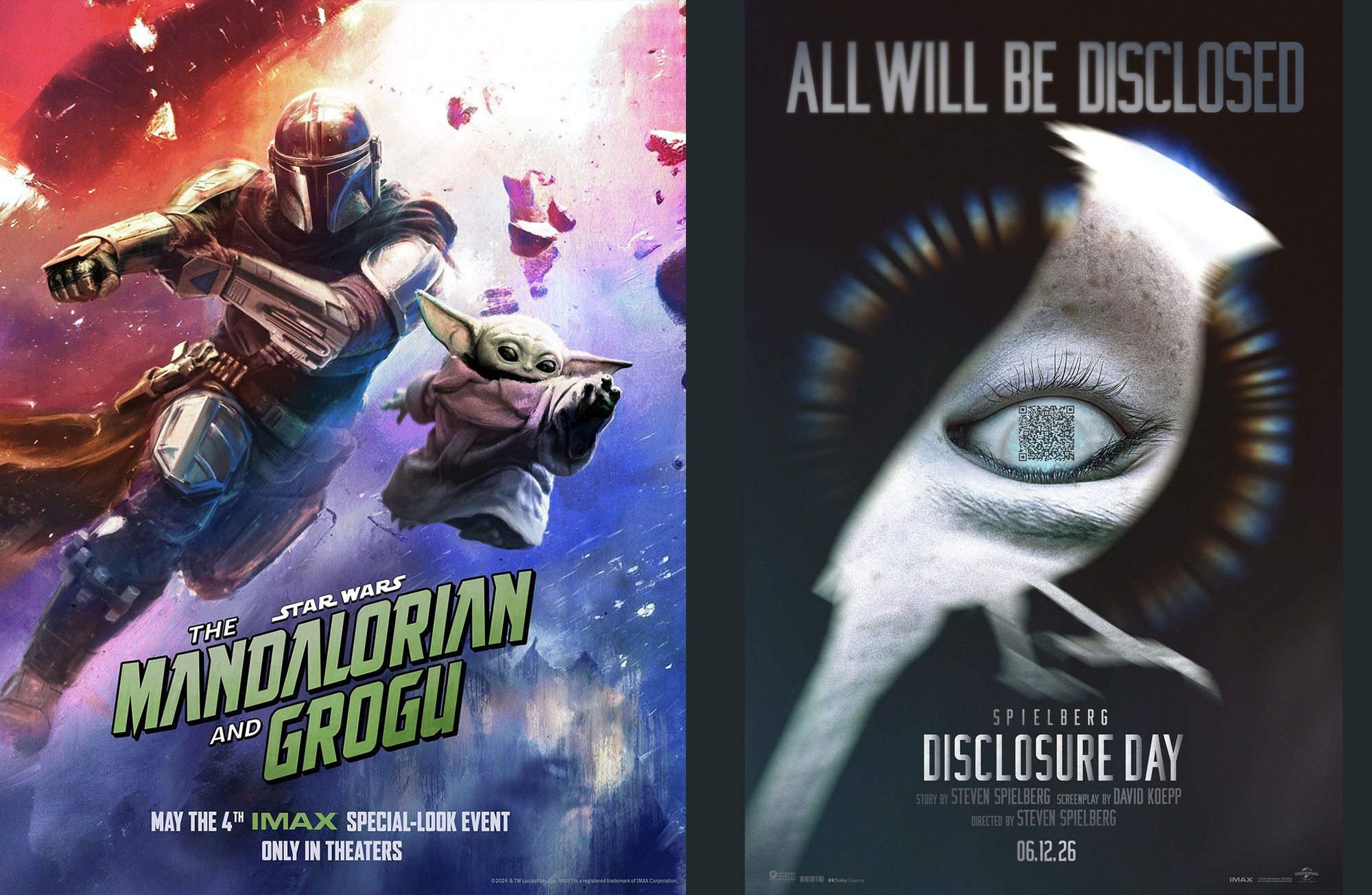
The Mandalorian and Grogu
There's always been something more than a little Japanese about Star Wars. This isn’t accidental; the Jedi robes, the magic swords, and the evil warlords — when creating the Star Wars universe in the 1970s, George Lucas drew heavily from the jidaigeki (feudal-Japanese) films of Akira Kurosawa, particularly 1958's The Hidden Fortress. In the modern Star Wars era, director Jon Favreau returned to feudal Japan for inspiration when creating The Mandalorian. Favreau's tales of the wandering bounty hunter (or rōnin) Din Djarin (Pedro Pascal) and his diminutive sidekick, ‘baby Yoda’ Grogu, borrow liberally from the cult classic Shogun Assassin, a blood-drenched 1970s rendering of the long-running Lone Wolf and Cub manga series, which relates the adventures of a disgraced samurai and his infant son.
Following three successful and well-received seasons of The Mandalorian, plans were in place for a fourth season. However, production was derailed by the 2023 Hollywood labor disputes, and Disney opted to scrap the TV show in favor of a theatrical release. Favreau and his writing partner Dave Filoni were thus tasked with condensing ten hours of TV episodes into one two-hour movie.
The Mandalorian and Grogu finds Din Djarin working exclusively for the New Republic, hunting down renegade warlords from the former Galactic Empire. Djarin’s contact, Colonel Ward (Sigourney Weaver), is hunting the powerful and elusive Commander Coin, whose location is allegedly known by the Hutt Twins, siblings of the late Jabba The Hutt. The Twins have made a deal with the Republic to reveal Coin’s location if the Republic agrees to rescue Jabba’s son, Rotta The Hutt, from captivity. Djarin reluctantly agrees to take on the contract and tracks Rotta to the planet Shakari, where the unexpectedly muscular young Hutt, far from needing rescue, has carved out a successful career as a pit fighter. Djarin soon discovers that the devious Hutt Twins have not told the whole truth; and the plot, as they say, thickens.
Given its production history, it’s not surprising that this is not, by any stretch of the imagination, classic Star Wars. Critics have given the movie a savaging that, upon reflection, it doesn’t deserve, but prospective viewers would be wise to manage their expectations. In the pre-Disney era, Star Wars films were cultural events. The long waits between installments, coupled with George Lucas’ focus on creating a mythos with the epic sweep of the Norse Sagas, gave old-school Star Wars a key element which it has lost in the modern ‘content mill’ era: grandeur.
There’s no high romance to be found here, but for those who are content to take it at face value, this is a well-made slab of pulpy comic book space fantasy, with the narrative sensibilities of an old-school spaghetti western. Yes, it does feel like two episodes of the TV show patchworked together from a larger story, and the celebrity cameos (including the legendary Martin Scorsese) feel rather spurious, but this is still a fun couple of hours with Jon Favreau's Lone Wolf and Cub.
And, mercifully, nobody even mentions the name ‘Skywalker’!
Disclosure Day
If there's one word which can be applied to every film made by Steven Spielberg, it's earnest. Regardless of his subject matter — which has ranged over the last six decades from political thrillers, to historical drama, to shark movies, to futuristic detective fiction — Spielberg has never failed to deliver a movie made with anything less than absolute conviction. That, coupled with his gift for storytelling, makes Spielberg a rare example in today’s cynical, corporate cinematic landscape. He is an optimistic auteur who really means what he's doing.
Spielberg's latest outing, Disclosure Day, sees him returning to a subject which he first tackled almost half a century ago in Close Encounters of the Third Kind: aliens! From the first frame of the movie, Spielberg asks us to suspend our disbelief to heights only he could get away with: In 1947, a ‘flying saucer’ crashed at Area 51 in the Nevada desert, containing intelligent, humanoid alien life-forms — the stereotypical ‘grays’ which have become the standard image of space aliens in popular culture since the 1950s. Crop circles are real, UFOs are real, and the U.S. government has been engaged in a cover-up at the highest level for the last 79 years.
In present-day Kansas City, a small red bird flies through the kitchen window of weather presenter Margaret Fairchild (Emily Blunt), and its presence unlocks psychic abilities she never knew she had. She finds herself speaking in Russian and Korean, with no memory of learning either, which scares the hell out of her boyfriend, Jackson (Wyatt Russell). She is also able to discern intimate details of other people’s lives from a single glance into their eyes. Meanwhile, brilliant young mathematician and cybersecurity expert Daniel Kellner (Josh O'Connor) is risking his life to liberate a sackful of top-secret data drives (the bona-fide X-Files) from a shady, government-affiliated corporation, Wardex. Assisted by an army of ‘men in black’, rage-driven Wardex supremo Noah Scanlon (Colin Firth) sets out to chase down Kellner and stop his intended ‘Disclosure Day’ from happening, as Kellner and Fairchild find themselves inexorably drawn together by forces neither of them understand.
It’s inevitable that most commentators have latched onto Close Encounters as a point of reference for this picture, and it’s true that the movies share a lot of connective tissue — Spielberg’s longtime collaborator John Williams provides one of his sweeping symphonic scores, and Emily Blunt’s Margaret fits cleanly into the narrative space inhabited in Close Encounters by Richard Dreyfus’ Roy Neary. But first contact is not the subject here; that's nearly eight decades in the past. If anything, the movie’s overarching theme is one Spielberg is no stranger to: the consequence of losing a sense of wonder. It’s a paean to empathy and human connection in an age which denounces both as infantile and worthless.
Disclosure Day is ridiculously entertaining, despite its dense script. Spielberg keeps the film rocketing forward, while at the same time evoking stunningly human performances from his leads. It’s a masterpiece of pacing and storytelling, executed with the deftness of a truly great director still at the peak of his powers. Whether or not this is Spielberg’s last word on alien contact remains to be seen, but as a late-career return to an earlier theme, this movie serves as an excellent full-stop.
Recently arrived in the Tri-Cities from Scotland, Damian Beagan is a former freelancer who wrote film and music reviews for a variety of UK websites.
