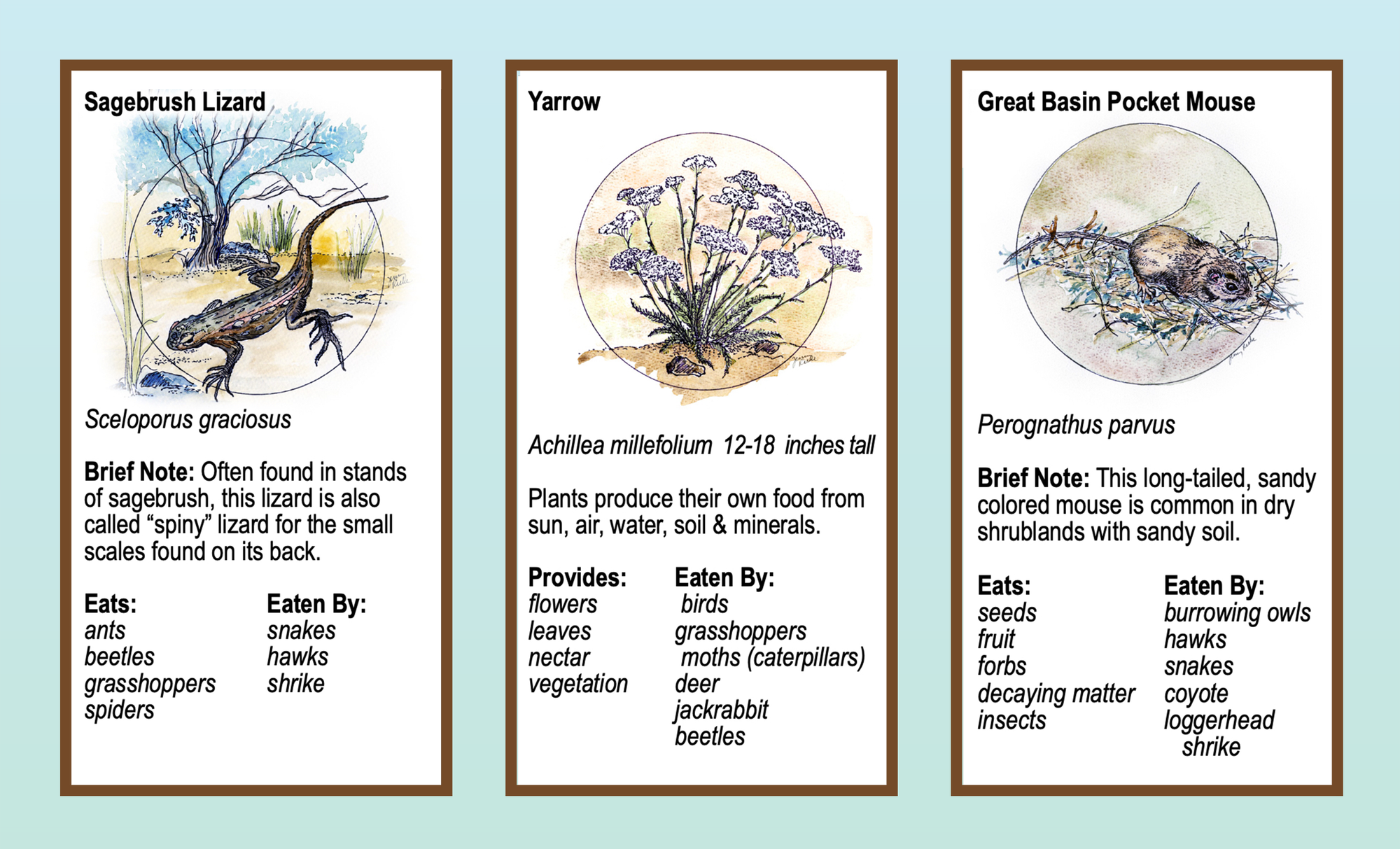
Illustrations by Jenny Rieke.
This month, we have a few submissions from some of our local Environmental Coalition members, as well as an interview with Ernie Crediford:
 Jenny Rieke (she/her)
You can see additional entries from the Coalition in our 'Best of 2025' roundup.
Jane Goodall was right.
Make an impact locally. Serve! Reclaim your hope.
Mike Lilga, President of Tapteal Greenway
I come from the generation that spawned “Think globally, act locally.” It’s a phrase that inspired many, like me, to take up environmental causes. But, with time, it’s apparent Jane Goodall had it right — the phrase is backward. She would say, “Act locally, then you dare think globally.”
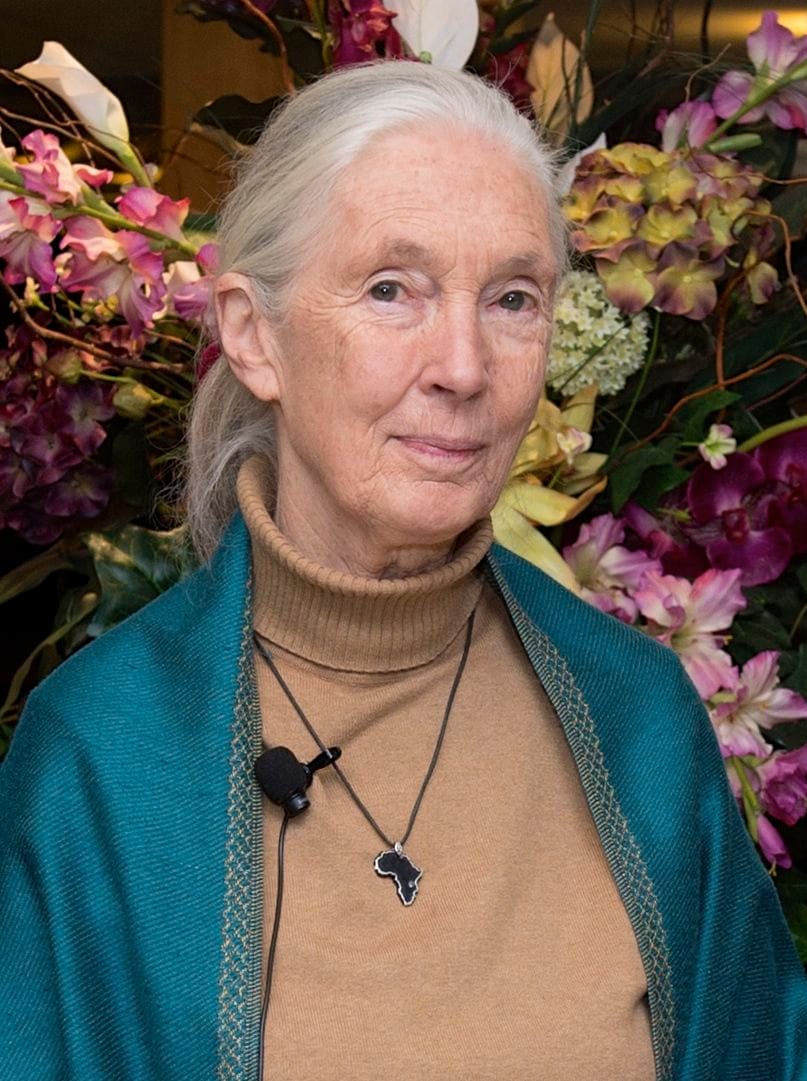
In today’s screwed up world, thinking globally too much can be a recipe for hopelessness, inaction, and apathy. Of all she is known for, I think that most importantly, Goodall was an ambassador for hope.
“If you care, you cannot give up. Hope is not passive – it’s about action.” She would tell us being of service to your local community, helping out, making even a small improvement is the path to hope and change. Many people with hope, each making the contribution they can, adds up to a better world.
It’s easy to get lost in the news or social media. I encourage you to reclaim your mind and heart by getting outside. Take a walk through Amon Basin Natural Preserve and take in the beauty of the blooming Rabbitbrush. Stop to look at the bees in the blooms. Observe. Wonder. Heal. Hope.
Excerpt from
The Teachers Lurking in Your Garden: Hungry Rabbits and Ancient Insects
Margaret Roach
I didn’t know a katydid from a cricket or grasshopper, or that what I’d called a Daddy Longlegs since childhood was not a spider. (A telltale difference: A true spider’s body is composed of two segments, the head and abdomen; Daddy Longlegs/Harvestmen have just one.)
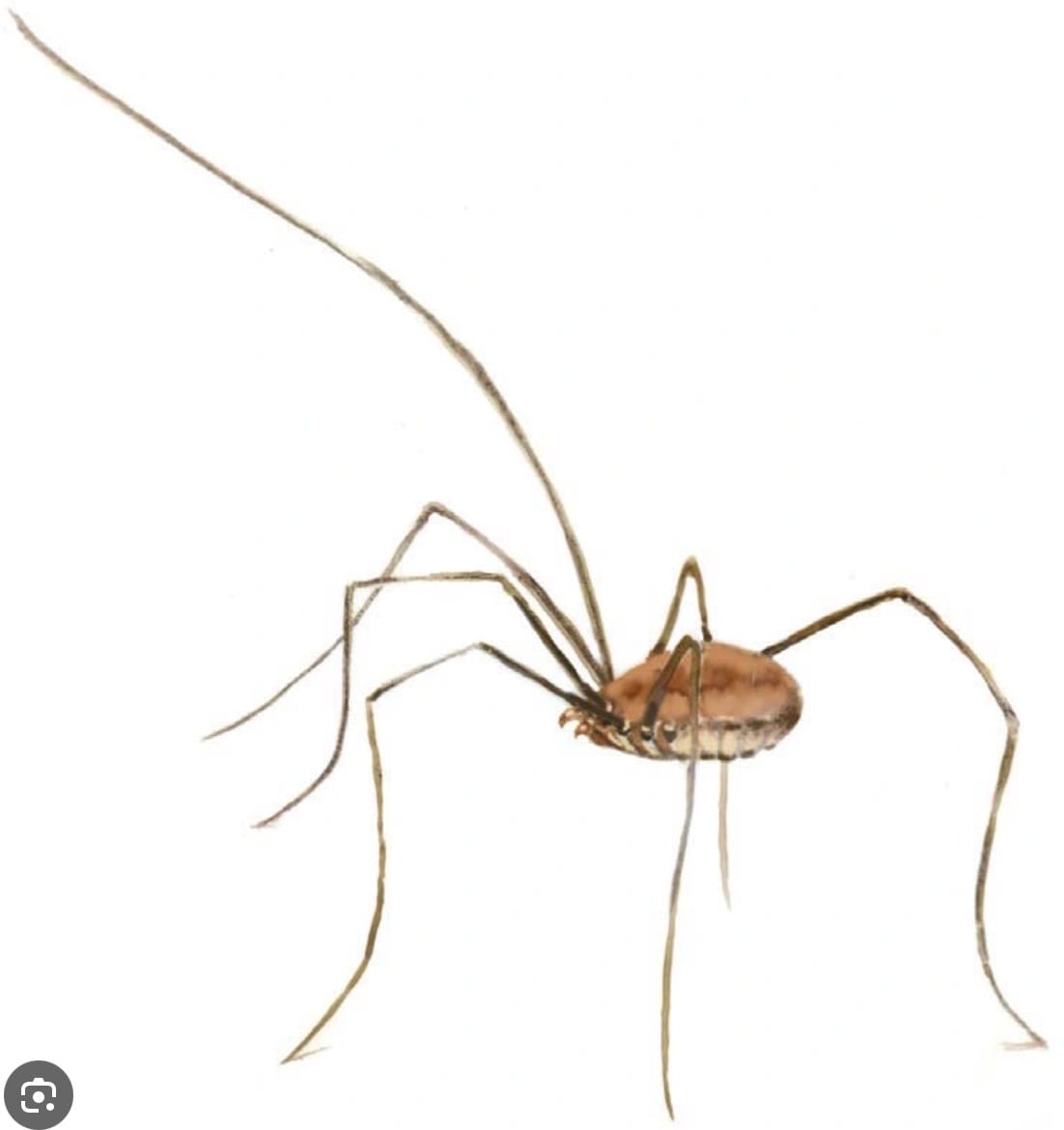
I certainly hadn’t yet grasped how little I knew about so many words I thought I could define, like migration, hibernation or metamorphosis — that they were not some one-size-fits-all terms, but had various shades of expression. I was ignorant of science’s own elegantly precise vocabulary, with entries like marcescence (when dead leaves of certain oaks or beeches, for example, hang on all winter) or stabilimenta (decorative zigzags of silk that females of some orb-weaver spider species incorporate into their webs — and who knows with certainty why?). The locomotion the yellow garden spider musters to create such embellishments is not something I will ever forget witnessing. Those mistaken-for-spiders Harvestmen (Daddy Longlegs) lack a silk gland, so they don’t spin webs.
The garden… offers not just botany classes but ones on entomology, ornithology, evolution, geology, and more to any pupil possessing curiosity, and the willingness to slow down and crawl around… Gardening feels like an art of attention, a form of cultivated awareness, like meditation. What discoveries await when I go cut the basil later for a batch of pesto, I wonder, or when it’s time to trim around the steppingstones of the back yard path? The chore list is endless, but so are the other possibilities — these bits of almost sacred-feeling science on offer to those who dig and rake and weed.
The garden is the best science teacher I’ve ever had, and it has also taught me the soul-sustaining skill of cultivating wonder, not just plants. It is a nonstop showcase evoking what the naturalist John Muir wrote in 1911: “When we try to pick out anything by itself, we find it hitched to everything else in the universe.”

Who are we? Sustainable Tri-Cities (STC) is a local volunteer-run organization with the goal to help people learn and act for a sustainable future. We have a directory on our website to find out who is working on local sustainability (environmental, economic, and social), and ways for you to help. We also have a list of events to provide you with current opportunities to learn about, enjoy, and protect our community, with a focus on the environment.

See the Solar Arches!
Pauline Schafer, Education Manager at the REACH Museum
If you spend any time on the river trail through Richland or Columbia Park in Kennewick, you have likely noticed the stone markers with a small version of the REACH Museum's Solar Arches on them. In a clever mash-up of art and science, these mark the distance of the planet's orbits in the Hanford Reach Solar System Model. Picture the sun beneath the Solar Arches just outside the museum, 40 feet in diameter. At that scale, Earth would fit in your hand and be located a 20-minute walk away, just past the Richland Wye Park. On your way there, you'd also pass Mercury and Venus, of course. Keep going on that trail and you'll find Mars, the dwarf planet Ceres, and Jupiter. Saturn greets you at the end of the trail next to the USS Triton Submarine Sail. Along the Yakima River, you can find Uranus in Benton City and Neptune in Prosser. A similar progression is in the works east of the museum, along the river shore through Columbia Park.

When you stand beneath the arches at noon on the Summer Solstice, the shadow of the lower arch aligns with the base in perfect symmetry. You are welcome to visit the Arches on the Winter Solstice to mark the furthest reach of its shadow. With sculptures designed by students and the process guided by science educators, this model stretches the mind to a greater awareness of the vast distances of space and our place in the cosmos. We are part of an intricate dance with other living things on our planet and larger systems beyond it. This project reminds me of the many interconnected partnerships that create a lively ecosystem of place-based learning in our community.
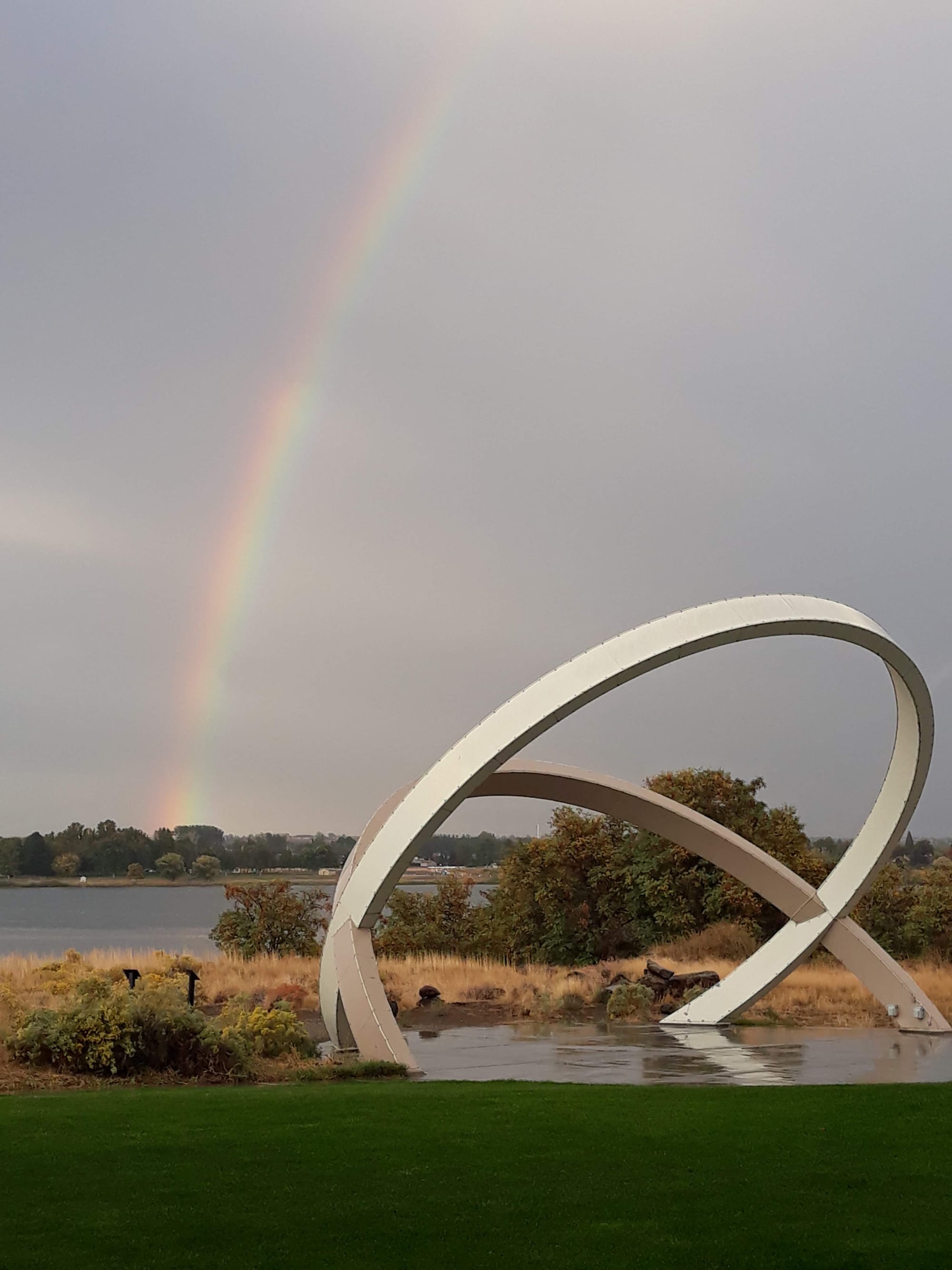
Visit SilasEducation.org to see an interactive map of the project and learn how to support its construction.
BOOTS IN THE BASIN is made possible by a coalition of local environmentally-focused organizations, including:
- Benton Conservation District
- Bike Tri-Cities
- Citizens’ Climate Lobby
- Franklin Conservation District
- Friends of Mid-Columbia River Wildlife Refuges
- The REACH Museum
- Save Our Shoreline 99301
- Sustainable Tri-Cities
- Tapteal Greenway
- WA Native Plant Society: Columbia Basin Chapter
- Lower Columbia Basin Audubon Society
