The new year lies before you, full of potential, like the clean, empty pages of a blank journal. How will you choose to spend your precious time in 2026? What will fill your journal?
As time hurtles ever forward, I plan to slow it down a bit with some nature journaling. This mindfulness practice can reconnect you with nature no matter where you are. Devoting a little bit of time on the regular to observe what’s around you and record it with writing and drawing can have a regulating effect on your sense of time. It can also lead to increased curiosity and empathy for other living things, reminding you that you are not alone.
Journaling can be magical when undertaken in a remote, scenic place. And it can be just as magical to journal in the most common, familiar location in your life. All you need is paper, favorite writing and drawing tools, a bit of regularly scheduled time, and attention.
What nature is worthy of your attention? That is completely up to you. An unfamiliar bird at the river, a weed in the lawn, a cool-looking cloud out your window. Is the blank page too intimidating? Then just start with a predictable routine, recording your metadata: date, time, location. If you’re feeling fancy, include weather conditions. A common, all-purpose nature journaling prompt can then get you started:
I notice...
I wonder...
It reminds me of...
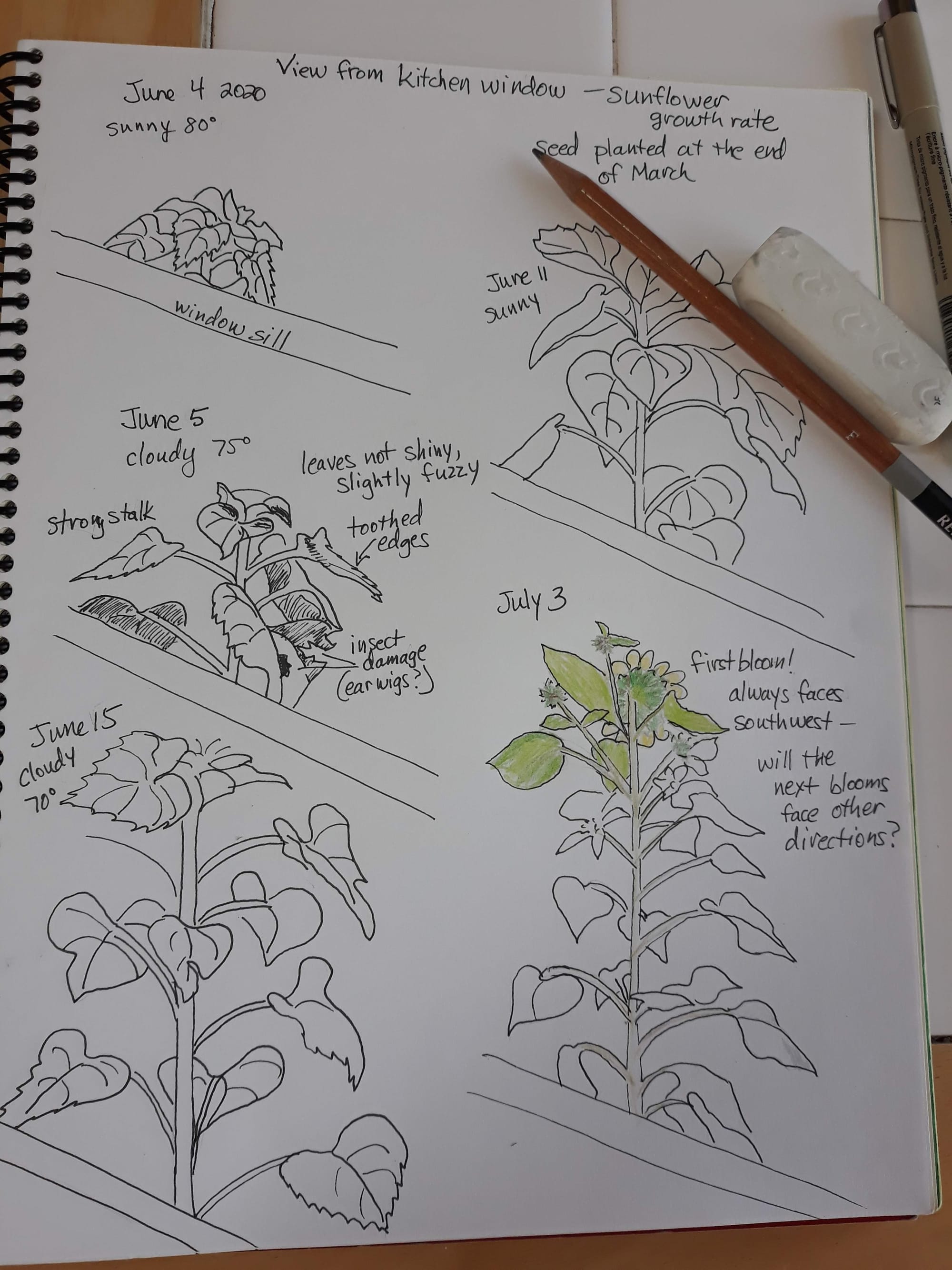
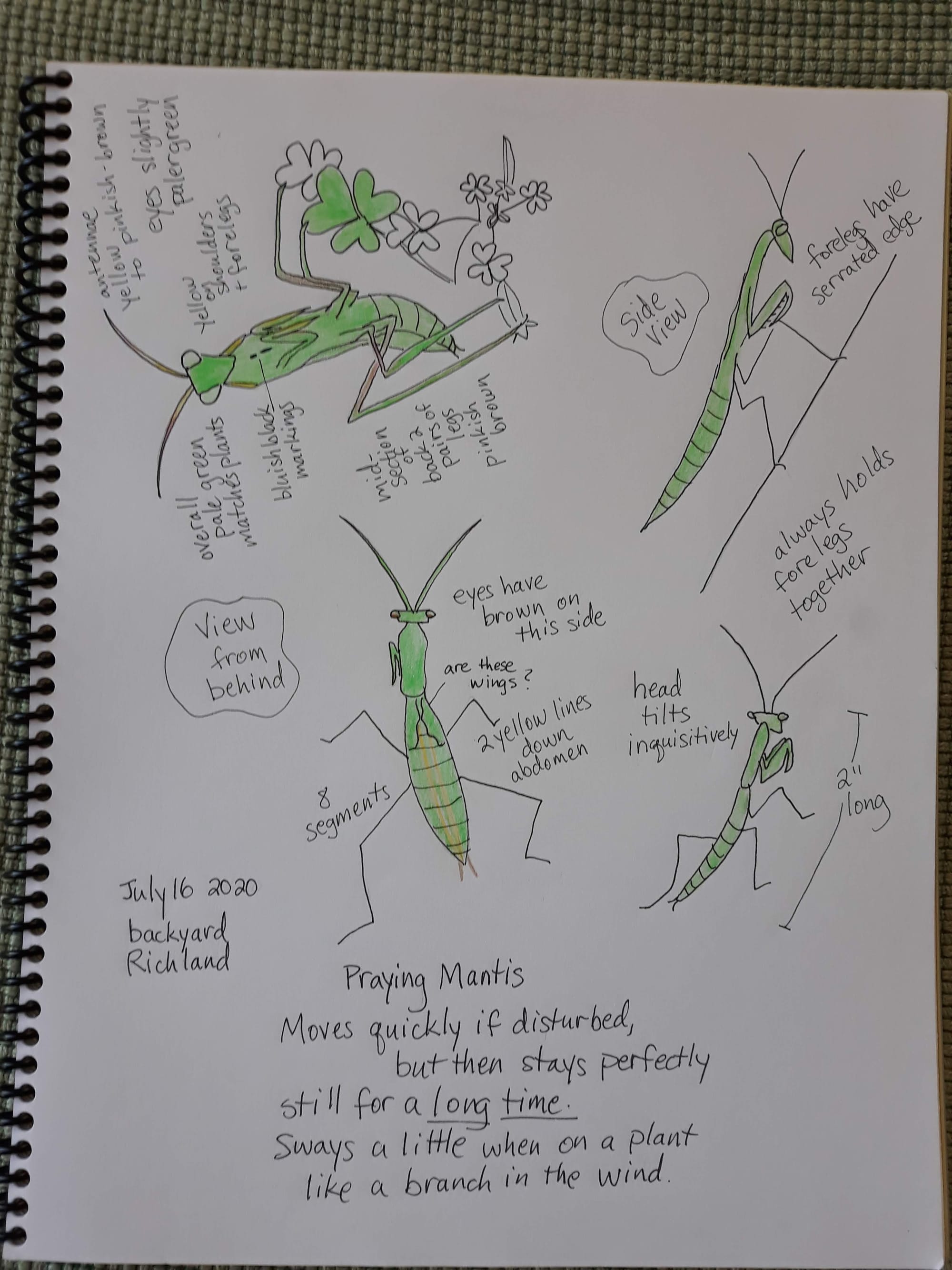
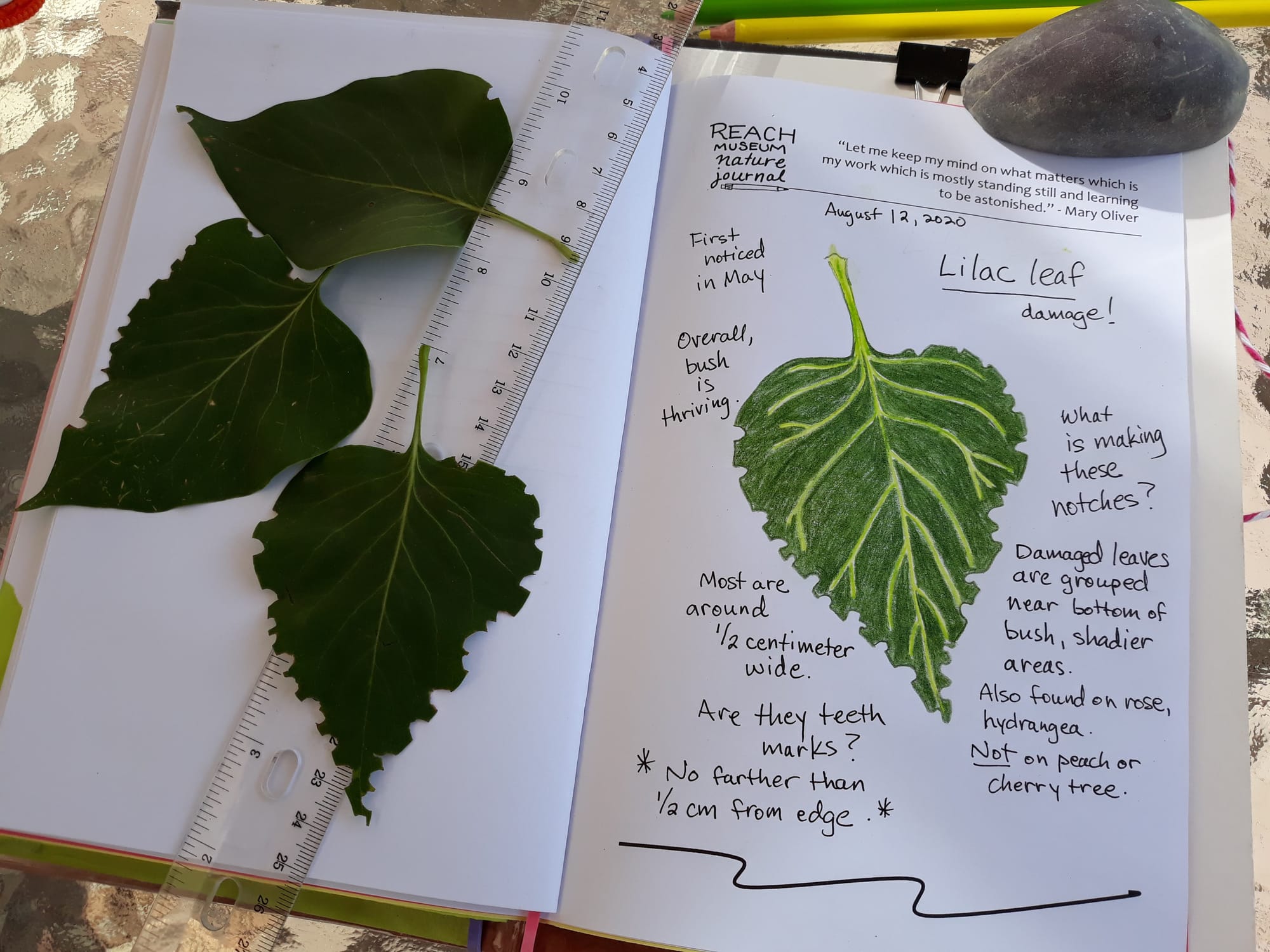
It’s good practice to use words, pictures, and numbers in your journal entry. Your noticing can include multiple senses. Your wondering can be questions scribbled in the margin. Your reminding makes connections to previous observations, creates a metaphor, or veers towards poetry. You can find an abundance of journaling prompts, instructions, and inspiration online to get you started. The prompt and ideas above are found in resources by John Muir Laws, who has created free classes and downloadable books on nature journaling. (Those can be found on his website: johnmuirlaws.com/nature-journaling-starting-growing)
I encourage you to embrace messiness and chaos in this practice. It’s more about connecting with a place and other living things than it is about creating a work of art worthy of framing. It’s a practice, not something that should be perfect. You are likely to observe moments of astounding beauty, restful quiet, and surprising insight, and you will notice things that you never knew were in your backyard. You’ll also have questions, and will maybe discover answers to these questions. But it is the work that matters, as Mary Oliver declares in her poem, ‘Messenger’:
Let me
keep my mind on what matters,
which is my work,
which is mostly standing still
and learning to be
astonished.
Pauline Schafer is the Education Manager at the REACH Museum, a Certified Interpretive Guide, and a nature nerd.
