
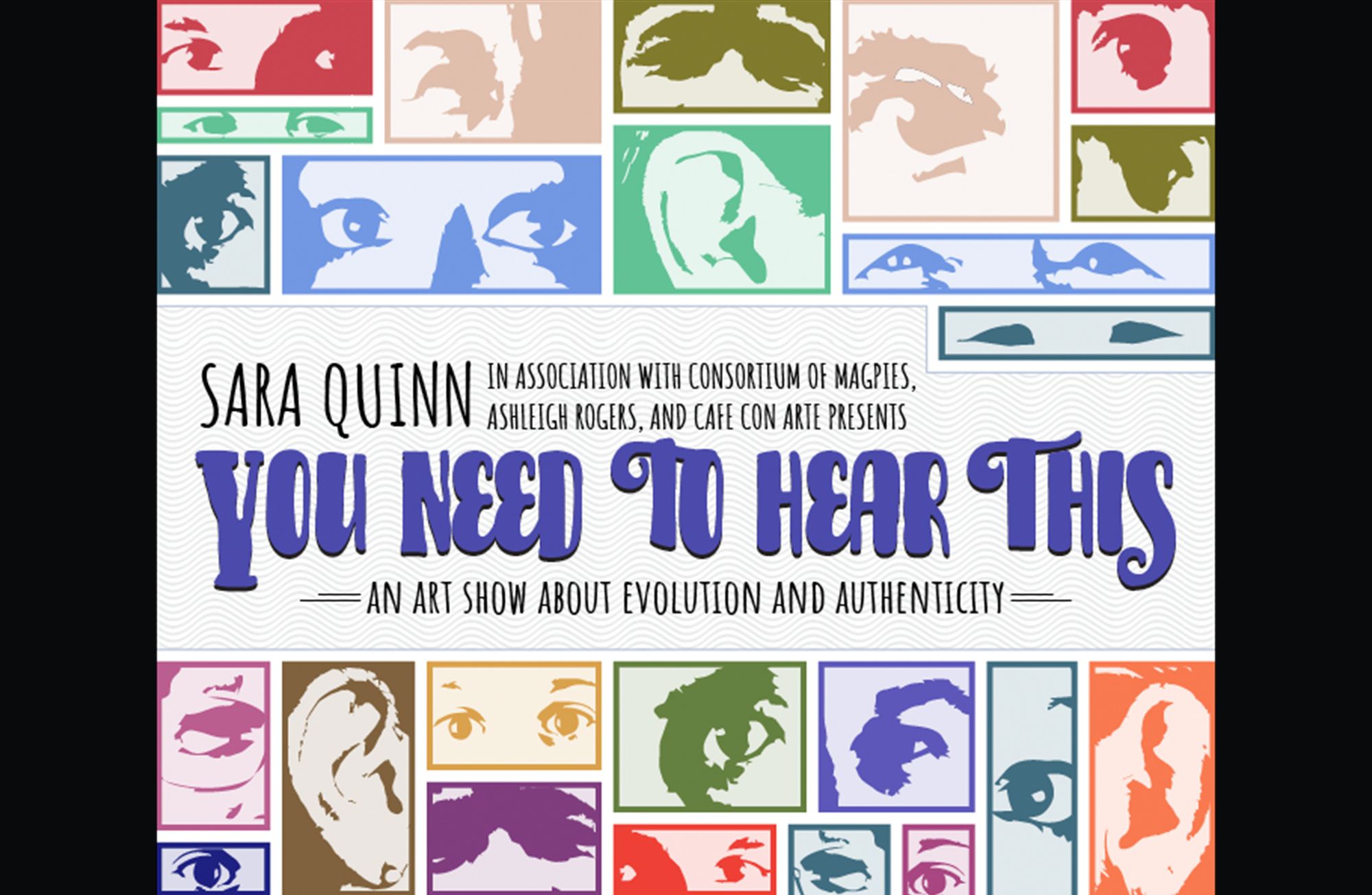
Artist Sara Quinn reflects on YOU NEED TO HEAR THIS, her upcoming exhibition and a deeply personal evolution of her 2022 show I DON’T KNOW WHO NEEDS TO HEAR THIS, a project that not only resonated with audiences, but helped inspire the formation of the Consortium of Magpies.
While the earlier show captured a raw, post-pandemic catharsis rooted in collective vulnerability, this new body of work shifts toward something more self-assured and unapologetic. Quinn describes the exhibition as expanding both in accessibility and intention, featuring work that can be seen, heard, and touched, grounded in the belief that art is for everyone. At its core, however, YOU NEED TO HEAR THIS is about self-acceptance, shaped by Quinn’s autism diagnosis and her ongoing journey toward living more truthfully and without apology.
“I’m learning not to apologize for who I am,” she shares, noting that while authenticity brings joy, it is also “messy” and sometimes uncomfortable. This tension is embedded throughout the show, which explores communication, identity, and the emotional complexity of being fully seen and heard.
Opening July 31, the reception will feature live performances, with a focus on accessibility and community engagement.
Can you tell me a little bit about your upcoming show, YOU NEED TO HEAR THIS?
YOU NEED TO HEAR THIS expands on the themes from the first show. We are still bringing accessibility to the forefront, including art that you can see, hear, and touch. Because art is for EVERYONE. But this show is a bit more focused, and more... I don't know if ‘aggressive’ is the right word, but I’ll say it’s more self-assured. I’m learning not to apologize for who I am. I've been ‘coming out’ to people about being autistic, with mixed results. You see it to some extent when people talk about coming out as queer to family members that they know will reject them. Being your truer self contains so much joy! But it’s also messy. Sometimes it’s ugly.
Was there a particular experience or moment that inspired you to expand upon I DON’T KNOW WHO NEEDS TO HEAR THIS? What has changed for you since that show?
Ooh! “What has changed?” Really great question. That’s the whole basis of the show, really. When we did I DON’T KNOW WHO NEEDS TO HEAR THIS a few years ago, I didn’t have my autism diagnosis yet. I was reaching self-acceptance, but in a lot of ways, I was still apologizing for who I am. And I’m continually working on that, actually. I haven’t ‘arrived’ or anything. I think that has to be the basis for understanding and loving yourself — for having a healthy relationship with yourself. We never stop learning.
So true! I love all of that. Does the subtle shift in the title reflect an unapologetic tone around self acceptance? What do you hope audience members will “hear” at the show?
Yes! That's exactly it! I still think it's so important for us to lean on each other (and rely on ourselves) when it comes to meeting our own needs for positive, healthy communication. But especially over the past few years, I have become increasingly frustrated with how terrible we are at listening to each other.
Actually, I'm not sure how relevant this is, but I think it might be? Haha…
My most common nightmare is that I’m trying to tell people something really important, and no one is listening. Either they don’t believe me, or they can’t seem to hear me.
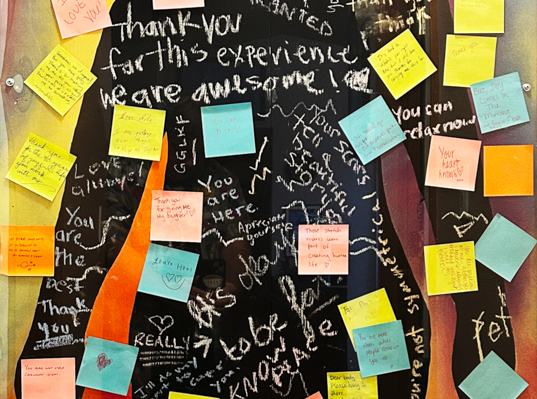
What do you need to hear? Or what do you need others to hear?
Thank you for that question!
Most of the time, it’s much easier for me to focus on what other people need than to think about what I need (I guess you could say I’m a ‘recovering people pleaser’). Then, when I finally do ask for what I need, especially as an autistic person, I am often chastised for it. Like speaking my needs clearly is inappropriate.
If I really had one wish — like, one thing I could change about how people communicate with me — it would be that everyone says what they mean. And I think that would generalize into other people knowing that I mean what I say, too. Like, for example, an allistic (non-autistic) person might ask: “Why are you doing that?” But they may not actually be asking anything at all; maybe what they really mean is: “Stop doing that!” And because my brain just takes things literally, I think that they want me to answer the question they are asking, so I will probably try to explain why I’m doing the thing that they just want me to STOP DOING. Things like this happen to me all the time, and it’s so confusing when people get angry when I literally just answer their question to the best of my ability.
And like I alluded to, the opposite thing happens almost every day, too. I say the thing I mean, but the person listening to me thinks I mean something else for some reason. And I know they're not ‘wrong’; allistic/neurotypical people seem to know the secret code when someone says one thing but means another. But when I say, “What are you doing?”, it doesn't make sense to me why the person would think I’m criticizing them, or asking them to stop doing it. It would be so great if they would just answer me, because I wouldn’t ask if I wasn’t genuinely interested in knowing what they're doing!
Does YOU NEED TO HEAR THIS speak to how you felt coming out about being autistic?
Yes, among other things. I think I have also done a lot of work around being less apologetic in general. I definitely tend toward the fawning response when it comes to ‘fight, flight, freeze, or fawn’, and it's something that has caused a lot of self-contempt.
At best, I would make fun of myself for being a teacher’s pet or a people pleaser; but behind even lighthearted mentions of any of that, I had a huge well of self-hatred. Looking at that kind of behavior through a more compassionate lens, I can see how the ‘fawn’ response, just like the other ones, is a survival mechanism. I would never shit on anyone else for freezing in fear when they felt unsafe, so why should I shit on myself for my own trauma responses?
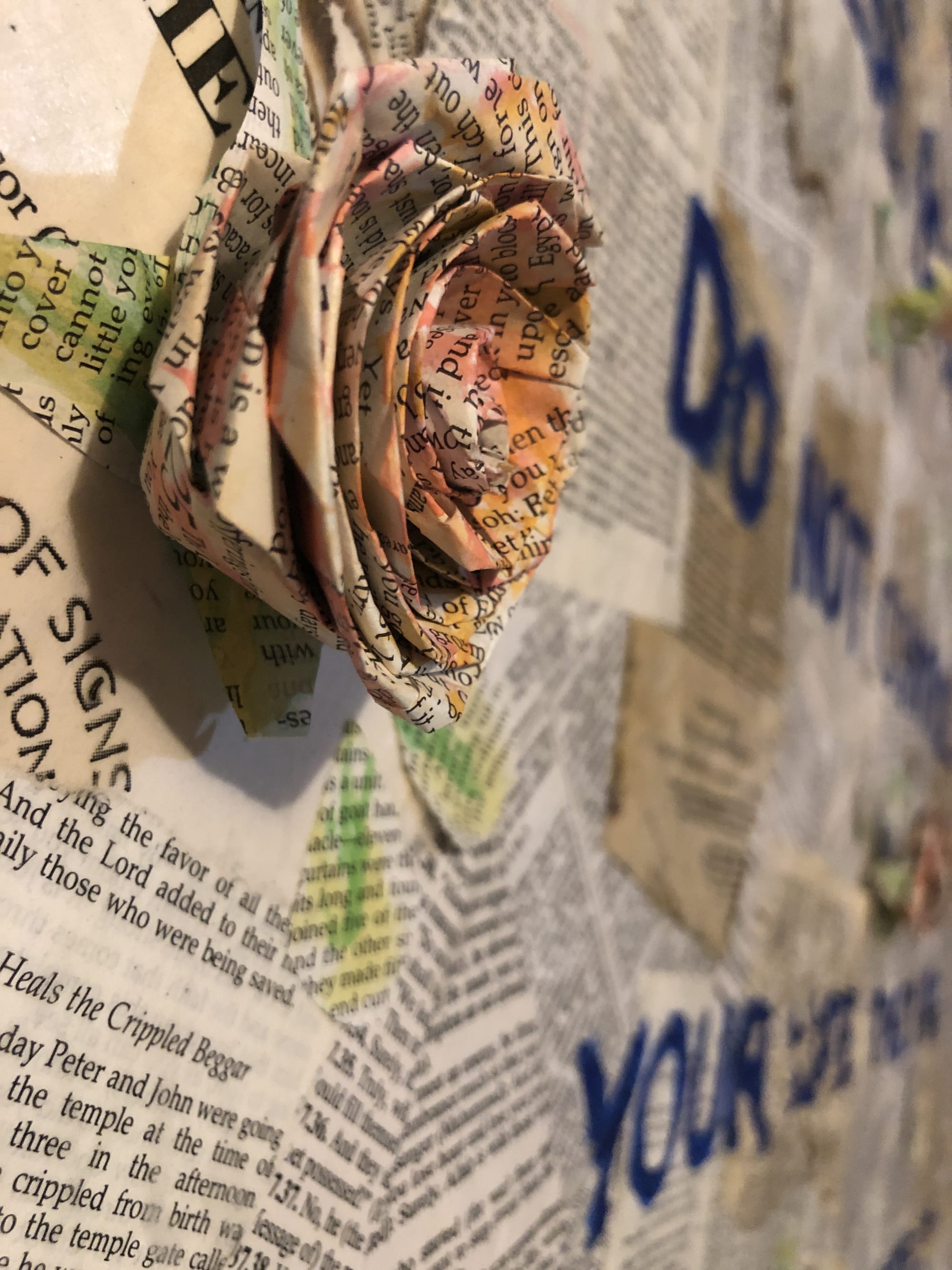
Anyway, I guess what I’m getting at is that a lot of this is about my continuing journey to accept myself. You can see some of those themes in the ‘Bad Words’ installation. One of my stories is about accepting my disabilities. I was one of those people who would never dream of talking down to anyone else about a disability, but I realized I was kind of doing that to myself. Like... every time I got mad at myself for not saying things ‘right’ or forgetting something, I was being a dick to a disabled person for being disabled.
What has art meant to you on your own journey of being truer to yourself?
I kind of touched on some of that already, but I also want to add that even though, like I said, being truer to myself has sometimes been messy and ugly, I think it has been a net positive in my life, and not just because it’s SO EXHAUSTING to try to pretend to be ‘normal’ (or at least ‘acceptably neurotypical’) around other people.
Before, even when I was trying my very, very best to mask (meaning to act like I wasn’t autistic), most people could smell something ‘off’ about me. And because I was trying so hard to act normal, it wasn’t at all clear what it was about me that was coming off a little weird, or maybe phoney. Because, really, I WAS being phoney! I wasn’t trying to be, but I was also trying to hide my weirdness, so I wasn’t really being myself.
It put a wall up between me and other people, even though that wasn’t my intention.
Now that I’m not doing that, I can have more honest relationships. And it’s also made it really clear that I can’t be friends with everyone.
There is an inherent violence in suppressing my true nature, because in the act of doing that, I am reinforcing the narrative that the way I am as a person is not acceptable, and in order to be ‘acceptable’ I have to chain that person up and play like a puppet show in front of people… it’s just so sick.
Maybe that sounds too dramatic, but I promise that, if anything, I am underplaying the experience. I think that’s why I would come home from family gatherings and sleep for a day and a half. It took everything out of me.
What can people expect who attend the opening reception? And why is it important to show up to events like this?
July 31st is the actual reception. At the reception, there will be some performances from local artists. To aid with our quest for increased accessibility, we're trying to secure a volunteer to do some ASL translation, also. I know I’ll be saying something, too… I’m still figuring out what, exactly.
Even though the show will be up for the month of August, the reception on July 31st is the best opportunity to interact with the artists. And even if you don’t buy any of the art, just you BEING there is a hugely important way to support local artists!
Plus, some of the performance art pieces will only be happening on that day, so don’t miss it!
Can you share a bit about Consortium of Magpies and their involvement in this show? How can the community get more involved in future shows?
YOU NEED TO HEAR THIS will be Consortium of Magpies’ second show. It's a new-ish art consortium in the Tri-Cities, and they’re a 501(c)(3) nonprofit. You can learn more about them on their website (https://www.consortiumofmagpies.org), and follow them on social media for more info, but they are already doing some cool things in the community, like keeping an artist directory and building an archive of local art shows. And they have been doing #FreeArtFriday for a while now, which is really fun and cool!
To get involved in future shows, you should follow them, and also check out the calls for art we publish in TUMBLEWEIRD! Also, there is always info on local art happenings if you search ‘Art’ on tumbleweird.org (https://tumbleweird.org/topic/art).
Mainly, I just want to encourage people to SHOW UP! It might be nothing to you, but to artists, having people show up to see what you've poured your heart and soul into means EVERYTHING.
YOU NEED TO HEAR THIS
https://consortiumofmagpies.org/shows/2026/you-need-to-hear-this.html
fb.com/events/s/you-need-to-hear-this/1290938289914381
Reception at Cafe Con Arte on July 31, 2026
Consortium of Magpies is a Washington-based 501(c)(3) that exists to serve the artists of Southeastern Washington. They manage and curate gallery shows, produce regular design and visual arts publications, and develop training workshops for emerging practitioners. If you'd like to learn more, go to consortiumofmagpies.org.
Sara Quinn is the Editor-in-Chief at Tumbleweird and serves on the board of Tri-City Area Gaming. She lives with her amazing spouse (Brendan), and her doggos (Jewel and Ruby). Sara makes art, writes stuff, reads A TON, plays a lot of games (board, video, and TTRPG), and makes crossword puzzles.
Sara is a queer, disabled, autistic demigirl. She has a dual degree in psychology and sociology, which she mainly uses to fuel her special interest in human interaction (and to pick her Survivor league lineup). She longs for the day when she will finally learn to relax. ¡Ojalá!
Ashleigh Rogers is an artist, art instructor, and facilitator in Tri-Cities, Washington. Her work explores the themes of connection and intergenerational stories through experimentation in painting, photography, installation, and sculpture. Ashleigh is passionately dedicated to facilitating accessible arts programming in her community.
www.ashleighrogersart.com, fb.com/AshleighRogersArt, ashleigh.a.rogers
