
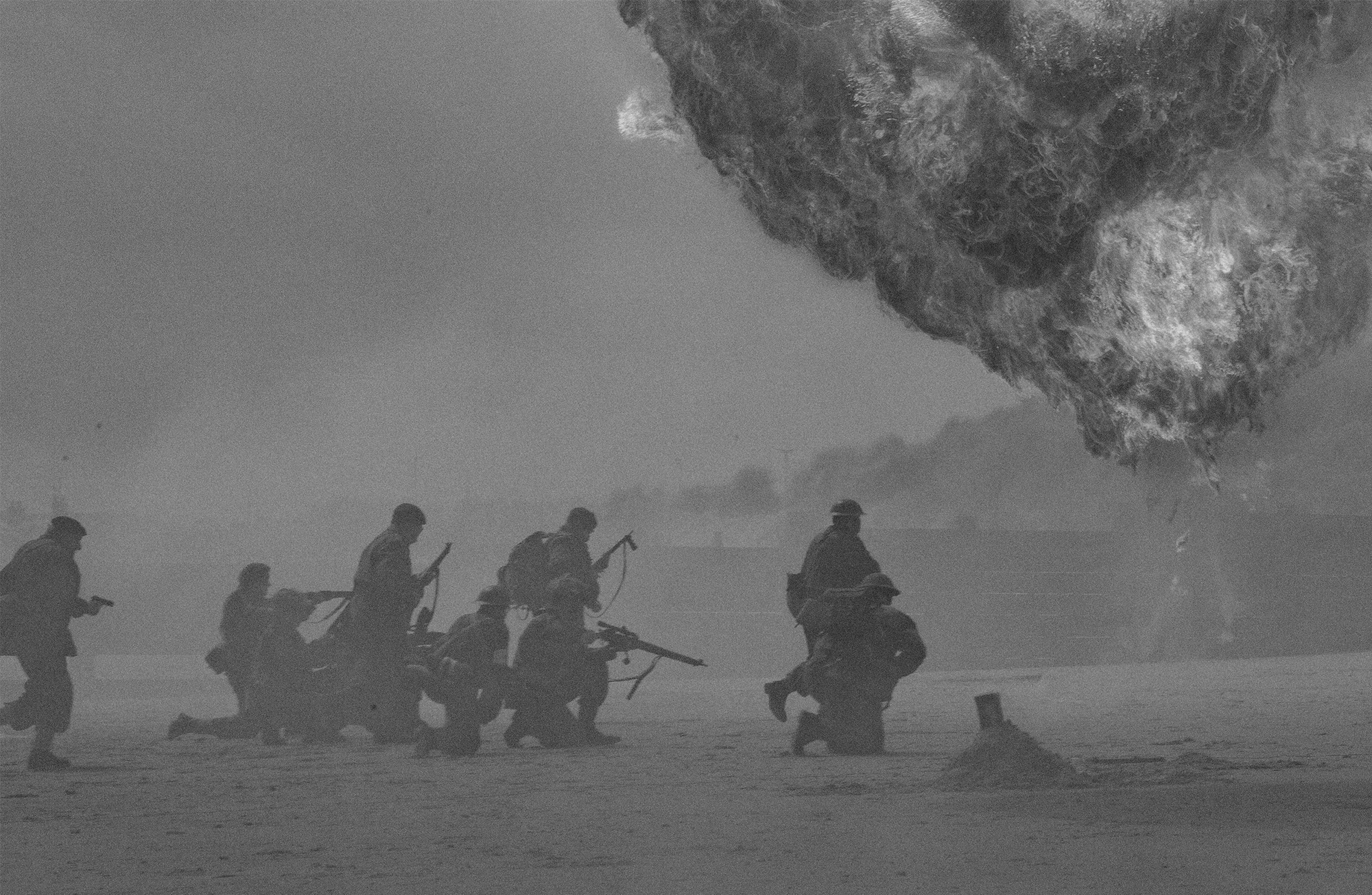
Photo by Duncan Kidd
“Every gun that is made, every warship launched, every rocket fired signifies, in the final sense, a theft from those who hunger and are not fed, those who are cold and are not clothed.” — Dwight D. Eisenhower, April 16, 1953
I’ve been thinking a lot about war and my 34-year military career.
When the Trump administration began blowing up small boats in the Caribbean Sea and the East Pacific last September, I tried putting myself in the position of the military commanders charged with carrying out those strikes. The government claimed, without evidence, that the boats were operated by narco-terrorists who pose an imminent threat to the United States. But those boats were far from the United States. The U.S. has been intercepting drug-running boats for decades, and the operators have been apprehended and charged under the law. We don’t have to blow them out of the water to stop the flow of drugs. The unilateral destruction of those boats and the killing of all on board bypassed any opportunity for due process, and is a violation of international law.
Shortly after the strikes began, Admiral Alvin Holsey, the head of the U.S. Southern Command responsible for the operation, resigned his position after reported disagreements with the administration. No official reason was given, but bombing small boats that aren’t an imminent threat would have been reason enough.
Would I have done the same as Admiral Holsey?
On February 28, 2026, the United States and Israel launched a significant military attack on Iran. Congress was not briefed. Allies were not informed. No case to justify going to war was given to the American people beyond conflicting justifications that are demonstrably false.
After just three weeks, the region is in chaos, the global economy is reeling, and thousands have been killed, including more than a dozen U.S. servicemembers. Millions of people in multiple countries across the Middle East have been displaced. Oil and natural gas infrastructure has been destroyed, and the Strait of Hormuz is closed. Tehran, home to millions of people, is under a dense cloud of toxic oil and smoke. U.S. military weapons are being depleted. Billions of taxpayer dollars have already been spent. The reasons and objectives for this war have been inconsistent and erratic. An end to the war is uncertain and recovery will take years.
It seems like we always have enough money to fight a war, but never enough money to fight poverty, hunger, and sickness.
In the first wave of the Iran War, a U.S. tomahawk cruise missile, followed immediately by two additional missiles, destroyed the Shajareh Tayyebeh girls' elementary school in Minab, Iran, killing at least 175 people, most of them 7- to 12-year-old girls. I stared at the widely circulated images of bodies buried under the rubble of the school and long rows of freshly dug children’s graves in disbelief. My heart sank in despair. How could we have murdered so many innocent children?
The ships I served on carried tomahawk missiles. How would I feel if I had given the order to launch that attack?
On March 4, 2026, a U.S. submarine launched two MK 48 torpedoes and sank the Iranian warship IRIS Dena in international waters off the coast of Sri Lanka while it was returning home following an international naval exercise hosted by India. There were three Australian sailors aboard the Dena. Of the 180 on board, only 32 were rescued by the Sri Lankan navy.
The submarines I served on carried MK 48 torpedoes. How would I have felt sinking a warship that was unarmed, including sailors from an allied nation that was not engaged in military action?
Many submarine veterans cheered this unprovoked torpedo attack by one of our submarines, as if those lives were no more valuable than characters in a video game. Pete Hegseth gloated that the ship “thought it was safe in international waters” and suffered a “quiet death.” The self-described Secretary of War says we won’t be following any “stupid rules of engagement.”
But not every veteran thinks this is a cause for celebration. A friend and fellow submarine veteran asked how this could be called anything other than murder. Like me, he is deeply disturbed with yet another war spiraling out of control. He and I are not alone in this. Thousands of veterans across the country are opposed to this war. Groups like Veterans for Peace and About Face are lobbying to change our “war first” policy.
So, obviously, I’ve been thinking about my military service a lot lately. This is not the way I was taught military force should be used. If we ignore long established rules of engagement, we are no better than the enemy whose tactics we call terrorism. Starting wars and killing civilians instead of using military strength as a deterrent, and leaving diplomacy behind almost entirely, feels like a betrayal of the ideals of global peace I believed was possible when I served.
I grew up in a military family during the Vietnam War, and entered the U.S. Naval Academy less than two months after that war ended with the fall of Saigon. As a young naval officer, I thought we had learned the lessons from the mistakes we made in Vietnam.
The U.S. spent over one trillion dollars (adjusted for inflation) on a twenty-year war that killed 58,220 U.S. service members, wounded an additional 300,000, and killed over a million Vietnamese civilians and soldiers. And we failed to achieve any of our stated objectives for entering the war. As the Pentagon Papers showed, Congress and the American people were lied to by the Johnson administration to justify the escalation of a war that was already failing.
Robert McNamara, the Secretary of Defense at the time, acknowledged in his 1995 book In Retrospect: The Tragedy and Lessons of Vietnam that “We were wrong, terribly wrong. We owe it to future generations to explain why.”
So as I began my military career, I believed that a strong military would act as a deterrent that could also promote peace. I thought, as I wrote in ‘Mutually assured destruction’ (Tumbleweird, October 2021), that my service was helping to prevent war. The fall of the Soviet Union and the end of the Cold War seemed to validate that belief.
When Iraq invaded Kuwait in 1990, the United Nations Security Council, at the request of Saudi Arabia, authorized the use of military force if Saddam Hussein did not withdraw his troops from Kuwait. When Iraq failed to comply, the U.S. military led a massive air strike as part of an international coalition. I remember watching the bombing on CNN and thinking that the military action was justified.
After just 42 days, George H.W. Bush declared a ceasefire, and Operation Desert Storm was considered a success. We were the good guys. Working with our allies, we had used military strength to defend another nation from an illegal invasion. We had restored international order.
But there was no lasting peace. Violence in the region continued with no end in sight.
Then, on September 11, 2001, nineteen al Qaeda terrorists hijacked four commercial airplanes and flew them into The Pentagon and the twin towers of the World Trade Center, with the fourth plane crashing in Pennsylvania after passengers took control from the hijackers. It was the only attack on U.S. soil since Pearl Harbor in 1941.
The next day, President George W. Bush announced that we were at war. A week later, he declared that we were, in fact, in a War on Terror, saying, “Our war on terror begins with al Qaeda, but it does not end there. It will not end until every terrorist group of global reach has been found, stopped, and defeated.”
And so began America's longest war to date — the War in Afghanistan. The stated objective was to destroy al Qaeda and defeat the Taliban. After twenty years, the U.S. had spent $2.3 trillion, 2,461 U.S. servicemembers had died, and 176,000 Afghani civilians had been killed. Eleven days after the last U.S. troops were evacuated, the Taliban regained power.
Echoing the lies told to Congress during the Vietnam War, the U.S. invaded Iraq in 2003 with false claims of Weapons of Mass Destruction. Although Saddam Hussein was defeated, the Iraq War further destabilized the region and led to the rise of the ISIS terrorist group. The Iraq War cost $2 trillion, 4431 military deaths, and 300,000 civilian lives.
And now we are at war with Iran.
For what?
Will this war bring peace to the Middle East? To the world? How many trillions of dollars must we spend on the military to bring the ‘peace’ we have shown again and again that we are incapable of achieving through military action? How many civilians must we kill? How many soldiers and sailors must die?
Donald Trump and Pete Hegseth are openly considering “boots on the ground” in Iran. That can only mean more soldiers and marines will die. Mothers and fathers are worried their sons will be forced to serve in a war none of us wanted, but the administration refuses to rule out a return of the draft. My grandson just turned 18. Will he be sent to die in a war I oppose?
I remember how the Vietnam War tore this country apart. I remember young men being sent to die. I remember registering for the draft and wondering if my number would come up before I got an appointment to the Naval Academy.
I joined the military to prevent war, not to start one. Another forever war is a betrayal of my entire military service.
The war apologists claim America has the moral high ground, but they fail to look in the mirror and see themselves as no different than the targets of our violence. Either every human life has equal value, or we are all expendable tokens in a game of winner-takes-all. Dividing the world into ‘us’ and ‘them’ to justify violence and destruction, to justify war, only leads to more violence, more destruction, and the loss of our humanity.
War and violence will only lead to more war and violence. This reckless and arrogant war will cause untold death and destruction.
Imagine if the trillions of dollars we spend on war were instead used to heal the sick, feed the hungry, and eliminate poverty. Imagine how many innocent lives we could spare. Imagine if the strength of the United States was used to lift up human beings and bring us together, provide hope, and lessen the desperation and hate that leads to violence in a misguided attempt to overcome oppression.
War can never bring peace. War is a betrayal of all humanity.
Ted Miller grew up around the world but now lives in Richland with his wife. He’s a runner, actor, singer, nuclear engineer, and graduate of the U.S. Naval Academy.
Ted believes that if more people worked toward love and understanding instead of giving in to fear and divisiveness, the world would be a better place.
justicepeacelove.comjusticepeacelove.substack.com
References:
- aclu.org/news/national-security/trumps-boat-strikes-are-illegal-the-public-needs-answers
- pbs.org/newshour/politics/fact-checking-statements-made-by-trump-to-justify-u-s-strikes-on-iran
- wikipedia.org/wiki/2026_Minab_school_attack
- wikipedia.org/wiki/Sinking_of_IRIS_Dena
- veteransforpeace.org
- aboutfaceveterans.org
- warcosts.org/conflicts/vietnam-war
- nytimes.com/1996/06/23/weekinreview/25-years-later-lessons-from-the-pentagon-papers.html
- archive.org/details/inretrospecttra00mcna
- tumbleweird.org/mas
- history.com/articles/persian-gulf-war
- history.com/articles/war-on-terror-timeline
- warcosts.org/conflicts/afghanistan
- sipri.org/commentary/essay/2023/twenty-years-ago-iraq-ignoring-expert-weapons-inspectors-proved-be-fatal-mistake
- warcosts.org/conflicts/iraq-war
- military.com/daily-news/2026/03/09/could-there-be-military-draft-trump-administration-says-its-table.html
- wikipedia.org/wiki/Perpetual_war
