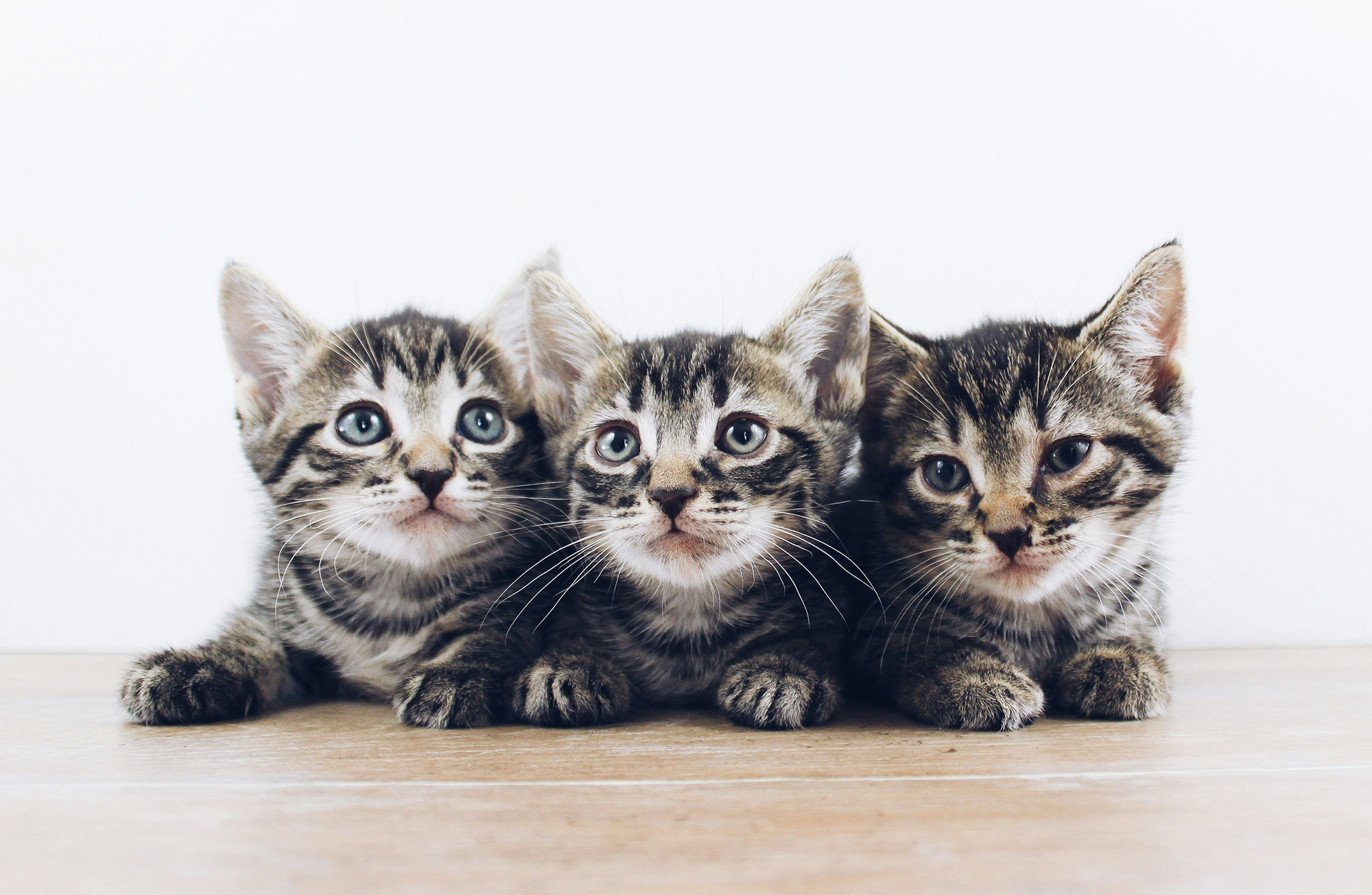
Trap-Neuter-Return (TNR) is the concept of trapping community cats, sterilizing them, and returning them to their original locations. ‘Community cats' is a term for a colony of cats that is usually made up of feral or stray animals. These cats often have people who watch over and care for them, but no one owns them.
Feral cats are typically wary of humans, and often avoid any contact with us at all. They are felines who were never socialized to us, and are savvy creatures. However, there are other stray cats that were once pets, but no longer have homes. These cats are more likely to approach us, and are typically friendlier.
So, why TNR?
TNR is a helpful way to reduce the community cat population, deliver necessary veterinary care, and hopefully improve their lives. It keeps male cats from roaming large areas, exhibiting aggression to people and other felines. It prevents females from having multiple litters of kittens, so that there is less competition for scarce resources.
To successfully perform TNR, begin by establishing a relationship with a clinic that offers low-cost spay and neuter services for feral and stray cats, and set up a date to bring in any cats you are able to trap. Locally, Prevent Homeless Pets and Pet Overpopulation Prevention are the two main clinics doing this work. They will often have traps available to borrow, and can give advice on best trapping practices.
If the colony of cats is not already being fed, start feeding two to three weeks before attempting to trap. You can use items such as wet or dry cat food, cooked chicken (unseasoned), fish, and milk. Begin with typical food, and work up to smellier, tastier morsels so that by the time you are trapping, the scent entices them in.
A couple days prior to trapping, withhold food, which will make the treats inside the trap more desirable when trap day comes. Alternatively, you can place the traps with food inside and the doors tied open for a few days, to acclimate them. Try to set more traps than the number of cats you would like to catch, and remember that it may take more than one try to trap all of the colony, so prepare to be patient and work consistently over a few weeks or months to get the job done!
What do you do when you have a trapped cat?
Once traps are set, check them every few hours, or monitor them from a distance if you can. A trapped cat is often anxious and vulnerable, and needs to be removed to a quiet, enclosed, temperature-controlled holding area. Keep the cage covered to reduce stress, and continue to provide food and water to the trapped animals (but no food after 10pm on the night before sterilization day!).
Depending on how successful your trap day has been, you can bring in the cats you have, or let the clinic know you are still working to trap the colony. Clinics are aware of the difficulties you might run into, and try to be flexible; but they are also handling huge volumes of animals and can be booked up months in advance, so it may take several visits to get all the cats fixed.
To prevent the spread of disease, it is very important to keep these felines away from other animals and to not handle them yourself. If an animal appears injured, get them treatment as soon as possible.
What if there are kittens in the colony?
Be sure to wait until the kittens are several weeks old before catching them. In a perfect world, kittens stay with their mom until 8-10 weeks, and if you have a way to contain them in an area where they can be handled and socialised while the mom is still feeding them, that is ideal. It can very quickly become impossible to catch unsocialised kittens as they age, and they are too small to trip the traps. So, if you are unable to socialise them in situ, it may be advisable to take them younger, and either try to trap the mom (you can lure her in with caged kittens next to a trap with food in it), or raise them yourself (if you are prepared for the hard work!). The clinic or rescue will be able to advise you on the best path forward for each situation.
It can be difficult to judge the age of kittens, but look for signs that they are no longer nursing, or are at least eating solid food (you can start providing kitten pâté starting at about four weeks old). Kittens must weigh over 2lbs to be sterilized.
What happens on sterilization day?
Before you drop them off, make sure your traps are labeled with your information and the details of where the cats were trapped so they can be returned to the right location.
Once at the clinic, the cats are put under general anesthesia, checked by the vet, sterilized, vaccinated, and treated for any injuries or other issues.
When the cats have all been returned to your care, return them to the holding area and monitor them overnight. It is important not to release them while they are still medicated, as this makes them extremely vulnerable. Provide some soft food mixed with a little water for extra hydration (a bowl of water in a small cage can be dangerous to a sleepy/drugged cat if they fall asleep in it). Things to watch for are lethargy, vomiting, or heavy open-mouthed panting. Should any of these symptoms occur, do not release them, but contact the clinic immediately.
Once released, the felines are back in the community to serve their purpose of rodent control. But now, they are healthier and less likely to cause issues or spread disease. A properly managed colony, with access to shelter and a steady supply of water and dry food, will stay healthy and keep neighborhood pests down for a long time! The important thing to remember is that there will always be new cats, so once you take control of a colony, keep doing the responsible thing and trap regularly.
I’m ready to lend a hand!
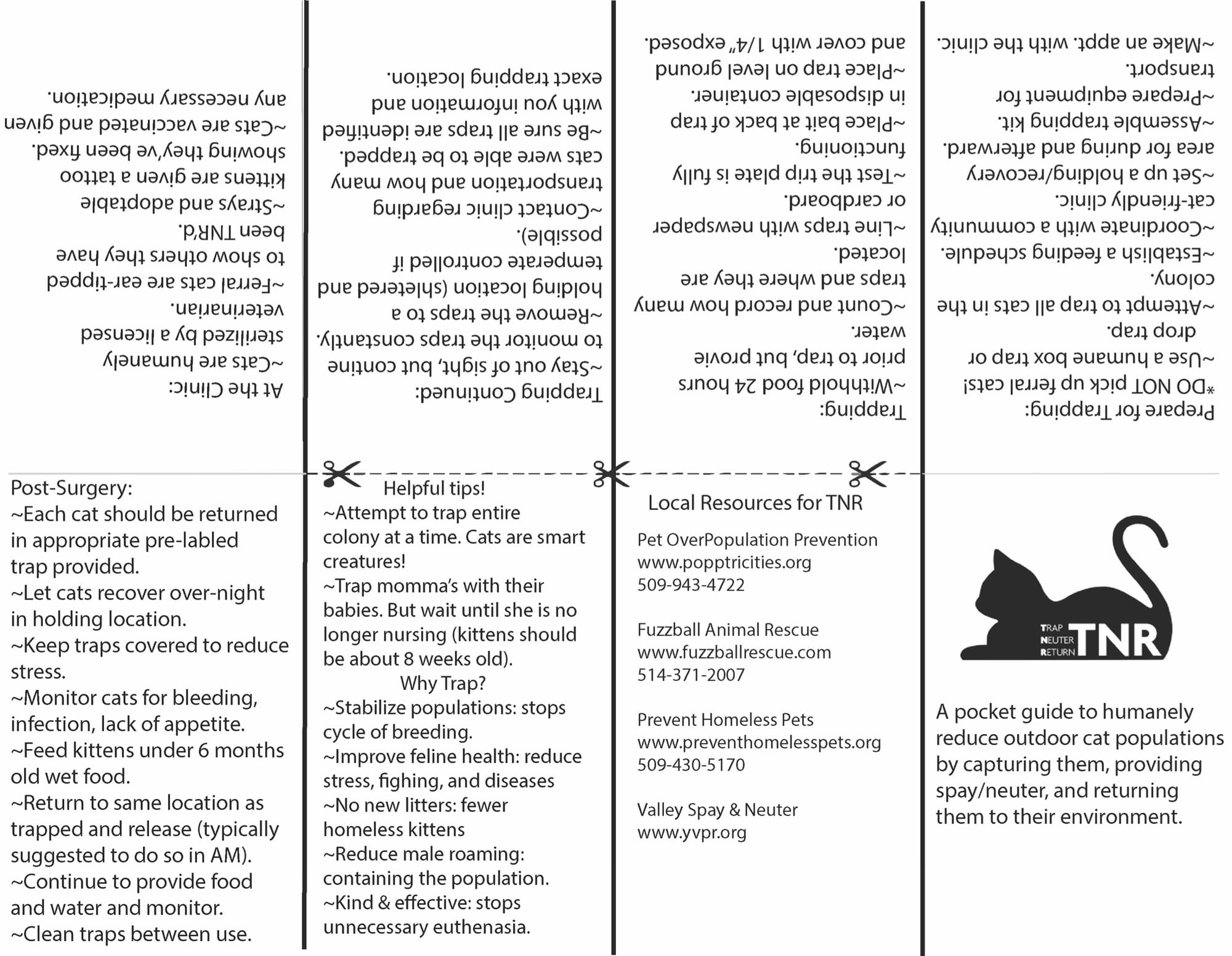
If you have a cat colony you’d like to help using TNR, contact a clinic or rescue for resources, and use the zine below as a guide!
Pet Overpopulation Prevention (POPP) Tri-Cities: popptricities.org
Prevent Homeless Pets (PHP): preventhomelesspets.org
Benton-Franklin Humane Society (BFHS): www.bfhs.com
Mighty Meow Kitten Rescue: mightymeow.org
Kitten Lady (excellent online resource): kittenlady.org
Alley Cat Allies: alleycat.org
