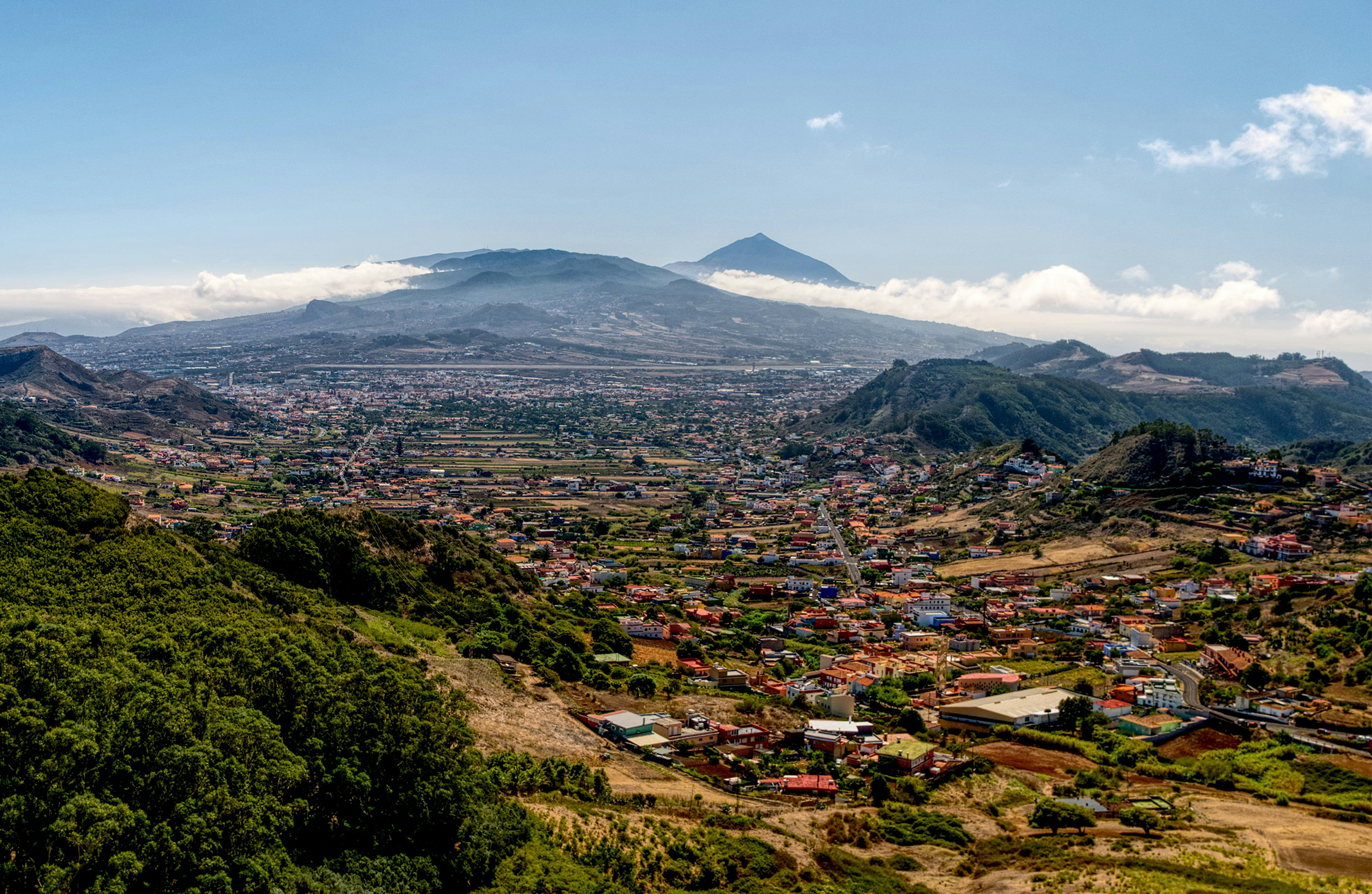
Miranda, Venezuela / Photo by Matthias Mullie
Why the Venezuela intervention should worry every American
Narrated by Chad Fox
We are told the world is safer now that a criminal dictator is in custody, yet for some reason I feel more tension and apprehension for the future because of it. Of course, I celebrate the relief many Venezuelans feel now that this tyrant is pulled out of power, but still — as an American who believes in the rule of law and the preservation of our Republic, I am deeply unsettled by how we got here.
If we claim to be a nation of laws, we cannot pick and choose when to follow our own. The recent military removal of a sitting foreign president without a whisper of Congressional approval isn’t just ‘bold foreign policy’; it is a direct violation of the U.S. Constitution, and a dangerous step toward a level of executive power that decimates the checks and balances installed in other branches of government by our founders.
A pattern of constitutional decay
Among other powers, Article I, Section 8 of the U.S. Constitution grants that Congress may “declare war, grant letters of Marque and Reprisal, and make rules concerning the captures on Land and Water”. It is clear that the power to initiate acts of war is vested solely in Congress. Removing a head of state via military force is, by any reasonable definition, an act of war.1
The various presidents who have ignored this rule have several arguments for why they have done so. In this case (and others before it), the justification comes from the powers granted by Article II, Section 2 of the Constitution, which states: “The President shall be Commander in Chief of the Army and Navy of the United States, and of the Militia of the several states.” This is indisputable; however, it does not erase the war powers given to Congress. This argument requires the operation to be for national defense, or enforcement of laws outside the United States — neither of which apply in the case of Maduro’s arrest and capture.
In any case, whether the justification is valid or not, using 150 military aircraft to arrest the sitting president of another country is still an act of war, no matter how evil that president is. Yes, Maduro’s regime had ties to the drug industry. And yes, he is a criminal. But sending that kind of military power into a sovereign nation cannot be defined in any other way.
This isn’t a partisan gripe. Since before George Bush senior, throughout Obama’s presidency, until today, we have watched a decades-long march toward losing our Republic. Both parties have overseen the steady erosion of legislative power, allowing the Oval Office to act as a global police force. We’ve traded the deliberate, constitutional process for the convenience of executive orders and ‘special operations’.
The myth of Modernization
There is a persistent, failed theory in Washington known as Modernization Theory. It’s the idea that we can drop an American-style democracy into a foreign country like a prefabricated house. This has been attempted several times, most recently in Iraq and Afghanistan. The logic can be boiled down to: “If we set up institutions for democratic government and public services, the people will see how much better life is. Then, when elections are held, they will elect good leaders and a stable republic will form.”
History (and peer-reviewed research) tells a different story.
Scholars like Adam Przeworski and Fernando Limongi2 have shown that while wealth can help maintain a democracy, external military force rarely creates a stable one. When we intervene to choose a nation’s leaders, we don’t inspire freedom — we often inspire ‘blowback’. [3] Our presence acts as a recruitment tool for the next generation of anti-American radicals, who will wait for the moment we leave to tear down everything we built. The recent withdrawal from Afghanistan is a prime example of how this can play out in the worst case; but even when the opposition is not notified of our departure, history has shown that the result is the same, just a little slower to unfold.
Is this ‘America First’?
The rhetoric surrounding our intervention in Venezuela has been alarmingly transparent. We aren’t just talking about removing a criminal; we are talking about occupying a country to manage its oil.4
When foreign policy shifts from national security to the management of foreign natural resources, we are no longer practicing an ‘America First’ doctrine. We are entering a mercantilist invasion. In his book The Resource Curse, Michael L. Ross explains why this fails: Nations that rely on foreign-managed oil wealth often spiral into corruption and instability.5
Is it ‘America First’ to spend billions of taxpayer dollars and risk American lives to run another country’s oil fields? Is it ‘America First’ to commit to another ‘forever war’ when we could secure our own borders and interests without a military occupation?6
We can stop the flow of drugs and address regional instability without becoming an occupying force. The people of Venezuela deserve to vote for their next leader, but it is not the job of the United States military to be the ballot box.
I’m glad a bad man is in custody, but I fear for a future where we sacrifice our Constitution and our fiscal sanity on the altar of global policing. If we don’t demand that Congress grow a backbone and reclaim its power, we won’t have a Republic left to defend.
Bryan Verhei graduated with a degree in Political Science from Eastern Washington University and is currently a small business owner in real estate. He has worked with FairVote Washington and other local nonprofits that share his passion for political literacy.
References:
- U.S. Constitution, Art. I, § 8, Cl. 11 (The War Powers Clause)
- Przeworski, Adam and Fernando Limongi. Modernization: Theories and Facts (Cambridge University Press, 1997)
- Johnson, Chalmers. Blowback: The Costs and Consequences of American Empire (Holt, 2001)
- Murphy, Damian and Allison McManus. ‘Trump’s Military Intervention in Venezuela Serves Big Oil, Not the American People’ (americanprogress.org)
- Ross, Michael L. The Oil Curse: How Petroleum Wealth Shapes the Development of Nations (Princeton University Press, 2012)
- California State Rep. Lee, Barbara Jean. ‘Ending the Post-9/11 Forever Wars’ (brennancenter.org)
