
Don't miss Earth Day at the REACH this year!


The shrub steppe is calling
Mikki Simonds, CBWNPS
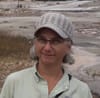
Carole Schuh enjoys a decades-long love of the wonders of the shrub steppe. Most of her experiences in the wide-open shrub steppe come by riding with other equestrians, and many rides are those connected with the Back Country Horseman of Washington’s (BCHW) local chapter members — Rattlesnake Ridge Riders (Benton City) and Purple Sage Riders (Finley). Working with and supporting Tapteal Greenway is another way she extends this love and knowledge by helping with science students at Ray Reynolds Middle School’s YEER Program as well as local trail maintenance.
Carole said that she has had a relationship with horses “from birth” and understands that they have a sensitivity to human emotions, which is a reason they are used in therapy. They can sense the human heart beat from over 20 feet, and our ability to relax into a similar rhythm is soothing. Born in San Diego, Carole’s paternal great-grandmother rode astride in the 1920s, which was unusual for a woman at that time. This legacy left her father with a love of horseback riding instead of using them just for work, and this love prompted him to move his family to Albany, Oregon when Carole was nine. He wanted more space to have a horse of his own and one for Carole. In her childhood, she “was very active in 4-H and showing horses, and they really helped me through some tough teenage years.” She said that sitting in her horse’s stall “just listening to him eat as the rain pattered on the roof was very soothing to me.”
Carole moved here as a young adult with a young family. “The first winter was dry and cold,” she said. “I loved the lack of westside rain. Every day during the month of January the temperatures were in the 20s, so the 4 – 6 inches of snow stuck. I fell in love — the blue clear skies and bright snow, the wide-open spaces and views.” This love led Carole “to learn the shrub steppe. I asked people, ‘Where do you ride here?’ I was used to riding and not seeing around the bend or over the hill because of trees. It was a paradigm shift, and now I know shrub steppe country is excellent trail riding country; it is a bigger, wider world, where you get to see lots of wildlife and native plants.”
At 76 years old, Carole has a goal of riding 500 miles annually, but she doesn’t stress if she doesn’t meet it. This past year she rode 447. Some of these miles she rides while leading group trail rides.

As a 4-H leader for 25 years, teaching kids in the arena and on the trail, Carole wanted to make sure that they “always had the balance of being out on the trail and enjoying nature.” Now, after a 30-year hiatus, she has once again become a 4-H project leader. She has developed Trail Warriors, the BCHW/4-H Trail Riding Project — a collaboration between both entities. One of her goals is getting kids ages nine to seventeen years old out of the arena and out onto the trail. Hopefully, these kids will grow up to join BCHW and work together to fulfill that mission.
Carole agrees with and teaches the young riders the BCHW mission: “To perpetuate commonsense use and enjoyment of horses in America’s back country and wilderness; to work to ensure the public lands remain open to recreational stock use; to assist the various government and private agencies in their maintenance and management of said resources; and to educate, encourage and solicit active participation in the wise use of the back country resources by horsemen and the others commensurate with our heritage.”
Though we are far from the back country here in the basin, we desire to take care of our ‘front country’ resources — our beautiful shrub steppe. A firm believer of Leave No Trace, she teaches kids “to leave the campground and parking lot looking better than when we found it.”
What’s more, in partnership with BCHW and Tapteal Greenway, Carole organizes trail pruning at W.E. Johnson and Chamna a couple of times annually. Per an agreement with Benton County Parks for the past 30 years, the BCHW chapters help with the cleanup of Camp Smith (the horse campground) and Meacham Hall at Horn Rapids Park.
Finally, for the last two years, Carole and two other PSR riders have become monitors for the BLM Juniper Dunes Wilderness. “I am loving it,” Carole said. “We consider it our responsibility to ride the perimeter fences, then we ride out and clean the five guzzlers [water receiving stations for animals] which are in various locations. Recently, we spent 45 minutes clearing one guzzler totally socked in by tumbleweeds; the animals couldn’t get to it. After clearing away the weed pile, seven inches of water became available to the animals. It is a fun job to have. We ride and report annually in fall the hours spent and miles covered, plus a monthly report.”
“I believe I am blessedto live here in the Columbia Basin. I desire to see the shrub steppe remain healthy and growing so that it can be enjoyed by all of us.
I like to teach people about it because many don’t know how fragile and endangered it is.”
When asked about her personal pact, Carole had this to say: “I love to pick a little sprig of sagebrush and smell it along the way. My granddaughter does it, too. I love all the critters — a herd of elk, coyotes, mule deer, chukars, meadowlarks, and lizards. I wish the jack rabbits were still here. Hopefully, the remaining critters will continue to thrive.”
As for a vernal mandate, Carole said, “Get out there and enjoy it! The shrub steppe is green and growing; it calls to us to come see the wildflowers. Yahoo! Phlox are coming!”
Interested in upcoming BCHW rides and events?
Contact Carole Schuh at caroleaschuh@gmail.com
Want to know more about Tapteal Greenway events?
Find them on Facebook (fb.com/TaptealGreenway) or contact taptealgreenway@gmail.com
This rock we call home
Pauline Schafer, Reach Museum
It happens to all of us at one time or another.
Someone makes a remark that you didn't see coming, and you have no good reply to offer… until the moment has passed. And you're forever stuck thinking about what you should have said.
In this case, it came from a sixth grader during one of our hands-on educational activities during a field trip. We were investigating local rock specimens to understand the geologic past of our region, which is dynamic and full of big stories. We're talking massive lava flows that lasted for millions of years and catastrophic floods unlike anything seen anywhere else on the planet. And the rocks that tell these stories often contain exquisite beauty, with delicate crystals and remarkable patterns.
"But ma'am, here's the thing," he said. "At the end of the day, they're all just rocks, right?"
I was speechless for a moment.
You have to understand… in my twenty plus years of environmental education, there are some facts that are super reliable. One fact is that kids love rocks, and another is that kids have questions. To find a young person who did not have questions about these rocks took me by surprise.
I don't even remember what I said back to him in that moment. It was probably something benign, like: "That's cool if it's not your thing." But I was worried that I did something wrong. Maybe I didn't demonstrate enough enthusiasm or show the most amazing rocks. And I felt a little sorry for him, too. Maybe he had been touched by that cynicism that overtakes many of us as we age and forget to wonder at nature's mysteries.
One retort that came to me too late was a question: "How are you going to live on this planet if you don't even know what it's made of?" To think of rocks as insignificant in one's life is to miss the fact that the entire human species is but a blip in the history of life on this planet, let alone the vast time scale of the universe. Despite our recent oversize effects on the planet, we are still relatively new here, and we yet have so much to learn. When astronomer and great science communicator Carl Sagan pointed out that "we are made of star stuff," he reminded us that the elements of which we are composed are the same as those found in stars, and that Big Bang started the process of forming what we are today.

But let's bring that closer to home.
We don't have to stretch our imaginations too far to see that we are made of Earth stuff. We eat the plants that grow in Earth's soil and breathe the atmosphere that clings to Earth. We evolved to live in Earth's gravitational pull and follow Earth's cycles daily, monthly, and yearly. I cannot imagine we would survive anywhere else but on Earth. To leave Earth would break our hearts. We see this reverence and emotional connection to Earth in those few people who have left the planet to travel in space. They keep turning their gaze to Earth's beauty and immediately recognize it for what it is, our source of life.
My wish for all of you reading this, whether you're a grown-up sixth grader or not, is that you never lose your curiosity about rocks. Especially for this rock we call home.
Dreaming of recycling at your school?
Heather Constance (she/her)
https://tumbleweird.org/dreaming-of-recycling
Badger Mountain Preserve 2026 BioBlitz
April 1st - May 31st on iNaturalist!
Kick-off event on April 4th from 12 PM to 2 PM at the WestGate Trailhead off of Dallas Road.

Join CBWNPS and Friends of Badger Mountain to kick off native plant appreciation month and our second annual BioBlitz to engage in community science and collect data on living organisms within the preserve.
We will provide a brief introduction to iNaturalist at the event, and guided walks will be given to collect data for flora, birds, insects, and whatever other cool things you find!
You can RSVP on Facebook but RSVP is not required
Please join the iNaturalist project at: https://www.inaturalist.org/projects/badger-mountain-centennial-preserve-bioblitz
Learn more about BioBlitz at: https://www.youtube.com/watch?v=N7Ms5xqgAf0
Email Al Spencer for any questions! carrotwarrior.botany@gmail.com
BOOTS IN THE BASIN is made possible by a coalition of local environmentally-focused organizations, including:
- Benton Conservation District
- Bike Tri-Cities
- Citizens’ Climate Lobby
- Franklin Conservation District
- Friends of Mid-Columbia River Wildlife Refuges
- Lower Columbia Basin Audubon Society
- The REACH Museum
- Save Our Shoreline 99301
- Sustainable Tri-Cities
- Tapteal Greenway
- WA Native Plant Society: Columbia Basin Chapter
