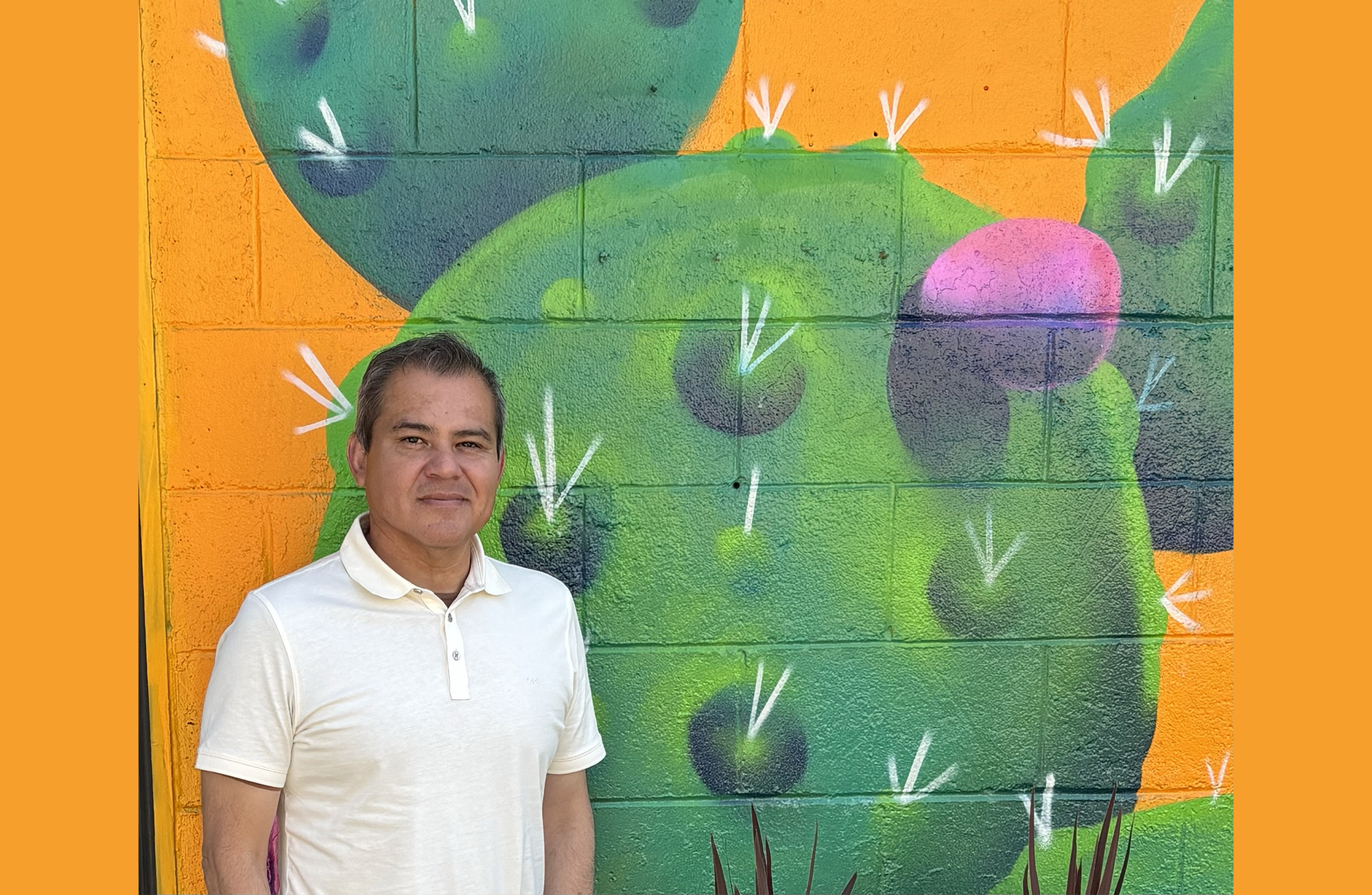
Calixto Hernández at Café con Arte in 2026. Courtesy of Calixto Hernández.
This semi-regular series by Omni Romero features interviews and short-form pieces that highlight how community members face the incalculable with courage, curiosity, and care in their pocket.
Out of pocket is a phrase rooted in Black American and working class vernacular that refers to both an emotional experience and material labor. Sometimes, that means money or other resources spent unexpectedly; other times, it means feeling out of sync with the people around you, outside the norm, out of line, or unwilling to perform what’s expected.
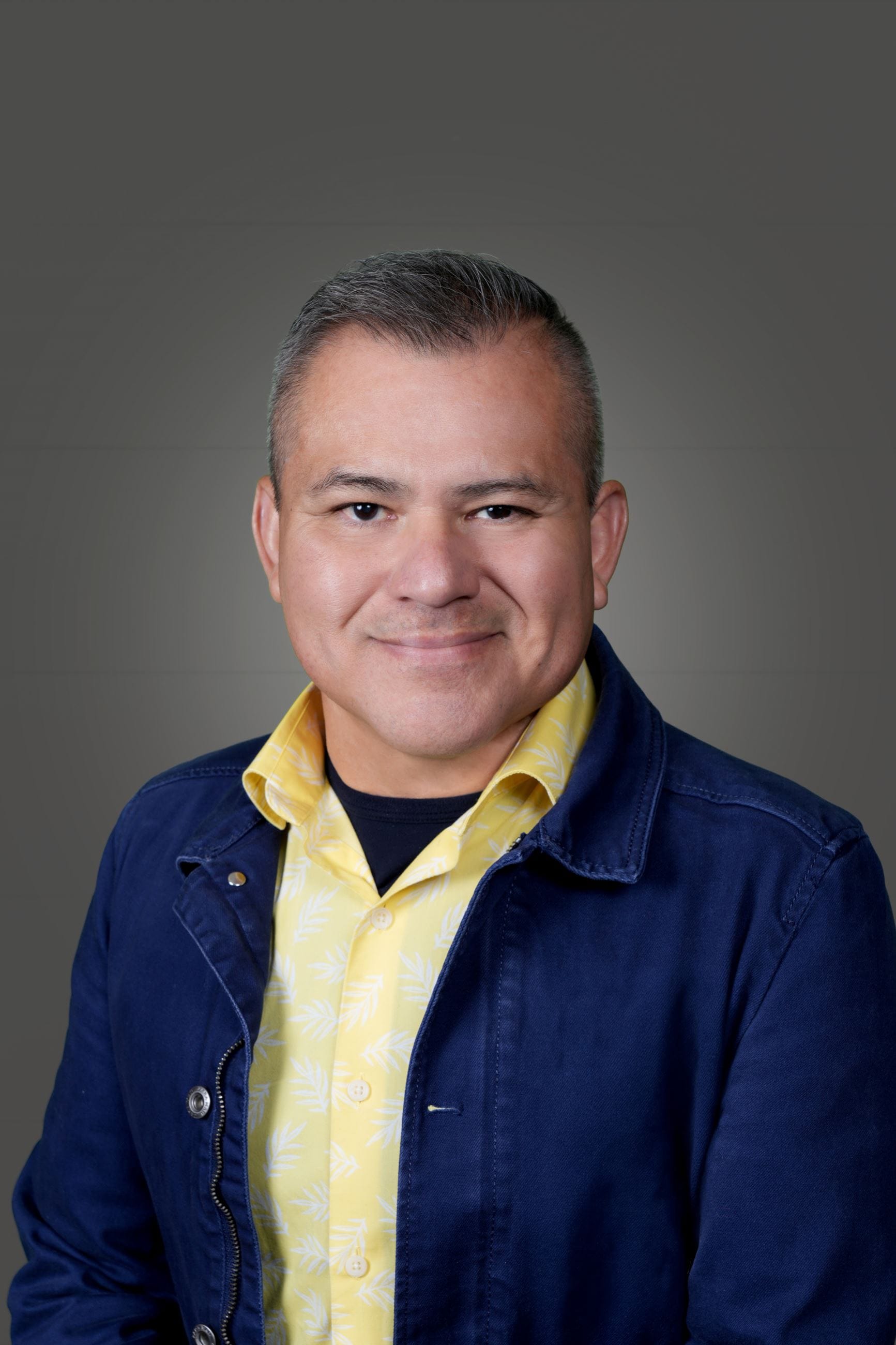
I did not know Calixto Hernández was gay. At least, not until he won the election. “I assumed everybody already knew! My marriage license is publicly available,” he told me.
“I’m not sure most folks are filing FOIA requests just to learn more about you,” I responded. We laughed, and the conversation eased into the rhythm of two people who share a comfortable rapport, despite only having met once before.
Hernández, one of Pasco’s newest city council members, is the first openly gay Latino person elected to a city council seat in the Tri-Cities. His relationship to that visibility is nuanced — he does not hide his identity, but neither does he center it politically. Throughout our conversation, he often returned to the importance of resilience, personal responsibility, and meeting people where they are, even while acknowledging that 2SLGBTQIA+ people continue to face discrimination in the region.
“[I]f issues come up, I’m here to meet with you,” he said about fighting discrimination. “You can turn to me. I will always support these efforts.” That balance — between visibility and caution, symbolism and tangible advocacy — seems to define much of Hernández’ public life so far.
Hernández traced his family’s journey from Mexico to California before eventually settling in Royal City, and later the Tri-Cities. He was born in Apatzingan, Michoacán in 1968, and his story is shaped by labor, migration, ambition, and even science fiction and mysticism. He keeps a fresh bowl of fruit out in his home for good luck, a tradition inspired by Walter Mercado, the legendary Puerto Rican astrologer and television personality who captivated millions across Latin America.
Like many local elected officials, Hernández’ work extends beyond city hall. Outside of council meetings, he works as an Employment Specialist with Sagebrush Employment Services, helping connect people with opportunities and services.
Our interview took place on May 22, 2026, over seasonal coffee at Café con Arte, a fitting setting for the conversation. The downtown Pasco space reflects a philosophy Hernández repeatedly returned to in our discussion: investing in what already exists, helping people understand one another, and building healthy collaboration. It is an approach that has helped him navigate local politics — though perhaps also one that leaves questions about what more outspoken leadership could look like from one of the region’s few openly LGBTQ+ elected officials. Even so, Hernández is far from disconnected from the community’s history. During our conversation, Hernández excitedly reminded me that Raven of RuPaul’s Drag Race headlined one of the Tri-Cities’ earliest Pride celebrations, a piece of local queer history I had somehow never heard before. “We’ve been on the map!” he exclaimed.
The following interview has been edited for length and clarity.
Tell me about your name, and what it means to you.
I was about nine to ten years old when I came from Mexico to California, and my name was always so difficult, nobody could pronounce it. Even with other Latinos, nobody had heard of it before. As I grew up, I grew more into it. I like this name because it is kind of unique. However, nobody really calls me by my name — my family calls me Callie, and in school and work, it’s Cal. My dad called me Kalimán, which is a superhero. My dad used to buy his comics for me, but we moved out of California and they didn’t sell them in Washington. When we moved here, there was not a lot of Hispanic culture, especially in Royal City. We were one of the very few families that was there all year. There were a lot of Latin American people in Royal City during the harvest, but then everybody left. So my dad would call me Kalimán as I was growing up there before moving to the Tri-Cities, where there were not very many Mexican people.
What roles do you carry in this community?
Well, first, I want people to understand that I’m here to help. I never thought about getting into politics at all. The reason I got into this was because, three or four years ago, I was paying my water bill online and I saw the announcement that said: “If you live in District Six, the council person is resigning,” and so they were interviewing for the position. I read it, and I thought, I can do that!
Six of us were selected, five of us interviewed; and in that process, I met Ana and John Kennedy. Ana was one of the other people that interviewed. Neither one of us was picked, and that was that. We kept in touch, and they asked me if I wanted to run for the city council position because of my experience in government, the medical field, [etc]. They ended up helping me, and [John] became my manager. … As an employment specialist and in other roles, I can help a group of people come to a decision that will help the community, and that’s really what this city council role is.
Do you know if you are the first openly gay person to serve on the Pasco City Council or in the Tri-Cities? What would that mean to you?
From the sounds of it, I’m assuming; but I don’t have any proof! You never know, you know? When I was running, I never said anything because that was not something I was running on. It’s not that I didn’t want to advertise it or was hiding it, but I wanted people to vote for me because of how I would address concerns people had, not because I’m [gay] or not. I had concerns about how things in this city were going and how things were done.
At the same time, I think that people knew. All of my forms where they asked me questions about myself are public; I never really have hidden it. My parents have known since I was young — I never had to come out to them because my dad asked me about it when I was eighteen. During that time, I had these two friends — they were a gay couple — and they were diagnosed with HIV. Back then, it was different than it is today, and they were taking 20 pills a day, or something like that. So I’m with my dad driving to go pick up a dryer or something, and he asks me, and says that he and my mother are concerned because of my friends.
It was a little awkward at first, but eventually those friends would continue to visit and even bring their families to come and visit the apple orchards. At any rate, I assume that my colleagues today know. But something I’ve been learning from my colleagues is how important it is to get things on the public record. So I’m trying to be more vocal and lean into it, but I’m not planning to just focus on that aspect of my identity in isolation. I know it’s hard to hear how people will say that things will get better, and we need to be able to live our lives and live [beyond] what is expected of us, though I know that is easier said than done.
What would you build here, if you could build anything?
If I could do anything, it would be to honor and restore the downtown Pasco area — this area where we are now. The city has a master plan that it paid a lot of money for that has been only partially implemented due to budget constraints. A lot of things are due to money and prioritization. This area is not prioritized. I understand the issue with the money — there are issues with infrastructure here that impact the whole city — but I do think we could do more. … So instead of building something new, I would just want to focus on downtown.
Tell me about a time you felt out of pocket.
This happened last year, I think… I walk my dog mostly after dark, with a little light on, of course. I walk her at night because people in Pasco will often let their dogs run around off-leash. My dog — Gemma is her name — is scared of other dogs. So we were walking one night, and she started barking at a cat in the bushes while somebody happened to be coming up behind us. I think I was on the phone with [my husband] at the time, but because I walk at night, I usually try to walk with some kind of stick or something. That night, I had the broken handle of a shovel that I was using as my walking stick. So this guy says to me, “If your dog bites me, I’m going to fucking knife your dog.” And it pissed me off that he threatened my dog. So I just said, “Try it, motherfucker,” and started grinding my stick into the street. He quickly crossed the street, but I just don’t know what his issue was. I usually cross the street when I’m walking [Gemma] because she’s so skittish, but I definitely felt ‘out of pocket’ because I was feeling that something will happen to you before it happens to my dog.
So… what’s in your pocket?
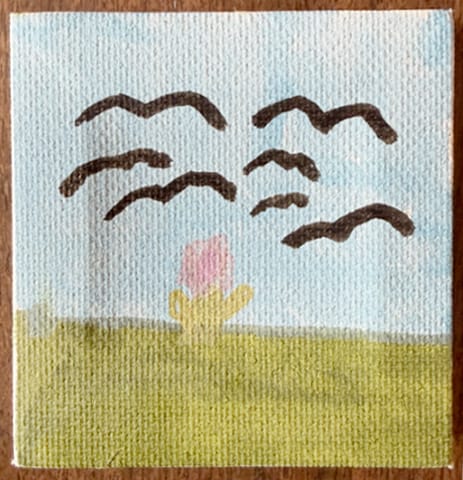
It’s a present to me! My coworker has a daughter that she brings into the office on Fridays because we work on a lot of reports on those days. So she was drawing things and she gave all of us one.
Omni Romero (they/them) was born and raised in the Tri-Cities region (Park Middle School 2006, Kennewick High School 2010). They studied cultural anthropology at UPenn and Duke, and currently serve as Vice President of Tri-Cities Pride and Board Chair of the Tri-Cities Diversity & Inclusion Council, alongside other volunteer leadership roles. For the past 14 years, Omni has worked with community leaders and various public and private partners to advance social justice and nurture hope across the Northwest and U.S. South. They can be reached for inquiries and partnerships at omniromero@outlook.com or linkedin.com/in/omniromero.
