(CW: Suicidal ideation)
“There are no atheists in foxholes,” said Army Chaplain William T. Cummings, in a rousing speech to U.S. troops in 1942. It means, essentially, that everyone will find God when they feel they are about to die.
In 2019, I would’ve scoffed at this phrase; I found it insulting. I was raised mostly Presbyterian, but I was an acolyte in an Alamogordo Methodist Church until middle school, when I discarded the church. I found it an ineffective vessel for salvation. For me, only guilt, inferiority, and shame lay in those hallowed halls.
In 2019, I wanted to die, but not so badly that I needed God to save me.
Then came 2020.
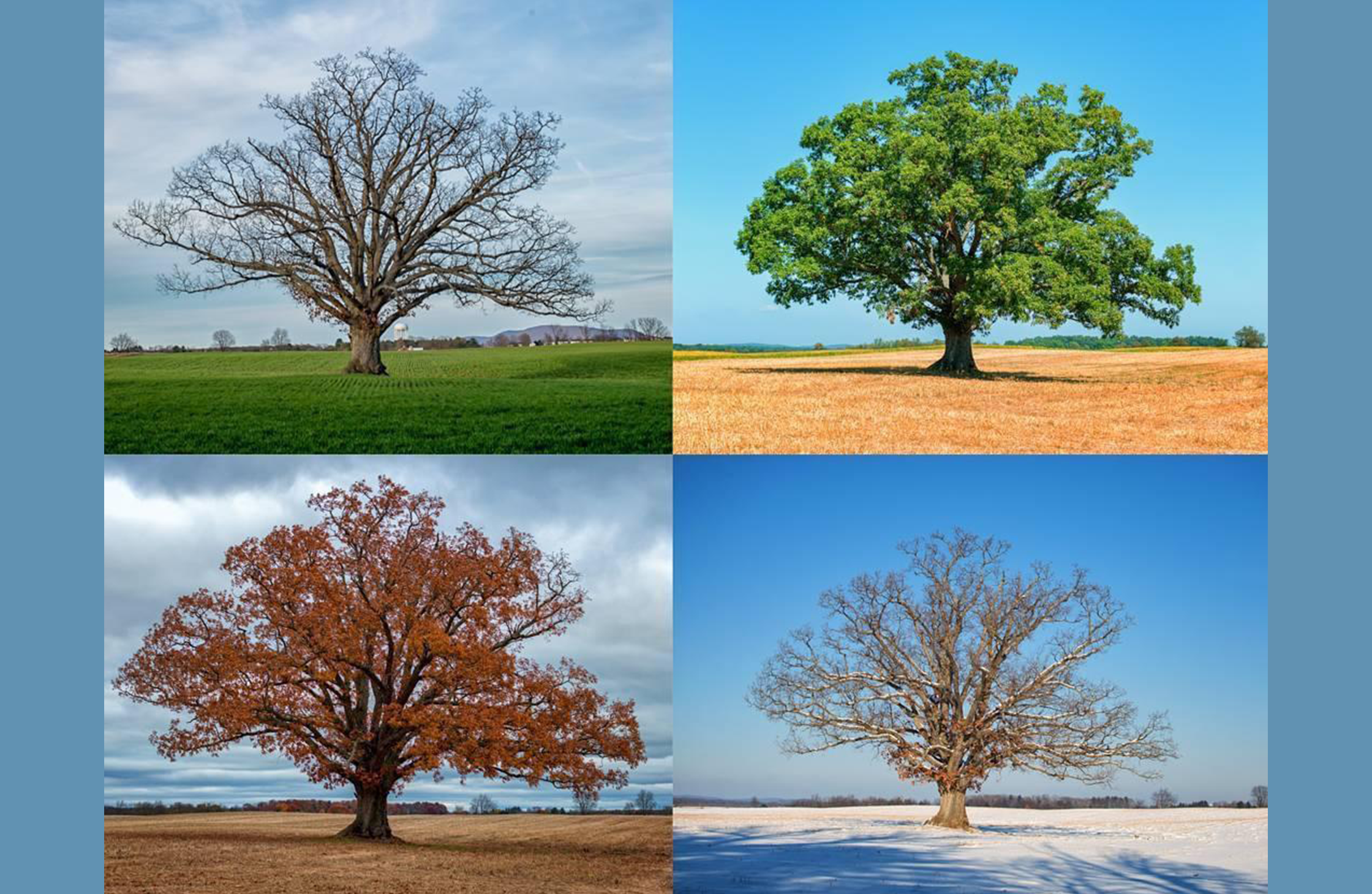
I remember the day clearly: it was beautiful out, and I was mowing the lawn while my wife was in town running errands. As I ran my mower around the large tree in my backyard, eyeing out its lower branches, I was glad I didn’t keep rope handy. I found myself thinking: I’m so desperate, I should buy a tarot deck.
I needed someone — anyone — to help me.
I hadn’t found my current (rockstar) therapist yet, but I’d tried out plenty. None had helped. I’d been gorging myself on Jungian psychology — archetypes, shadow work, symbolic thinking — even though, in college, I scoffed at the idea of the collective unconscious.
This was my plan: I’d wait until my wife left for one of her business trips, tie the rope up in the tree, call the police, and hang myself. Hopefully, I’d be dead before they arrived at the scene.
It wouldn’t be until 2025 that the fantasy of that rope around my throat became alien to me.
See, I didn’t believe in anything — at least not anything good. I believed that humans were made of meat and shit and not much else. I believed that hope was dead, and I was worthless.
I’d been living with this albatross around my neck since 2015, when I lived in Albuquerque. Back then, I used to consider how I’d drop out of the window head-first, when I lived in a place on an upper floor.
But we were talking about a tarot deck.
It was uncanny how soon after that sunny, summer day (when I was desperately looking for a reason not to die) that I met the person who’d inspire me to buy my first tarot deck.
In 2020, I was working with the Kennewick School District. A colleague introduced me to what I always called “woo-woo hippie shit”. You know the stuff — tarot, crystals, astrology. I laughed at it all when Penn & Teller debunked it on Bullshit!
My colleague did my first tarot reading, and I was so skeptical that I thought she was running a scam at first. But she wasn’t, and I reflect on that initial judgement now with tremendous shame.
Instead, my desperation felt seen.
This could work, I thought.
I didn’t know how it could work, or what it could do, but I wanted it to. Church was not an option; that ship sailed when I was a teenager and figured out guilt wasn't the same as God.
I didn’t even know if I was looking for God, but I knew I was looking for something to believe in.
I had asked a lot of people why they believed what they believed; how they maintained faith in the face of the miracle-less present. When Mormons came to my home, I’d joke with them that if a guy walked in with holes in his hands and feet, touched my tap, and turned the water into Pabst Blue Ribbon, I’d be sold.
I guess a miracle, no matter how asinine, was my benchmark.
Enough enemy fire was blasting over the foxhole now that I was desperate enough to accept even a tiny miracle. I was sending emails to random suicide prevention organizations, hoping someone would give me a reason to live. I considered life insurance.
My tree had lost its leaves by now, its skeletal fingers grasping at the heavens, the lower branches stretching out their invitation.
But I wasn’t ready to give in, and I’m nothing if not contrarian, so I purchased a nontraditional tarot deck. Every card was designed by a different artist. It was chaotic and colorful and bizarre. Hell yeah!
When I started, I refused to learn the meanings of the cards for about a month, because I believed the whole point of the thing working was in the head, not the aether. My readings were long and excruciating, as I attempted to extract meaning and distill reason from the images like a chemist.
A pen exploded on it in my backpack a few weeks after I bought it, and it was ruined.
An omen? Perhaps. But I didn’t care, because I still didn’t believe. So I bought myself another deck: the Black Tarot. I still have it. It’s dark and abstract and I love it — all the imagery, all the unconscious activation.
And just like that, I was hooked. I became a bona fide tarot addict.
My next deck was The Wild Unknown, and it was the first one I pulled cards from that caused me to pause.
I’m pretty sure my mother communicated with me through it. She died when I was 15, killed by malpractice. She was a teacher and a writer, too. I often wish she was still here to guide me, to see my wins and nurture them.
The way Jung reads the cards is by allowing the images to activate pathways in the psyche. Think of it like brainstorming with card stock. You go through the deck and associate people in your life with different cards.
And so, around Halloween — when the veil is thin, and the dead can reach through — I sat down at the kitchen table with my deck and asked for guidance.
The first card I pulled was the Queen of Wands — my mother.
I asked if it was really her.
I pulled the Five of Cups — grief.
My hands shook and my mouth went dry.
The rest is between us.
I still have the deck, though nowadays I only pull it out for special occasions. I got what I wanted, and it spooked me.
Maybe I wasn’t looking for God.
Maybe I just wanted a map.
By the time the tree in the back yard started to bud again, my tarot-reading colleague’s husband had introduced me to Damian Echols; but, man, that just didn’t stick. I mean, angels? Banishing? Rub your hands and manipulate the energy? Give me a break!
I did the meditations, though, and sometimes still do. I’d meditated even before the woo.
After tarot, Alan Chapman’s Advanced Magick for Beginners was probably the most influential book in my early practice. It taught me that there are no rules — at least, not if you don't believe in them.
And I still didn’t believe, but that was the point. Chaos magick says: use whatever works. Belief is a tool you pick up and put down as needed. Hypothetically, I could consciously pick up the belief that I am worthy, and that was totally allowed.
“The placebo effect is real” became my mantra.
Fresh green leaves pressed out of the buds and covered the tree.
Chaos magick says: belief can be used to make the changes we want in ourselves. At the time I was learning this, it fit with my rapidly disintegrating sense of identity.
I’d changed so much since moving to Washington in 2018. Trying to define myself was like trying to scale a climbing wall without any holds; I knew I existed, but my grip on who I was, and who I was meant to be, kept slipping.
I realised I wasn’t looking for someone else’s map. I needed to become a cartographer.
I tried other systems: Celtic paganism had my blood but not my heart; Qabalah, with its mystical letters and numerology, had my heart but not my blood; but the runes of the Germanic pagans called me home.
The map developed details — rivers, forests, mountains, hills — different gods for different needs. I “step into them” (as Farber says), when I need to. Any time, I can tap into Thor’s strength, Bragi’s eloquence, Odin’s wisdom; Yggdrasil serves as a metaphor for the psyche — roots in the unconscious, branches reaching toward consciousness; the runes are a path to smuggle desires past my own resistance.
I’m not a practicing Norse pagan, but I use Norse paganism in my practice.
I don’t worship Thor. I worship the parts of myself that Thor represents.
It's those parts of me — externalized, given names, faces, and stories — that, through a daily practice of recognition and examination, transformed the tree in my back yard from a harrowing reminder of where I was headed to a beautiful metaphor for the soul.
Odin hung from Yggdrasil for nine long nights, a sacrifice of himself to himself, to acquire the knowledge of the runes.
I didn't hang for nine nights. I didn’t hang at all, in the end. But I did the work. Daily candles. Daily runes. Stepping into Thor when I needed strength, into Bragi when I needed words.
Do I believe in magic? Hell yeah! My dead mother talked to me. But do I believe in gods?
I light a candle for Bragi when writing or recording. I write tarot spreads to do under the full moon. I invoke the Warboss when I need to get a lot of shit done.
I do the work.
I believe in myself.
Derrick Heisey is the author and storyteller behind the Nightmares & Grief podcast. You can find his Human Rituals project on Instagram @tc_humanrituals, and his horror stories at nightmaresandgrief.com.
