
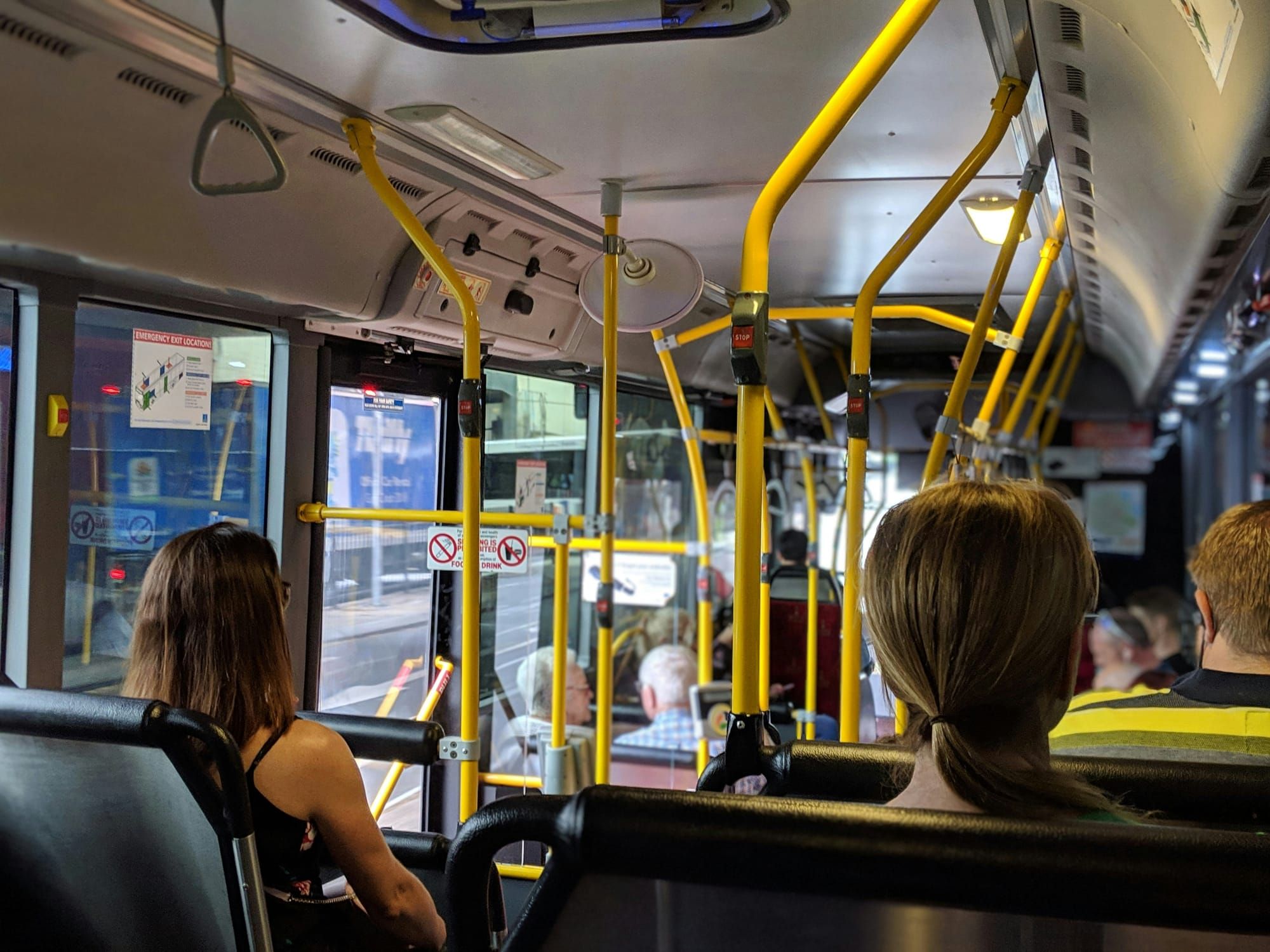
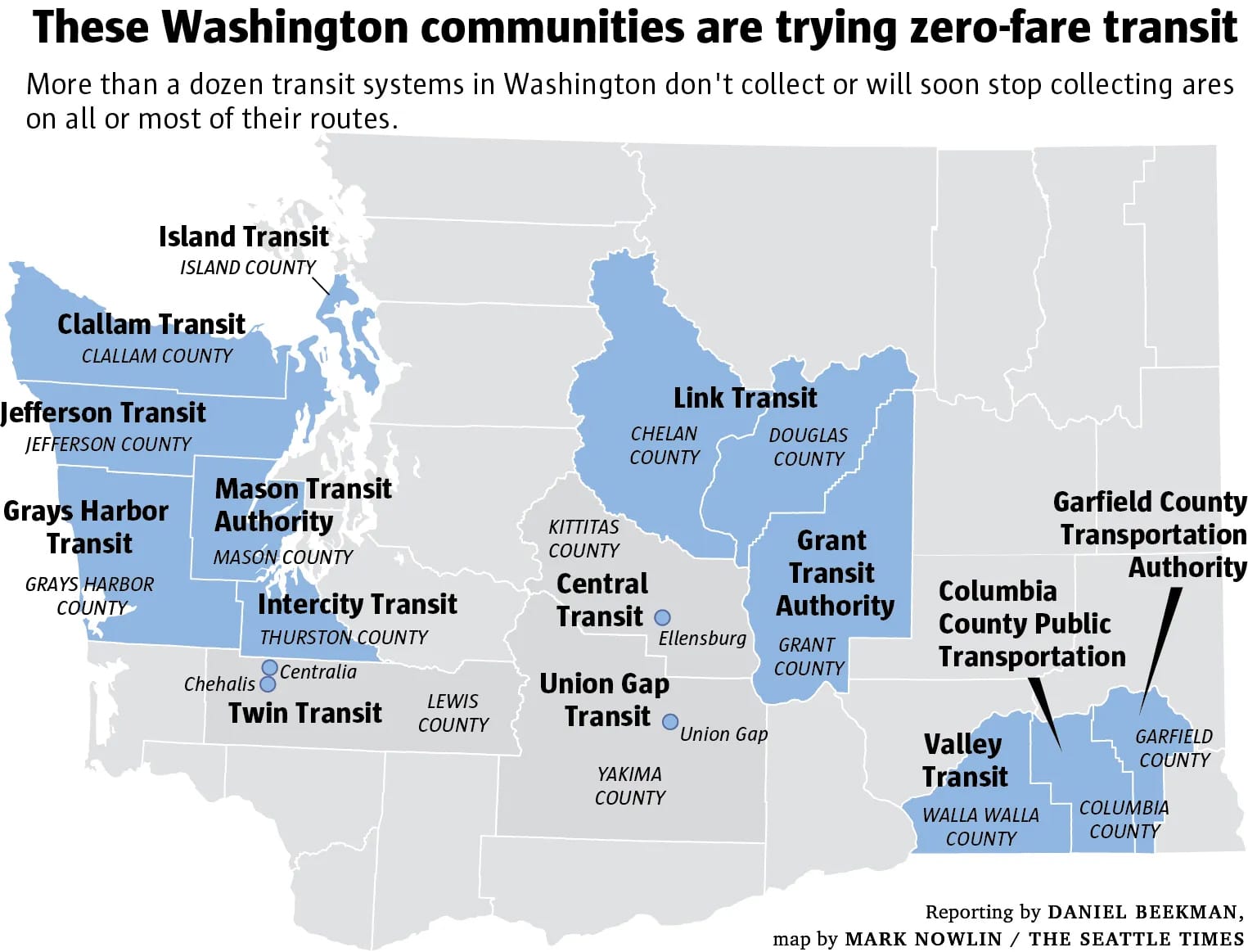
Fare-free transit is happening all over the U.S. in major cities like Boston and New York, and in smaller communities all over Washington.
Members of the Ben Franklin Transit’s Citizens Advisory Network (CAN) have discussed the idea of going fare free over the past few years on several occasions, and it was brought up again in March.
In 2023, The Seattle Times published the article ‘More Washington towns opting to end bus fares’. At that time, about a third of the transit agencies in the state had already gone fare free.
Even earlier, in 2022, Move Ahead Washington was passed and was enacted into law the following year. This allowed anyone 18 and younger to ride all public transportation in the state for free.
Now members of the CAN are discussing why going fare free for Ben Franklin Transit (BFT) would improve transit services in the Tri-Cities.
Laurie Price, who has been a member of the CAN for over two years, was named the Washington Industrial Education Association Counseling and Career Professional of the Year in 2026. Price works with students with disabilities to gain workplace skills, including traveling on public transportation in order to gain independence.
When asked about why she wanted to discuss free transit with other members of the network in a phone exchange on April 6, Price said:
My main thought is, if BFT is a service, why not provide this service to all community members? Fares should not be a barrier. It would be prudent for BFT to research the benefits of free fares, starting with looking at other Washington counties who have free transit. Fares should not be the barrier to accessing our community for work, leisure activities, and various appointments. Also for volunteer opportunities, community and sports events.
Public transportation is a service of the community, just like the fire service or police service. It is paid for by everyone, through sales tax. Dennis Kreutz, Chair of the CAN, has been studying the fare issue. Kreutz is looking at the amount of money collected in fares and comparing that to the amount of money it takes to administer the fares. Included in his costs are: management of fare collectors, fare collectors themselves, material costs, tickets books, printing costs of passes, mailing costs, finance staff, and more. Kreutz said he is asking for more information from BFT staff to really see the cost breakdown.
It is also important to consider the issue of conflicts with the public over lack of fares. When someone doesn’t have money to ride, it causes a conflict with the drivers and the public.
During the March 12 BFT Board of Directors meeting, there was a presentation on how coach operators should handle situations in which riders do not have money — or refuse to pay — for bus fare. On page 51 of the packet, operators are told to ask for the correct fare but allow the riders on, regardless. Operators are also told not to demand the fares. The slide reads: “No repeated badgering about fare, No physical enforcement, and No service interruption over single refusal.”
Marcus McCready, the Director of Safety, said that there was a memo from January 17, 2025 showing that the majority of conflicts come from fare disputes. In the memo, McCready said: “We want to reduce disputes and conflicts and help you avoid confrontations.”
During the board members’ comments, BFT Vice Chair Kurt Maier suggested that the board investigate going fare free. He has brought the idea forth in the past:
We received a presentation describing one of the most common trigger points to confrontations with operators is fare collection. We had discussed in the past maybe taking a closer look at exactly how much revenue we're getting out of fare collection on fixed routes, and whether or not that's [] worth the hassle. Because as I remember looking at the numbers, we were spending an awful lot of money to collect it, and we weren't turning too much of a profit on it. And if it can enhance the safety of our operators to not be put in a position where they even have to ask for it, it might be worth … digging into for more than one reason.
Tumbleweird emailed Maier on April 8 about the free fare idea and he responded:
The board has had discussions regarding fixed-rate fares several times over the past couple years. Opinions regarding abolishing fixed-route fares differ. The board has recently requested staff look into fare collection costs and revenues, but staff haven’t presented their findings to the board (other than the normal budgetary reports, which lack sufficient detail to form the basis of a decision on the matter).
Mayor of Pasco Charles Grimm, also a board member of BFT, responded to Maier’s comment regarding looking into the details of going fare free with the following:
I would take the other side of that and say, you know, in our retail business environment, our biggest issue also is people that don't want to pay for their merchandise, but yet we don't turn that all over for free for people to come get, and we've just surrendered too much in society. We've surrendered our parks. We've surrendered our sidewalks. …
I think the bigger issue here is we need to hold the line, because the people that are paying, or not paying, they're still going to be on the bus. And so, whether they're being allowed to ride for free, or they're just evading the fare, they are the problem to begin with. And so, I think we need to continue doing the things we're doing with security; and yes, you know, driver safety is of utmost importance, but we just can't surrender our buses, too. And so, yes, I would take the other side of that and say we need to hold the line and not just give something away for free just because that's potentially an easier way of dealing with it.
During the meeting, Maier responded to Grimm by reminding him that people are already paying for bus service through the sales taxes everyone pays in the Transportation Service District. Right now, 0.6% of sales tax is added for most things in the district, paid by all those who shop in the district. Maier said:
I would like to point out that I'm not proposing giving anything away for free, because everyone already pays their taxes. And I appreciate that when you're running a business, you need to charge for product and service, and that's how businesses work. But again, fare revenue is not our primary source of revenue. It's the taxes that everybody's already paying to provide this service. And I just don't think that we’d be crossing an event horizon of lawlessness by not fighting over $1.50.
And you make a great point. The people who don't pay are on the buses anyway. The way I interpret that is that we're punishing the people who do pay. If we're going to let them on the bus either way, why are we extracting $1.50 every time from people who are already paying for these buses with their taxes? I don't like double charging folks.
Maier went on to say he believes it is something to look into, and that if they really look at the numbers, it might be that fares pay for themselves.
West Richland Councilmember Kate Moran chimed in at this point, agreeing with Maier:
I feel like what it really comes down to is dollars and cents. So, if it is in turn costing more money than it actually provides in revenue to collect it in the first place, then it seems like collecting the revenue is putting you at a negative. So, it wouldn't make sense to be putting yourself in the negative, and instead would be better for the safety of the operators, and also for the money aspect of it, to not charge it. So I'm kind of curious myself as to [whether] the benefits outweigh the problems.
One of the arguments against going fare free are ‘destinationless riders’ — bus riders that get on a free bus and ride all day long. That has long been the argument against fare-free riders. We followed up with Charles Grimm on April 8 asking for further details about his comments during the March board meeting talking about “surrendering” parks, sidewalks, and buses to unhoused people. Grimm responded with the following:
Thank you for the opportunity to further explain my thoughts. Sometimes when I’m on the spot, I struggle for the right words, and the transcript definitely reveals those blemishes.
The first thing I want you to know is that I am down at the Union Gospel Mission every Tuesday volunteering my time working with the homeless men, and I’ve done so for years. I believe in their “new life program” that rescues people and restores them to functioning members of society, and I’m honored to be a part of it.
At the same time, I have to be mindful of our business community who have invested their time, talent, and treasure into our city. It is paramount that we provide an inviting and safe environment for our businesses to flourish and for their customers, and our community at-large to feel safe.
Regarding the “destinationless riders,” the majority party in our state legislature has repeatedly tried to pass bills like HB 2489 that restrict cities from keeping public spaces free of encampments and panhandling. The Ninth Circuit Court previously ruled that cities could not enforce ordinances designed to keep parks for their intended use — recreation and relaxation for families. Thankfully, the United States Supreme Court overturned that decision in Grants Pass v. Johnson, allowing cities to protect their citizens and maintain the free flow of commerce. We have already been forced to surrender our parks and sidewalks to vagrants — we should not now let them take over our buses too.
In regard to free fares, two board members insisted that since the biggest point of contention on our buses happens at the point of fare collection, we should just quit collecting fares. I responded by saying that the biggest point of contention in retail is when someone doesn’t want to pay for their groceries — should we just quit charging people for what they want to leave the store with?
Furthermore, when people pay for something, it gives it value. When something is given for free, it is often taken for granted and taken advantage of.
One of the board members insisted that the buses are a service provided by the government, and since the service is already paid for with taxes, riders shouldn’t have to pay. I didn’t continue the back-and-forth for the sake of decorum, but I wanted to respond by saying that our fire department and EMS are also a service, yet people still have to pay if they ride on an ambulance.
The point I was trying to make is that destinationless riders are the biggest problem on our buses for the safety of drivers and paying riders alike. Simply letting them ride for free won’t help.
It is not clear if veterans or people under the age of 18 who currently ride for free, are using the buses as so-called ‘destinationless riders’.
When Kurt Maier was asked about this in a follow up email on April 9, he replied: “I’m not aware of a particular issue in BFT with destinationless riders. There are other issues that have been raised by other directors, but I’ll let them speak for themselves.”
The analysis of the costs of collecting fares is currently being researched by staff at BFT and CAN members.
A lifelong resident of Eastern Washington, Dori enjoys the outdoors, her family, and making good trouble. She has worked for many years in broadcasting and reporting and believes in the value of the 4th estate. She is a true community advocate that loves Washington.
