

youtube.com: State of the Ports-Benton, Pasco, Kennewick Ports video
Editor’s note: The day after this article was edited, the Tri-City Herald released an article which contains additional interviews about the corruption scandal. It can be read here: https://www.tri-cityherald.com/news/politics-government/article314744974.html
The Port of Benton is a taxing district in Benton County that owns and manages nearly 3,000 acres and $90 million in assets, including the Richland Airport, the Prosser Airport, sixteen miles of rail line, and multiple industrial sites.
“Ports develop economic opportunities that are specific to the communities they serve.” — ‘How Ports Work’ from the Washington Public Ports Association (WPPA)
It is important to understand who is in charge of ports, as they have a large economic impact in the community. Who wields that power, and who benefits from it?
The Port of Benton has three elected port commissioners — elected officials who govern the public port district, setting policies for its development, growth, and operations. They are responsible for strategic planning, adopting annual budgets, approving tax levies, and hiring an Executive Director to manage daily operations.
The current Port of Benton commissioners are Scott Keller, Lori Stevens, and Bill O’Neil.
Scott Keller was the Executive Director of the Port for 17 years until he retired from that position on June 1, 2019. Before that, he was in previous Port positions starting in 1989. According to an article from the Tri-Cities Journal of Business, while Keller was Executive Director of the Port of Benton, the assets of the port went up from $10 million to $80 million.
On February 14, Tumbleweird spoke to former Port Commissioner Roy Keck. Keck said that just two weeks before Keller announced his retirement, Keck and his fellow commissioners had an executive session to discuss a personnel matter. That was in May, 2019.
“We came out of that session [and] we asked Stuart Dezember [the Director of Finance] and the lawyer at the time, David Billetdeaux, for a copy of Mr. Keller's employment contract,” Keck said in the interview. “Two weeks later, he abruptly retires.”
For 17 years, Keller had been in charge of running the day-to-day functions of the Port. And, according to former Commissioner Keck, Keller liked to make “sweetheart deals.” Keck said when he was a commissioner during Keller’s time as Executive Director, he would ask Keller about lease rates, and Keller would always tell him they were at the market rates; however, Keck said no documentation was ever provided to back up Keller’s statements.
After Keller’s abrupt retirement, the new Executive Director, Diahann Howard, began investigating Keller’s sweetheart deals, his violations of state and federal law, and his conduct. Keck explained to Tumbleweird in a lengthy interview how it all came to light.
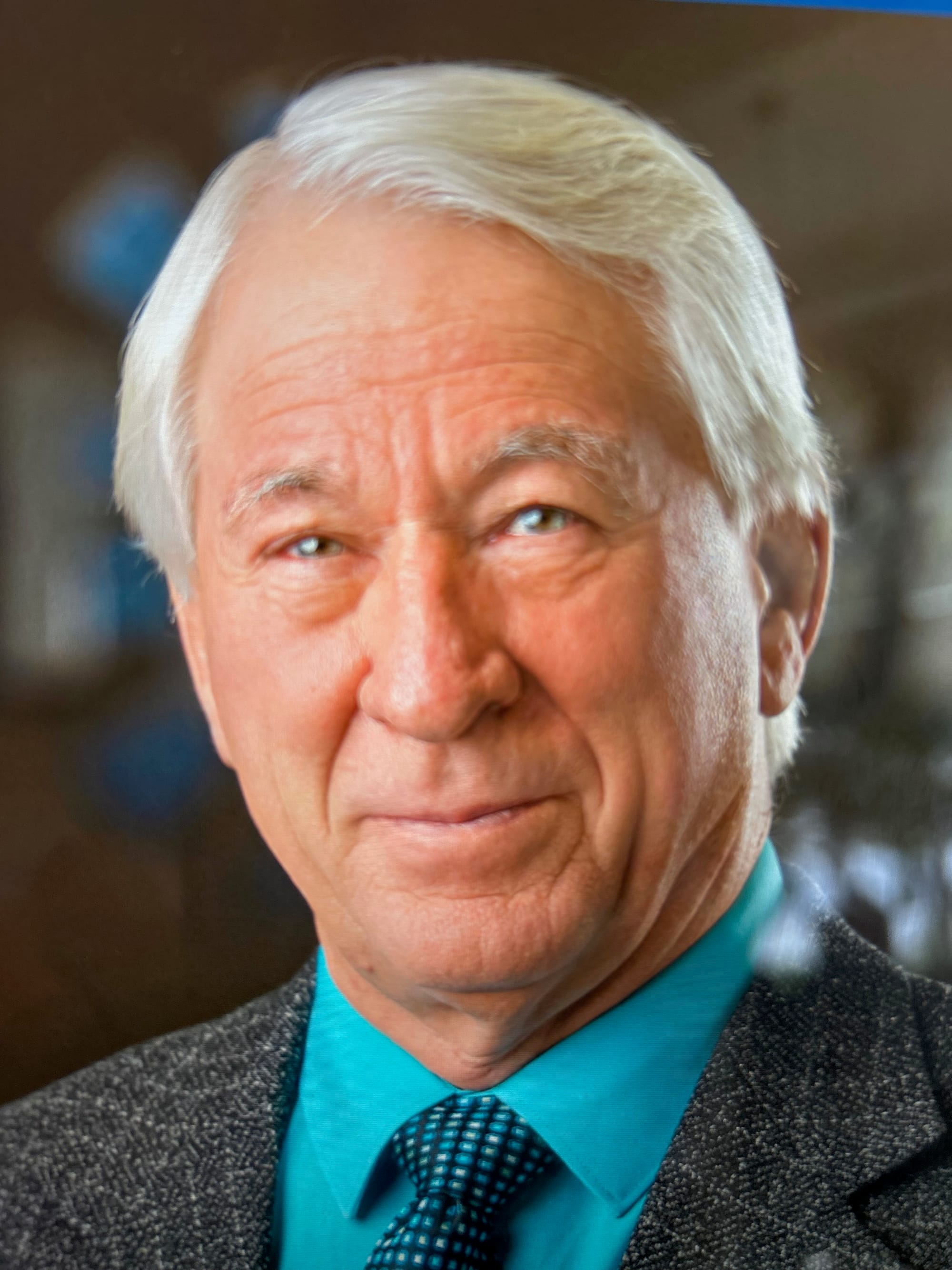
Keck said the Commission directed her to assess the finances of the Port and provide more detail, along with checking for overall compliance of leases and contracting across departments. Keck said:
Let me set the stage. Diahann came on board in 2019 as Executive Director. During the 2020 pandemic, her team went in to update the Port's financial system, work order system, and get us in compliance with GASB 87. GASB 87 is the accounting standard that the auditor's office uses for leases, and the Port had previously known about this requirement [but we kept] kicking it down the road.
Keck said that when Howard came on board, they set the compliance date for June 15, 2021. Keck explained that Howard — along with some accounting staff and a new auditor that was brought in from the outside accounting firm CliftonLarsonAllen to lead and support the effort — went through the old records, which were on paper, in a filing cabinet. They manually entered all the records into the new finance system per GASB 87 standards.
Keck said that was when the irregularities were discovered. Transferring all the 180 leases from paper into the new system was a big job for Howard’s team, and Keck said it took until 2023 to complete it. He said that when they compared the data, they realized, “this doesn't make any sense. Some of these leases were a dime on the dollar, literally.”
Irregularities discovered
Howard came to the commissioners, which at that time included Keck and Keller, with her findings, and said that some of the leases were “really out of compliance.” Many of them had not had any rate adjustments made for years — in some cases for 10 to 20 years — and Howard said she needed to alert the State Auditor and the FAA (Federal Aviation Administrator) that efforts were underway to make the necessary adjustments, and to get any further guidance to bring the Port of Benton into compliance.
Keck explained:
The airport is funded with 90% of the capital cost of any improvements on that airport. Inside the fence, 90% of it is paid by the FAA. Only 10% of the capital cost and all of the O and M [operations and maintenance] are paid by the Port. So, consequently, we've spent like $26 million of FAA money on Richland’s airport. And every time that we accept one of these AIPs [airport improvement projects], we certify that we're in compliance with all the FAA requirements.
Keck said that the FAA requires that there be an active flying airplane in every hangar. But he explained that there are a number of compliance requirements beyond that:
We've got to make the airport economically neutral to the community, so there's not a burden on the community; and we do that through taxes and leases. And then we compared the new system data — financial data — against our previous budgets. And lo and behold, the Richland Airport as a cost center is $200,000 a year upside down, and has been for years.
Then-Executive Director Howard disclosed to the state and to the FAA that the Port of Benton was out of compliance, and overviewed the Port Commission action in 2022 to revise the policies, rates, and new standard lease agreement specifically for the airport that was to be used going forward (see Port of Benton website under Richland Airport).
Port lease rates are typically adjusted using the consumer price index (CPI) to adjust for inflation, or via a Fair Market Value assessment. Keck explained that usually, lease rates are adjusted every three to five years or when the lease renews. Keck said that Keller’s leases to the 80 or so airport tenants didn’t administratively follow the required adjustments, and created a mix of lease types.
Keck relayed what the Port attorney told them at that time: “‘You’ve got two alternatives. Either you can fix it as the contracts and the leases come up and update them, or you can go in there and just do them all at one time and end up with 100 different lawsuits.’”
Howard went the route of waiting for the leases to come up for renewal, and adjusting each tenant one at a time. She and the prior commission worked with tenants to stair-step the rate adjustments over a five year period.
Some lease holders were being charged a quarter of what their neighbors were — even those who entered into lease agreements in the same year, creating further issues when some of the tenants noticed their neighbors were not being charged equitably. Many of the older agreements had gone without making the adjustments required by contract, which only made the gap between tenant’s rates grow even wider. The ‘sweetheart deals’ were drafted under the direction of Keller, at the expense of the Port and taxpayers.
Any lease over five years was required to be presented to the Commission for approval. According to Keck, when Keller presented the leases, he represented to the Commission that they were being entered into contract “at market rate.”
The Port paid for an investigation into Keller by law firm Schwabe, Williamson & Wyatt, who also uncovered another violation concerning Keller’s own personal airport hanger. The findings state that Keller violated Washington State law RCW 42.23.030 “by knowingly receiving public water and sewer services paid for by the Port of Benton.”
That law is in place to prevent corrupt politicians from using their office to obtain personal benefits to themselves or their businesses using public funds and resources.

Sweetheart deals
During the September 10, 2025 Port of Benton Commission meeting (which can be seen at https://vimeo.com/1117601193), when he was confronted about making sweetheart deals, Keller said that he was being attacked, and defended his actions by giving examples of how his deals had been responsible for the enrichment of Prosser and other Port properties. After spending five minutes reading out a list of the commission’s accomplishments, Keller said, “Sweetheart deals? You know, you could call ‘em whatever you want. I call it economic development.”
One of Keller’s most flagrant sweetheart deals was made with his cousin, Jeff Marcum. Marcum built the 9-hole Buckskin Golf Course in 1998, and signed a lease for 55 acres of Port property. Keck said, “The 55 acres was condemned by the FAA and paid for by the FAA airport improvement project. So we ended up with all this acreage, which is all farmland, it was all pastures. And those pastures were irrigated by individual owned wells.”
According to the lease agreement, Marcum was going to pay the power bill for the lights and the pumps to irrigate his golf course.
Instead, it appears that the Port has been paying the golf course’s electricity bill for the last 30 years.
Also included in the original proposal was the arrangement that Marcum would lease the 55 acres for $5000 for the first five years; after that, the lease would increase to $7500. Plus, Marcum was supposed to give 10% of the green fees to the Port.
Keck added, “The commission agreed, due to Markum’s proposal for the first five years, [and] that he was going to invest $400,000 in a clubhouse. And this [contract] was going to help him do that. Well, he never built a clubhouse.”
Further, the lease was changed by Keller after the agreement was made, and the rate was never raised beyond the initial $5000 per year. To our knowledge, no one has been able to produce records showing that this proposed change was brought in front of the commission to be ratified.
In September of 2025, the Port of Benton Commission began an independent investigation into the irregularities found in Keller’s contracts. Keck was still a commissioner at that time, running for reelection. The detailed complaints mostly centered around Keller entering into contracts with relatives and gifting public funds.
The complete report and all violations and findings of the investigation by the law firm of Schwabe, Williamson & Wyatt can be read here: https://drive.google.com/file/d/1kq4r55oHYsXwjXpL1PgyLNdNHLTxpF8b. The independent investigation found evidence of gifted public resources, and unauthorized lease reductions.
During the same September Port of Benton meeting, the commissioners discussed the struggle to untangle what then-Commissioner Keck described as “shenanigans relative to the management and leadership of Richland’s airport.” At this point in the meeting, Keck directly addressed Keller, saying:
I continue to go through the record trying to figure out all these leases, sweetheart deals… inside and outside the fence. And I’ve come to the point that I did an extensive review of several of the contracts that we have with some of your relatives. I’m going to submit this as a complaint — not as a commissioner, but as a taxpayer.
The law firm’s investigation concluded that Commissioner Scott Keller violated state law and Port policies.
Meanwhile Howard — the Executive Director who disclosed the violations — was suspended on January 7, 2026, after receiving a performance-based raise in December with having had no documented concerns or complaints on her record. According to a source familiar with the situation, Howard still has still not been given any information regarding the reason for her suspension.
Howard has retained an attorney, and has publicly stated that she had a public duty to disclose the issues to the FAA and to the state, and that she followed the Port’s own policies and processes.
Commission votes “no action” on Keller findings
In 2023, Keller ran to serve as a Commissioner of the Port and was elected.
Currently, the three Port of Benton Commissioners are Scott Keller, Lori Stevens, and Bill O’Neil.
The findings of the 2025 independent investigation into the irregularities with the Keller contracts were discussed at the January 14, 2026 Port meeting, where commissioners Stevens and O’Neil reviewed the investigation into Keller (the video can be seen here: https://vimeo.com/1154452753). Keller sat silently during this portion of the meeting. He did not recuse himself.
At the one hour, 11 minute mark, Commissioner O’Neil read a prepared statement:
Before I get to the disposition of these findings, it is important to establish some facts. First, former Commissioner Roy Keck has been at the Port of Benton as a Commissioner for the past 18 years. Second, Commissioner Scott Keller has been an employee of the Port of Benton for 30 years — as a real estate officer, airport director, and 18 years as its Executive Director — all of which was under Commissioner Keck's oversight. And now two years as a Commissioner.
Commissioner Keck submitted on September 10th, 2025 a total of ten complaints against Commissioner Keller. Per the investigator’s final report, seven of those findings lacking sufficient evidence, with three found to have had sufficient evidence to warrant disposition by this commission.
Diahann Howard has been an employee of the Port of Benton for 20 years with six and a half of those as Executive Director. Executive Director Howard submitted on September 5th, 2025 a total of fourteen complaints against Commissioner Keller per the investigative final report.
Commissioner O’Neil’s prepared statement went on to say that Keck was running for re-election in 2025, and implied that Keck had filed the complaints against Keller for political reasons.
Nevertheless, O’Neil was obligated to read the investigator’s findings: “Commissioner Keller violated the Washington State Gifting Laws, Article VIII, Section 7, when the Port entered into a new lease with Jeff Markham for the property of Buckskin Golf Course on August 1st, 2008.”
O’Neil’s prepared statement went on to say:
…We accept this investigator's qualifications and stellar reputation and are not challenging this finding outright. There are other factors that we feel must be included in our deliberations of this finding, such as the informal conduct of the Commission in 2008 with regard to giving verbal authorizations, as noted by former commissioner Jane Hagarty during the August 8th, 2025 commission workshop.
Next the fact that there has been nearly 20 years that have passed since this event took place, as well as many prior commissions that could have addressed this complaint. Eighteen of those years, Commissioner Keck was a sitting Commissioner, and could have filed this complaint at any time. Finally, the timing of this complaint by Commissioner Keck during his re-election campaign. Therefore, based on the weight and totality of these factors, I, Commissioner O'Neil, move that no action be taken on this finding.
Fellow Commissioner Stevens seconded the motion, and with two votes in the affirmative, the motion passed. It looked like Keller would not be facing any consequences for violating Washington State law and Port of Benton policies.
Keller would also not be held to account for his use of public funds for nearly a decade due to using unpermitted utility infrastructures. The Port had been paying the utilities for Keller’s airplane hangar since 2017; but Keller argued (using a letter from 1999) that the Port was in agreement to pay for that hangar’s utilities.
Regarding Commissioner O'Neil's assertions that Keck should have done something about Keller's ‘sweetheart’ contracts sooner, Keck explained that a Port Commissioner's duty is not to review individual leases; that is the job of the Executive Director and their staff. Keck said that he didn’t know about the ‘special’ deals Keller had been making until the audit was complete in 2023. “Keller did a great job on covering it up,” Keck told Tumbleweird. “In fact, he did a great job of covering up for 30 years.”
Keck went on to say that Port Commissioners [UPDATED from ‘Executive Directors’ to ‘Commissioners’] “never look at lease terms and conditions. We had Tom Cowan, our council, to protect us from that. And we had Stuart Dezember, our auditor, to protect us from that. And they were in [Keller’s] pocket.”
Infrastructure violations
Ashley Garza is a licensed Professional Land Surveyor that was contracted by the Port of Benton in 2022 to do GIS (Geographic Information System) mapping. Garza had been working on Port projects with Roger Wright of RGW Enterprises for over two decades, so she was very familiar with the properties owned by the Port. In the course of performing this contract, she discovered a number of infrastructure violations.
Tumbleweird reached out to Garza and conducted a phone interview on February 15. Garza described her contract with the Port: “We wanted to develop a GIS mapping system for the Port. We were auditing all the infrastructure so that we could map it, for tracking purposes and asset management.”
In a letter from Robert Wright to Executive Director Howard, he explained that he and Garza contacted the Richland Fire Department to test the hydrants when they found the violations. “Since it was fall of 2022, and we were approaching cold temperatures, they suggested we wait until spring to test the hydrants,” Wright wrote. Ultimately, Richland Water Maintenance was not able to schedule testing until April 2025.
In April of 2025, the City was testing the fire hydrants at the Richland Airport when they discovered someone had connected to their mainline using a ‘hot tap’ procedure. A hot tap is used to connect to a main line when a pressurized system is in service, and requires a permit and inspection. When Garza was notified of the discovery, she went on site to try to assist the City. But she needed more information to understand what was being serviced, where the services were connected, and how the water was being metered.
The City reported the issue to the Port of Benton, and Garza said the Port paid for ground penetrating radar (GPR) and discovered there were multiple utility infrastructures servicing several buildings. Garza did the mapping and shared her findings with the City. A comprehensive report was made to show the estimated uncollected permitting fees and usage fees, which can be read in the RAP (Richland Airport Properties) revenue report.
Garza had a legal and ethical responsibility to report these violations under Washington Administrative Code (WAC) 196-27A-020. She first filed with the Washington State Ethics Board in August 2025 regarding the infrastructure violations, and was told that the Ethics Board doesn't have regulatory authority over Port Commissioners — that commissioners regulate themselves. Garza then contacted Commissioner Keck about her concerns.
Wright’s letter to Howard further detailed the infrastructure violations he and Garza had uncovered connected to Keller’s personal hangar in 2017:
After the investigation, I reported to Mr. Keller and informed him that there were clearly water services to hangars at the Richland airport that did not appear to be metered, and that there were no records of those services or mainlines on City mapping. I told him that I did not know how his hangar received utilities and that the utilities to the hangars adjacent to Runway 26 looked like a “real mess.” As I recall, at that meeting, Mr. Keller instructed me to stop working on this effort and “let the City worry about it.”
When the hydrants in Richland were finally able to be tested last April, they found the unpermitted water connection to the airplane hangars. “As they continued to investigate water connections and water meters, Richland Water Maintenance found several other undocumented water lines and service connections,” Wright's letter said. “Richland Public Works then notified the Port concerning these unpermitted and undocumented connections.”
Public outcry
Retired Judge Eugene Pratt spoke out at the February 11 Port of Benton Commission meeting regarding the actions of the Port Commissioners (the video can be seen here: https://vimeo.com/1164135703). Pratt is the father of Ashley Garza, the land surveyor who had uncovered the hot tapped utilities. In his three-minute public statement, Judge Pratt said the following:
I'm speaking today in response to the concerns I have regarding the Commission's apparent conflict of interest, the findings of gifting of public funds, and the actions taken in response to those findings. As you likely know, my daughter, Ashley Garza, until recently, has been a consultant for the Port of Benton. She shared with me her concerns about the actions taken by Commissioner Keller, specifically in regard to the shared water meter and unpermitted utility installations, permitting unpermitted building improvements by a handful of tenants, including Commissioner Keller.
I'm appalled that there has been zero action taken by Commissioner Stevens and Commissioner O'Neil to ensure accountability or rectify the misuse of public funds. Rather, the response has been to justify the actions and protect the guilty. I have read the letter written by Herb Brayton dated May 17, 1999 to Scott Keller. If the letter is, in fact, valid, even though it was presented months after an investigation was completed, I would not consider this an agreement between the Port and its tenant. It is merely a proposal made to Scott Keller. It appears to support the findings and complaints that Keller knew and authorized the unpermitted utility installations and connections to the Port meter in question.
It further suggests that he did this without the consent or knowledge of the Commission, which also means that Commissioner Keller was not truthful when he stated multiple times on public record that he was unaware that this personal hanger had unpermitted connections. Lastly, Commissioner O'Neil has misled the public by stating in the January meeting that said the letter was an agreement, when it's clearly not.
At the very least, an acceptance by both parties is needed to constitute an agreement. I now sit here today to understand how you plan to justify more public dollars spent to assist some tenants who avoid the regulatory process, one of which is Mr. Keller himself.
I am in disbelief at your continued willful disregard of the law, the truth, and more importantly, your public duty as a public servant.
Judge Pratt is not the only person voicing his discontent with the Port of Benton Commission. A number of citizens have joined Pratt and Garza to form a recall committee. According to an article published by the Tri-City Herald on February 18, Citizens for a Better Port registered as a political action committee to support a recall against Keller, O’Neil, and Stevens.
A registered voter from each of the Port’s three districts has signed on to file for recall. One of these voters, Steve Goheen of Richland, emailed Tumbleweird explaining why he was interested in filing for recall.
"Elected officials need to serve the voters and never take financial advantage of them,” Goheen said. “This is a very unfortunate situation where Mr. Keller seems to have drifted far from this universal standard. I therefore believe he should resign from office or be recalled.”
A lifelong resident of Eastern Washington, Dori enjoys the outdoors, her family, and making good trouble. She has worked for many years in broadcasting and reporting and believes in the value of the 4th estate. She is a true community advocate that loves Washington.
