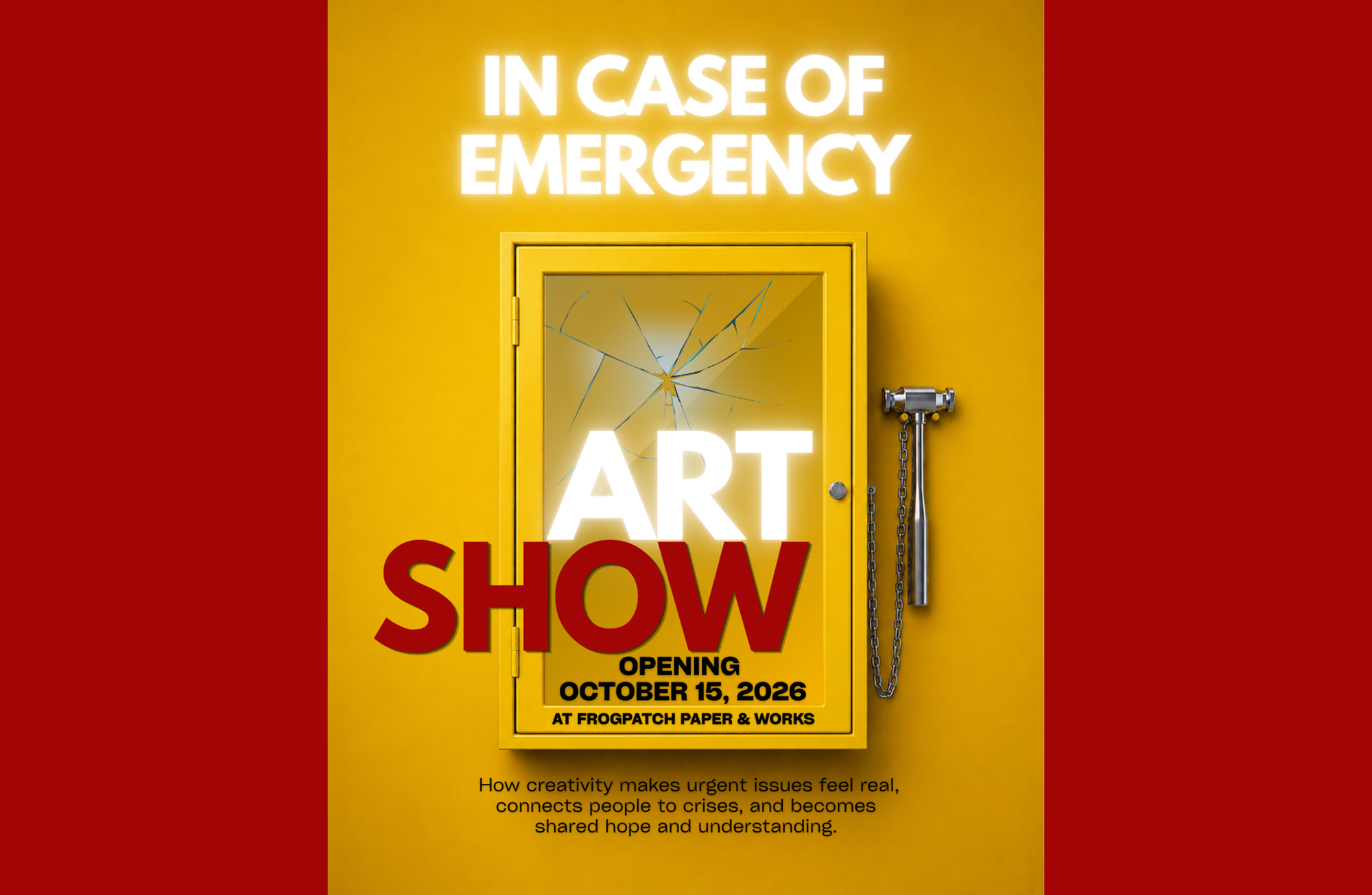
On October 15 at 6pm, Frogpatch Paper & Works in Downtown Kennewick will be hosting In Case of Emergency: ART, a new exhibition examining the emotional outlet that art provides when we encounter hardships. In the same way that physical needs — like water and food — must be met to sustain us, our emotions need recognition and processing.
If you’ve ever watched a TV survival show, you probably know the rule of threes, a quick guide for ranking needs in a survival situation: a person can survive three minutes without air, three hours without shelter, three days without water, and three weeks without food. It’s not exact, but people find it a helpful reminder. Situations like these aren’t something most modern humans need to worry about (although if you grew up watching reality TV, you can be forgiven for thinking otherwise); but it’s true that in an emergency, we often prioritize physical wellbeing over emotional wellbeing. This makes sense — physical harm is usually visible and immediate, while emotional harm is often invisible and takes time to perceive.
If you ask someone what makes their life worth living, though, they’re not going to pull out the rule of threes. They’re going to talk about the people they love — partners, children, extended families. They’ll talk about their hopes and dreams. Many of us are more prepared to cope with a hypothetical survival situation than the everyday tragedies that take our people and our hopes away from us. In many ways, it’s easier to think about being dropped naked into a rainforest to survive for 30 days than it is to think about the losses we are far more likely to experience.
Inside these everyday tragedies is where art can find a home. Art, and the power to create something new, come from within. No matter what happens, you can capture and share your internal world in whatever way feels natural, even if you’re only sharing it with yourself. Art is a way for you to see yourself in your grief when no one else can. You can’t lose your creativity to your ex in a divorce; it’s yours! You’re the only one capable of making and remaking it. You’re the only one who knows the shape of the hope that makes you excited for the future. And, as we lose our dexterity or strength due to age or illness, there are always adaptations and opportunities for growth when it comes to how we do the work itself.
Many individuals growing up in North America have largely been exposed to Western ideals of ‘fine art’, which include very recognizable mediums: painting, drawing, classical music, ballet, opera. The perception that art requires the ‘right’ kind of medium, or the ‘correct’ topic, has distanced art from the everyday. It’s perceived as either a hobby for the rich, or eccentrics starving for their art. I’m not a scholar on art history or education, but I am an award-winning artist in a non-traditional medium who’s been creating since 2018. I feel that art can be made from almost anything. You can collage with scraps of paper, create a fabric landscape with used clothing, or unravel an old sweater and crochet it into a vest with swear words on it. Try to see the ephemera in your life with new eyes.*
Access to materials is not the only roadblock an aspiring artist might encounter. Art may come from within, but so do our unique sets of obstacles. Figuring out new ways to prevent yourself doing art is a delicate art in and of itself, and the bane of many professionals. When we’re just starting out, we can block ourselves from even beginning to make art, saying, “I don’t have the right tools/skills/space/talent to make ‘real’ art, so what’s the point in even trying?!” (I’m guilty of this and it’s my actual job.) Maybe we tell ourselves we’re ‘bad’ at it — that we have no talent, and therefore should not make art.
When I was 39 or 40, someone looked at my artwork and said something to the effect of, “Well, of course you’re an artist. You’re talented.” Dear reader, that shocked the shit out of me! I went from feeling like a crafty person with a grandma hobby to a ‘talented artist’ almost overnight.
Unfortunately, most people who tell me I’m talented follow up with “I could never…” or “I’ve tried art and I suck at it…”. These self-effacing comments always make me a little sad. While art can be whatever we make of it, I see art more as a tool than a product. We can use it to create meaning, to process emotions, to dream of a better future, to occupy our hands and our minds by developing skills with time and attention. If the outcome is beautiful, or meaningful to other people, that’s just a bonus.
Below is a piece that is hard to look at but is important to me.
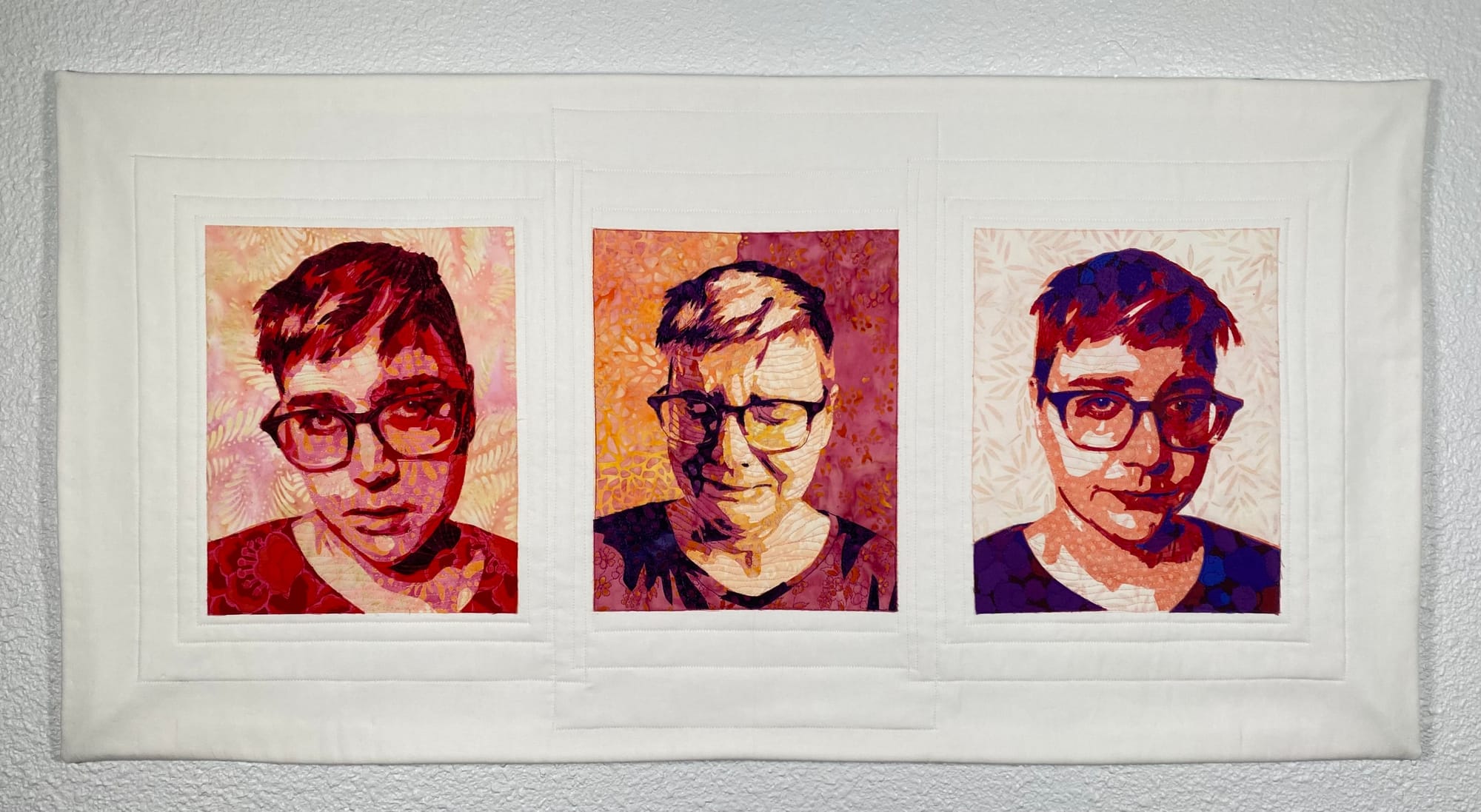
This fabric portrait, Nothing’s Peachy, emerged from the combination of a divorce and a quilting challenge involving the Pantone color of the year: Fuzzy Peach. It helped me process my sadness, and made me feel seen, in a moment when life wasn’t stopping for my grief (it never does). Sometimes being a witness to your own emotions when no one else can see you is the thing that keeps you whole, hoping for a better future.
And while I am being vulnerable in this moment, I’d like to stress that you are not required to lay yourself bare in your work! You definitely don’t have to display your deeply personal works. I do it because I love talking shop with other artists, and earning awards can (I’ve been told) improve your access to opportunities. Your art is your own, and you get to decide who sees it. (Also, as an aside, I felt very silly taking reference pictures of myself crying. It’s hard to be completely sad when you’re feeling a bit silly.)
The act of creating something is never simple. You can’t just shout, “Grab your wine cork collection, think about your dead goldfish, and make art!” Suffering is not a prerequisite; neither is skill. Just choose a medium you’d like to play with — paper, fabric, plastic straws, paint, wood, clay, aluminum cans… the list is endless! — and discover what ideas come to mind. The rest is in the practice, the crafting, and (all cliches aside) the process.
*Frogpatch Paper & Works (where my art studio is located), hosts a quarterly free art supply exchange to make art more accessible. You can also join the Bad Art Club, or check your local library’s calendar for various and sundry free art nights. There are a lot of people eager to share their knowledge and tools.
Beau Boaro is an award-winning artist and former scientist. Their piece, The Kiss Revisited, won Best in Show in the 2026 Big Gay Art Show in Sedona, Arizona. Beau’s Art, their small business, has been open since 2023 and accepts commissions. You can watch them make art on Instagram @beauasinhandsome.
