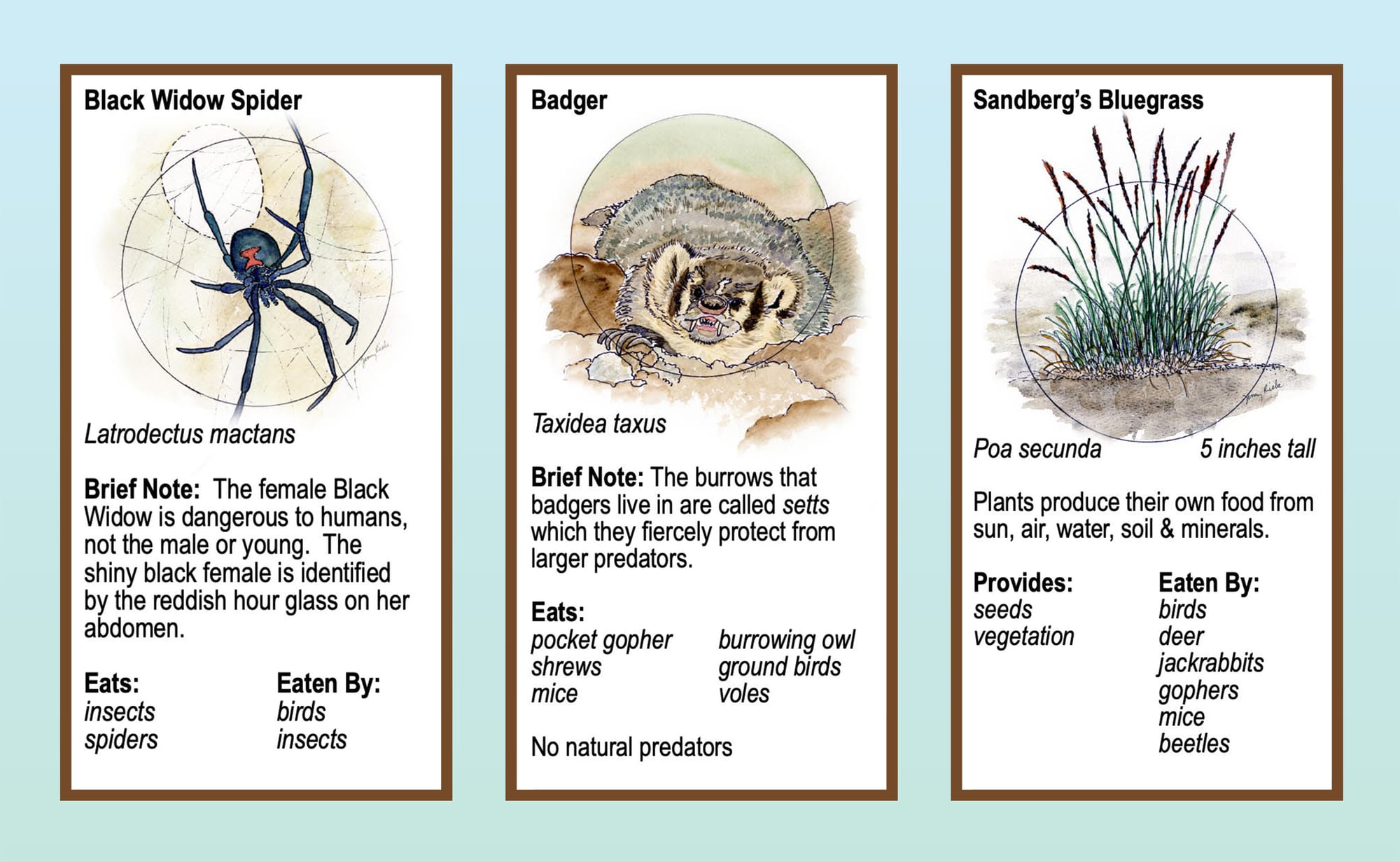
Illustrations by Jenny Rieke
This month, the coalition brings you community news, including an essay from Washington Native Plant Society's Mikki Symonds, and a special invitation to a screening of Inhabitants: Indigenous Perspectives on Restoring our World from REACH Museum's Pauline Schafer!
Choose hope
Mikki Symonds, Columbia Basin Washington Native Plant Society
Is what we bring to life limited only by hopeful imagination?
Participating in the Washington Native Plant Society has offered many activities that over four years have deepened my appreciation for the shrub steppe and inspired caring actions. Through working with others who care for the specific lands in which they live, I have felt more stable and rooted in the place I’ve called home for nearly a quarter of a century. Plant walks led by individuals who share their knowledge of local flora and fauna, clean-ups, restoration activities, speaking events, and seed-ball making events inform my sense of stewardship. I represent our Columbia Basin chapter at local events, working at a level that feels like I am contributing positively to this unique habitat of which I am a part.
With our son Miguel, Flint and I have worked on a few projects around our town. I reached out to Prosser School District Superintendent Kim Casey, and she welcomed two native plant gardens and a recent “rain garden.” This three-year process began with a neglected area that we asked to plant. As it did well, Casey asked if we wanted to do another area. Then Miguel asked to create a rain garden. As our projects increased, the number of participants grew. We had the opportunity to reintroduce native plants into the landscape, to work and learn together, and to enjoy the feeling of having done something worthwhile.
Most of our public institutions are strapped. By volunteering to participate meaningfully where we live, we acknowledge our place in this shrub steppe ecosystem. We can choose to respectfully and carefully interact with each other, our institutions, and our land to create beauty.
Yesterday I read these words from Nick Cave as quoted by Ryan Dowd of the Homelessness Institute:
Cynicism is not a neutral position — and although it asks almost nothing of us, it is highly infectious and unbelievably destructive.
In my view, it is the most common and easy of evils.
I know this because much of my early life was spent holding the world and the people in it in contempt.
It was a position both seductive and indulgent…
Unlike cynicism, hopefulness is hard-earned, makes demands upon us, and can often feel like the most indefensible and lonely place on Earth.
Hopefulness is not a neutral position, either.
It is adversarial.
It is the warrior emotion that can lay waste to cynicism.
Each redemptive or loving act, as small as you like… keeps the devil down in the hole.
It says the world and its inhabitants have value and are worth defending.
It says the world is worth believing in.
In time, we come to find that it is so.
Together we grow hope.
Community-based strategies & climate mitigation
North American Association for Environmental Education
Drawing on 15 case studies across the U.S. and Canada and interviews with more than 40 climate experts, a new report from the Redstone Strategy Group looks at the carbon mitigation impacts of community-based climate work. The report cites specific examples to demonstrate how community-based strategies can have a large impact. Strategies examined include state and local legislation; renewable energy development; supply-side campaigns; and implementation efforts.
Overall, the report offers solid evidence supporting community-based climate projects, with many of the profiled projects mitigating between 1–8 million metric tons of carbon dioxide equivalent by 2030. Additionally, these strategies are cost efficient, scalable, and contribute to greater community investment.
Read the report at https://bit.ly/redstonestrategy
Hope from the Inhabitants
Pauline Schafer, REACH Museum
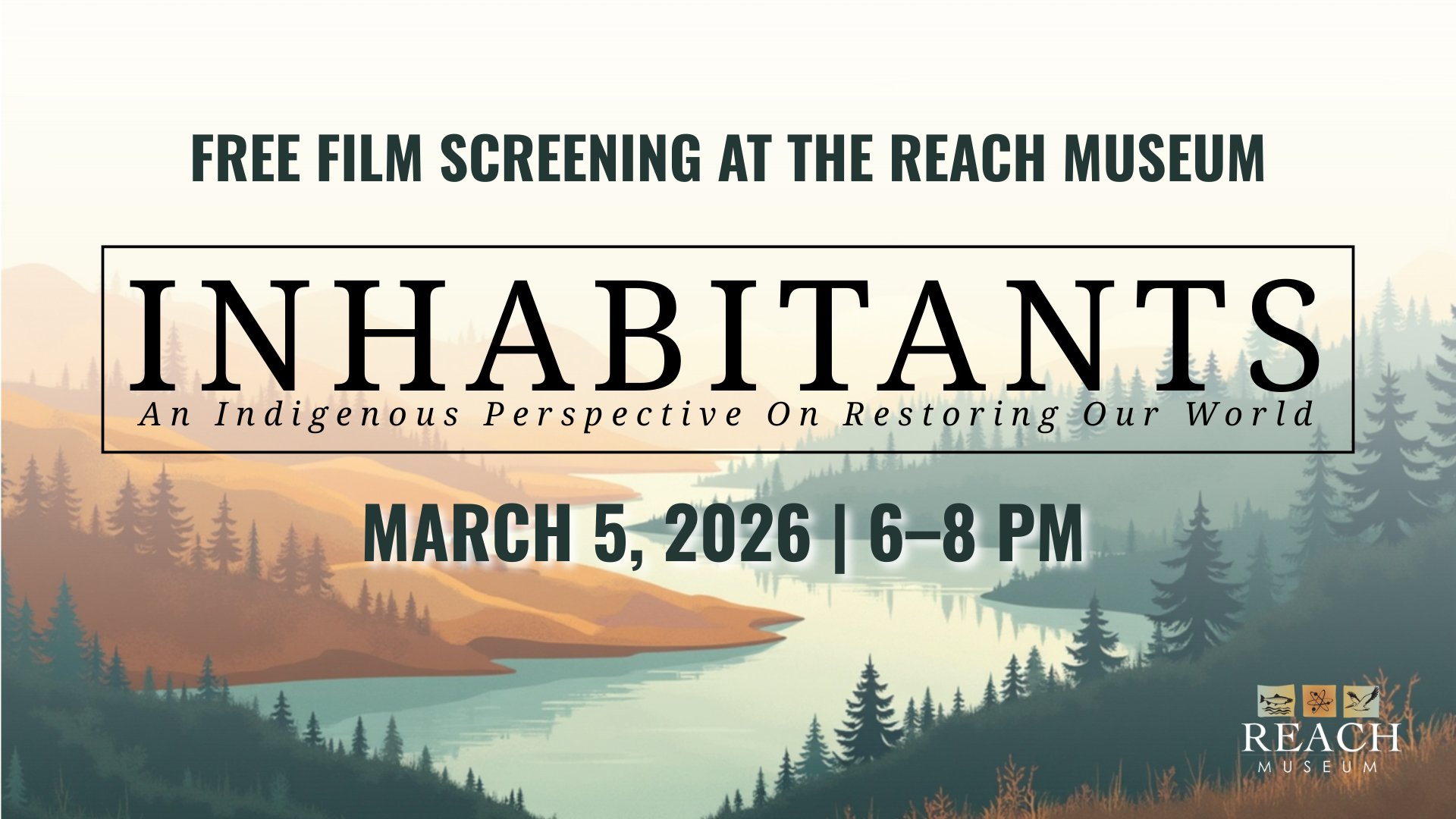
Screening March 5, 6-8pm at the REACH Museum

We are bestowing upon our children and grandchildren a world that is already feeling the effects of climate change and loss of biodiversity. But what if I told you some of the best ways to deal with the effects of climate change — as well as to prevent it — are built into the landscapes we live in, and the knowledge of the people who have lived here for countless generations?
“Indigenous peoples make up 6% of the world’s population, manage 25% of the world’s land surface, and support 80% of global biodiversity.”
This line comes from the 2020 documentary Inhabitants: Indigenous Perspectives on Restoring our World. This beautifully filmed and thoughtfully produced movie gives us hope, based on the successes of various North American peoples as they reclaim their traditional ecological knowledge and apply it to modern land management.
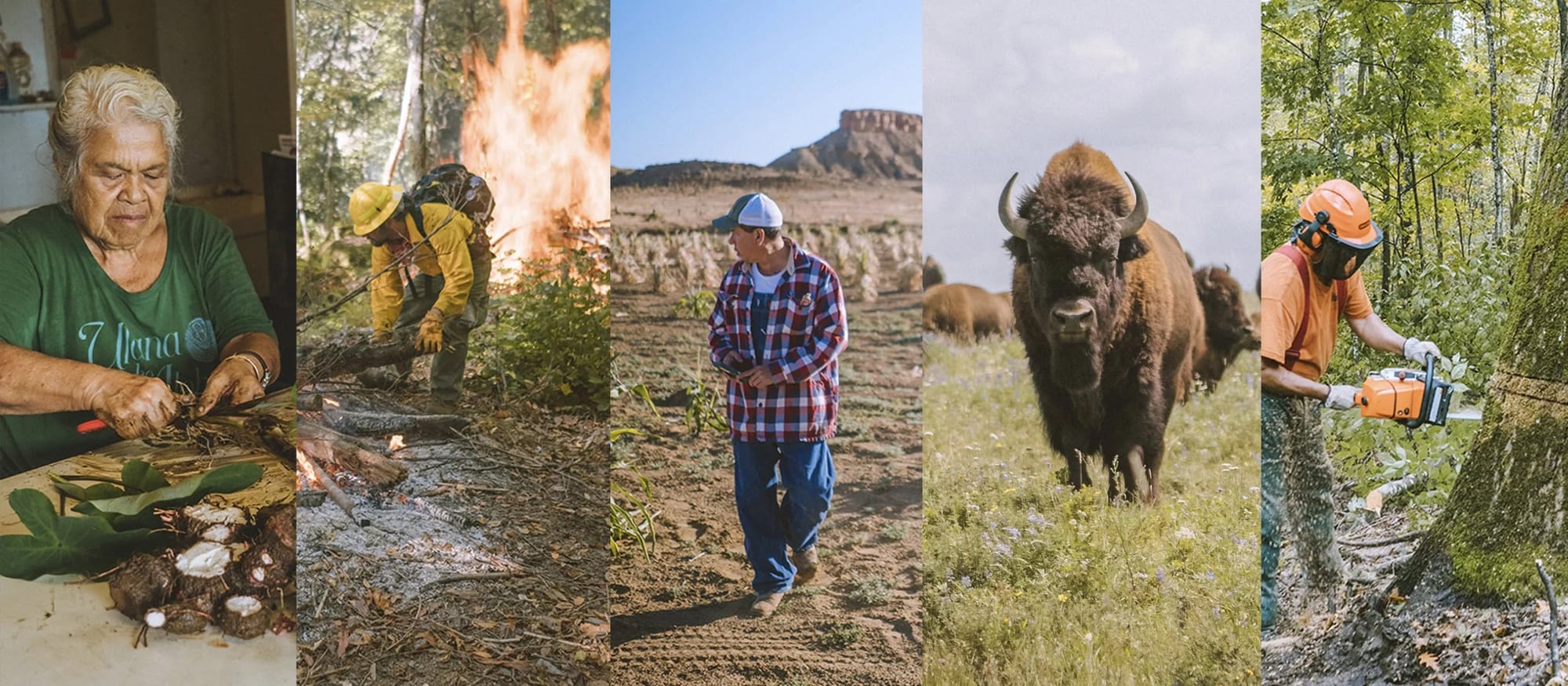
The Karuk of Northern California implement prescribed burns in their oak woodlands to enhance food supply, control wildfires, and improve salmon habitat. A Hopi dryland farmer demonstrates how their resilient corn and bean varieties continue to adapt as the climate warms. The Blackfeet, along with dozens of other Tribes, remind us why bison are the best grazers for the Great Plains as they heal the damage of cattle overgrazing and the bison’s near extinction that so harmed their people.
These practices and others hold lessons useful to our local arid, agriculturally-rich area, as we deal with declining salmon populations. There are emotional lessons woven through these stories as well, showing the power of maintaining right relationship between a land and its people. If you ever feel like an empty space in your life is best filled by meaningful work with nature, you will appreciate the experiences this film documents.
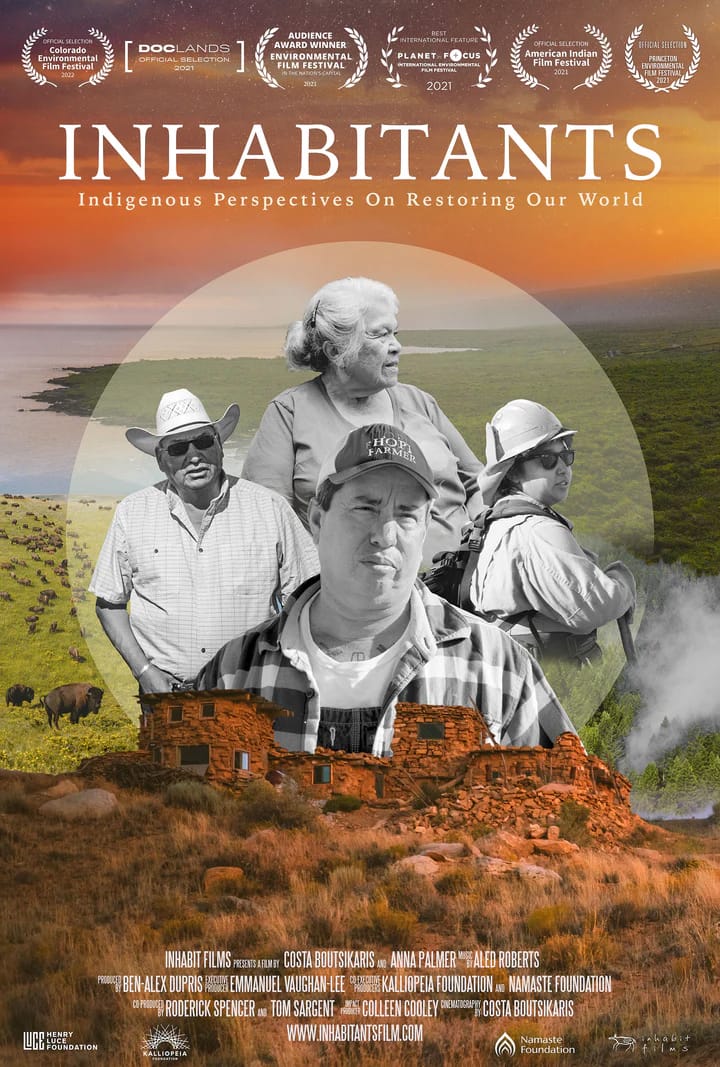
You are invited to a screening of the film Inhabitants followed by a panel discussion with representatives from the Wanapum, Yakama, and Confederated Tribes of the Umatilla Indian Reservation on March 5 at the REACH Museum. This event is sponsored by the Reach Foundation and the Columbia Basin Chapter of the Washington Native Plant Society, and admission is by donation.
The Hanford Reach:
An open letter to our elected officials from Lower Columbia Basin Audubon Society
In December, Dana Ward, President of Lower Columbia Basin Audubon Society, composed this letter in response to a recent proposal that the National Park Service would be a better manager of our precious Hanford Reach National Monument than the U.S. Fish & Wildlife Service. He sent it to Washington State Senator Patty Murray, U.S. Senator Maria Cantwell, and Representative Dan Newhouse.
The original PDF can be found at: https://drive.google.com/file/d/1LI9E94pwkvpO7j6a-ULjSHG-3KM0TwBa
Dear [representative],
Recently, there has been a suggestion by some in the Tri-Cities that the National Park Service (NPS) is better equipped than the U.S. Fish and Wildlife Service (USFWS) to manage the Hanford Reach National Monument (HRNM). Lower Columbia Basin Audubon Society (LCBAS) strongly disagrees and opposes this proposed change in management. These land management agencies have different missions, and we strongly feel the mission and past experience of the USFWS will continue to best serve the HRNM by managing for salmon and natural resources rather than for visitor access.
In 1992, NPS agreed that USFWS was a more competent manager for the natural resources in the Hanford Reach than NPS itself. After extensive public involvement and comment, the NPS published the "Comprehensive River Conservation Study and Environmental Impact Statement" for Hanford Reach of the Columbia River. The preferred alternative was National Wildlife Refuge with National Wild and Scenic River Overlay managed by USFWS because the desired management focus was to protect salmon and cultural resources and to enhance wildlife habitats and populations, while allowing refuge-compatible visitor access. NPS management as a National River with enhanced visitor access was deemed to provide insufficient resource protection.
Consequently, Energy Secretary Richardson set aside the North Slope as a National Wildlife Refuge under USFWS management. The inability to secure legislative protection resulted in administrative action in 2000 to create the HRNM protecting the river and designated adjacent lands. These actions were consistent with agency and public sentiment reflected in the preferred alternative in the 1992 EIS [Environmental Impact Statement].
Washington State is blessed with natural and cultural resources throughout the state. We are particularly blessed in south-central Washington State with the HRNM. This resource incorporates much of the Department of Energy's surplus lands along with many unique biological and geological features within the 586 square miles of the Hanford Site.
Since its establishment by President Clinton in 2000, the HRNM has been well managed by the U.S. Fish and Wildlife Service. It contains the last free flowing section of the Columbia River within Washington State, which in turn contains the last spawning grounds for the fall Chinook salmon. The uplands and shoreline next to the river are home to a host of native plants, some of which are only recently discovered, such as the White Bluffs Bladderpod and the Umptanum Buckwheat. New insects are being found with studies needed to determine their role in local ecosystems.
Our Monument hosts the largest population of elk in the state, east of the Cascade Range. At least several thousand of these majestic animals roam over the HRNM. The HRNM also contains significant Native American cultural and village sites that need to be protected from intrusion and overuse by visitors. Some sites of considerable cultural significance are already vandalized, although only those with a need to know have location information. The geology of the region is unique due to the impact of the ice age floods, which is reflected in the glacial erratics and the white bluff escarpment in the HRNM.
The above mentioned features need to be saved for future generations, and isolation has been a key factor in saving them so far. Continued preservation of both natural and cultural resources will be best managed by the U.S. Fish and Wildlife Service.
The U.S. Fish and Wildlife Service — with their experienced and professionally trained biologists, archeologists, and geologists — know how to manage vanishing or sensitive resources now and into the future. While we are strong supporters of the National Park Service, their work is better suited for managing the heavy visitation in places such as Olympic or Mt. Rainier National Park. These parks have been managed to have relatively easy access with an abundance of roads and trails. While some public access is needed, the biological, geological, and cultural resources of the HRNM would be compromised or destroyed if public access were to be prioritized over habitat preservation.
The Lower Columbia Basin Audubon was a key player in championing the designation of the HRNM, and continues to keep a watchful eye on the Monument. We sincerely hope you understand the importance of continued protection and management of the resources of the HRNM under the U.S. Fish and Wildlife Service. They are the best agency for the task.
Sincerely yours,
Dana C. Ward
Lower Columbia Basin Audubon Society
BOOTS IN THE BASIN is made possible by a coalition of local environmentally-focused organizations, including:
- Benton Conservation District
- Bike Tri-Cities
- Citizens’ Climate Lobby
- Franklin Conservation District
- Friends of Mid-Columbia River Wildlife Refuges
- The REACH Museum
- Save Our Shoreline 99301
- Sustainable Tri-Cities
- Tapteal Greenway
- WA Native Plant Society: Columbia Basin Chapter
- Lower Columbia Basin Audubon Society
