
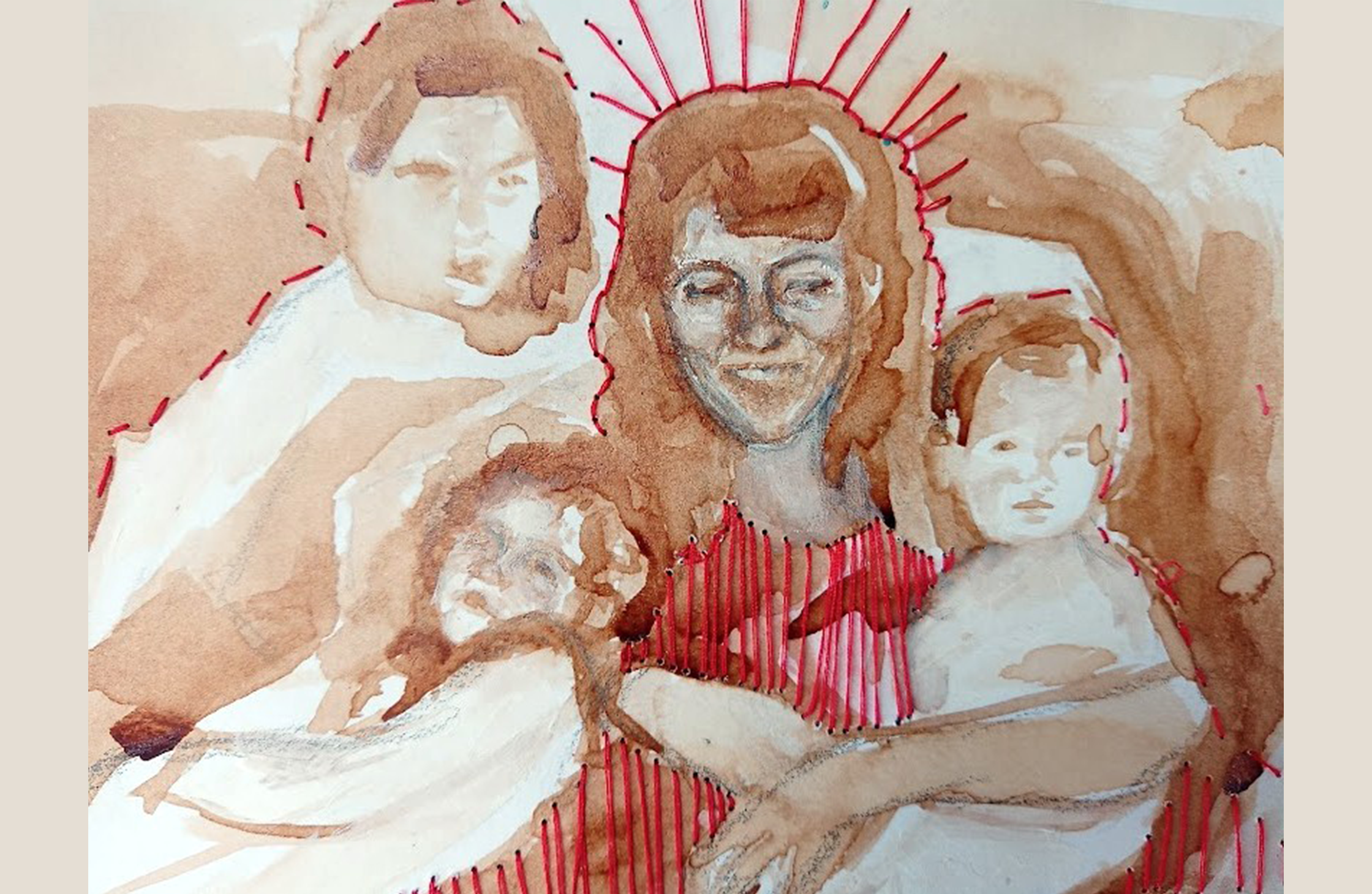
It is a well-researched and scientifically backed principle that therapeutic art practices can aid in overall wellness, whether that be physical, mental, or emotional.
Art practices are used in treatments for Parkinson’s, PTSD, Alzheimer’s, substance use disorder, pain management, and more with great success.
While many of us do not have access to an art therapy program, there are art practices that have therapeutic benefits, require few supplies, and can be performed in the comfort of your own space.
Embroidery as therapy.
Embroidery is a powerful therapeutic tool which can induce the meditative state known as ‘flow’. The repetition, structure, and simplicity of creating something with cross-stitch and embroidery techniques has been shown to produce a multitude of benefits. One study of adolescent girls in treatment for mental health conditions indicated that the patients reported increased calm, a sense of reward, and increased energy after engaging in embroidery. Studies have also indicated participants experiencing enhanced intergenerational and cultural connections, self efficacy and focus. (Studies can be found at https://pmc.ncbi.nlm.nih.gov/articles/PMC10297288 and https://ijsdr.org/papers/IJSDR2504073.pdf.)
Local artist Nathan Plung learned embroidery as a child, and has created incredible works of art in that medium. In a Tumbleweird artist feature from July 2025, Nathan described how it felt to grow up with cerebral palsy and epilepsy, and how he overcame significant physical challenges, requiring many years of occupational and physical therapy.
According to Nathan, cross-stitch was a therapeutic breakthrough for him.
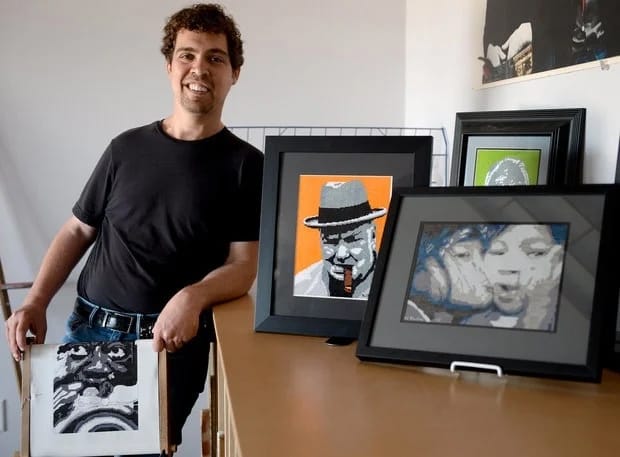
In an interview, Nathan shared his thoughts about the benefits of cross-stitch:
Its simplicity, low costs, mobility, accessibility irrespective of one’s artistic talents, and the hours-long positive engagement make it an ideal activity. As I can attest, cross-stitch has a range of therapeutic values: It enhances hand-eye coordination, promotes social interaction, and contributes to both self-confidence and sense of self. Even a brief introduction to the art, mechanics, and therapeutic value of cross-stitch — as seen from the perspective of someone who has been doing it since age eight — will clearly define why this art form is one of the most enjoyable popular pastimes.
How to get started with thread
Embroider existing art
Supplies: A photograph, drawing or painting that you don’t mind using in an experiment, thread of any color (or colors) you choose, scissors, and a needle. You can find small sewing kits at Dollar Tree and many other retailers if you don’t already have one.
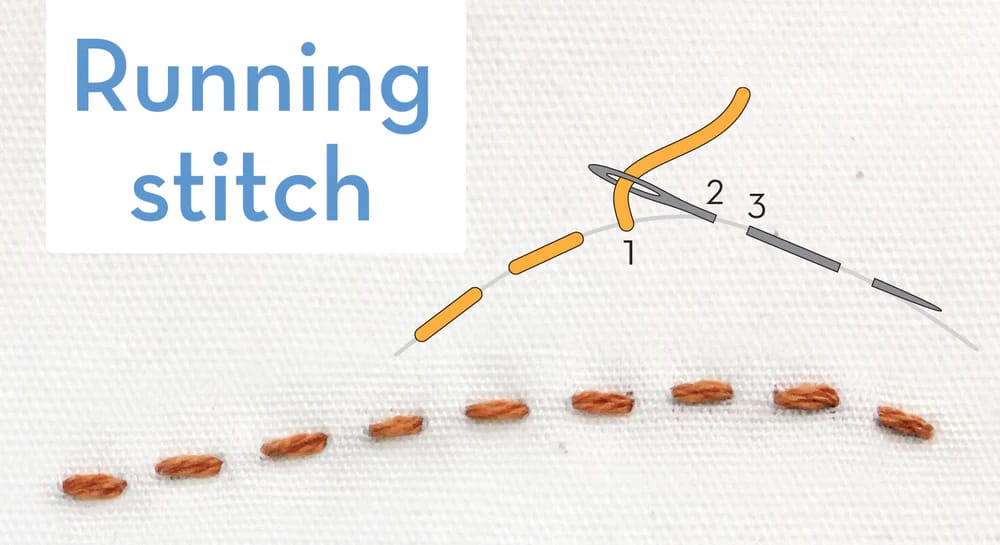
Thread your needle and find a focal point in your chosen image. Using the running stitch (illustrated below), either outline the focal point, fill it in, or create your own shape on or around the image. You could also fill in the background with patterns or shapes. This project can be freehand (stitch whatever you feel), or you can draw over your image first to create a pattern. Set a timer or just put on some music and stitch until you’ve done enough to feel satisfied, then take a few moments to reflect on the work and how it made you feel.
Make a scene
Supplies: Any scrap fabric (old clothes, rags, sheets, etc), scissors, pins or fabric glue, needle and thread, embroidery hoop.
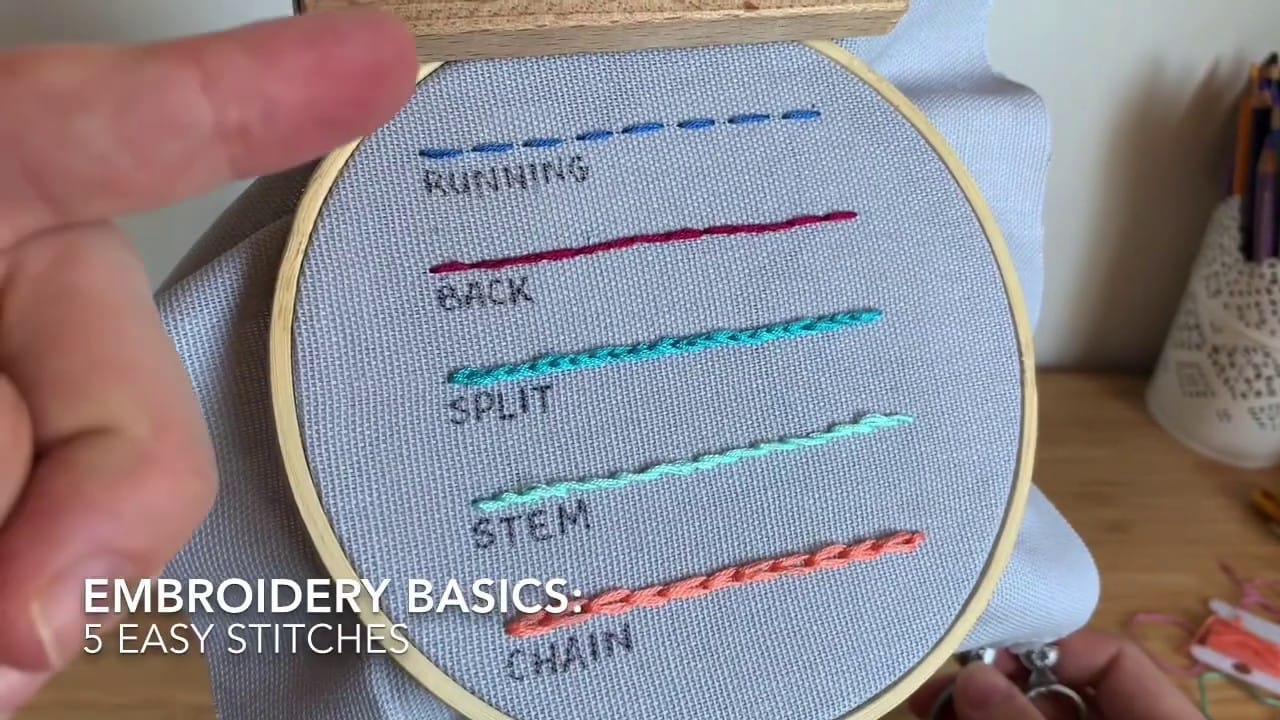
Begin by selecting a piece of fabric that will be your ‘background’. Cut this fabric to size and secure it in your embroidery hoop. Next, use your other scraps of fabric to imagine a scene and begin cutting out shapes and arranging them on your background. Once you have finalized a scene, secure your shapes with fabric glue or pins. Lastly, add texture by outlining your shapes using any stitching method you enjoy — running stitch, backstitch, cross-stitch, whipstitch, or straight stitch, to name a few.
While doing this activity, remember that there is no expectation of perfection or instant expertise. The only requirement is to have fun with it!
Check out these local artists who create textile masterpieces on Instagram for inspiration: Beau Boaro @beauasinhandsome and Brittany Archibald @_brittarchibald
Also, don’t miss the textile show at Gallery at the Park!
Use an embroidery kit
Supplies: A basic embroidery kit of any design. You can purchase them for $5.00 or less at Michael’s, WalMart, or Dollar Tree.
This option is pressure-free, as the design is created for you, and you need only thread your needle and follow the pre-drawn outline. This can be completed anywhere, anytime — while watching a movie, sitting in the park, listening to a podcast, or even as a passenger on a road trip. If this is your first time using an embroidery kit, make sure you get one that is made for beginners.
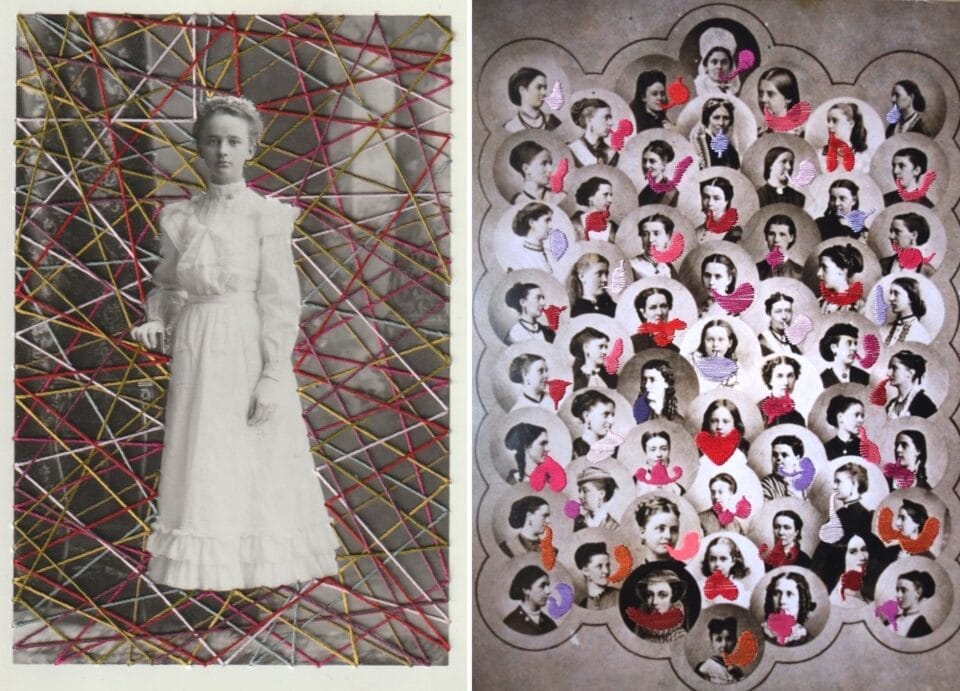
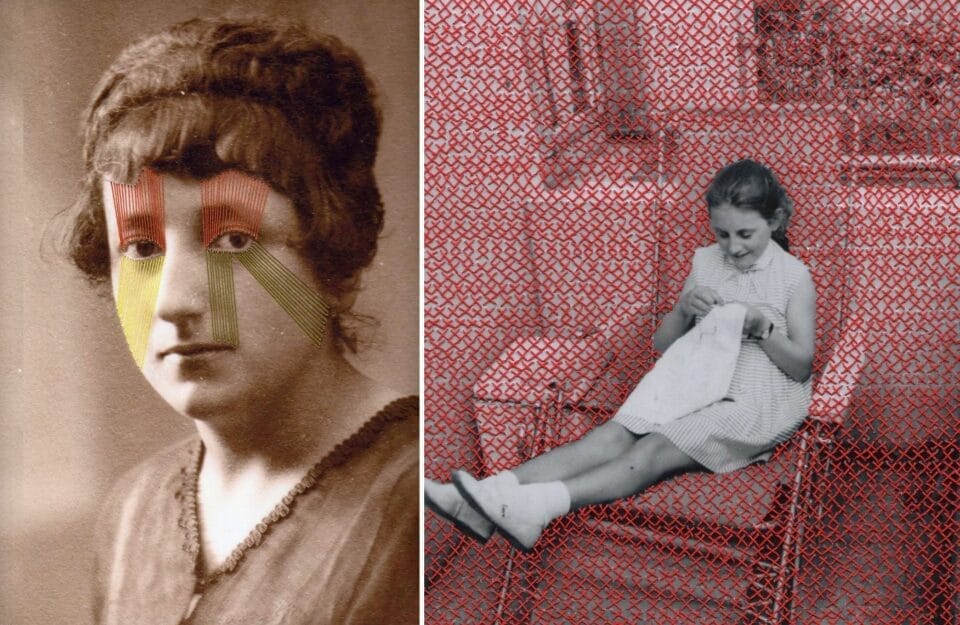
A few examples of Flore Gardner’s stitched vintage photographs: https://www.thisiscolossal.com/2022/04/flore-gardner-embroidered-photos
When you have finished
Ask yourself…
- Did the repetitive stitching motion have any effect on your sense of calm?
- Did the activity have any impact on your energy levels?
- Did you experience pressure to create a specific outcome?
- Did you experience a sense of accomplishment after the activity?
- Did you work through any specific challenge?
- What thoughts arose during the process?
- Did the activity bring forth any historical connections for you?
Also, check out the Good ‘Nuff Mending Club, a beginner-friendly sewing meetup that meets every first Thursday at Tri-Cities Food Co-op from 5:30 – 7:00pm.
Ashleigh Rogers is an artist, art instructor, and facilitator in Tri-Cities, Washington. Her work explores the themes of connection and intergenerational stories through experimentation in painting, photography, installation, and sculpture. Ashleigh is passionately dedicated to facilitating accessible arts programming in her community.
Find her on Facebook: fb.com/AshleighRogersArt or Instagram: ashleigh.a.rogers
