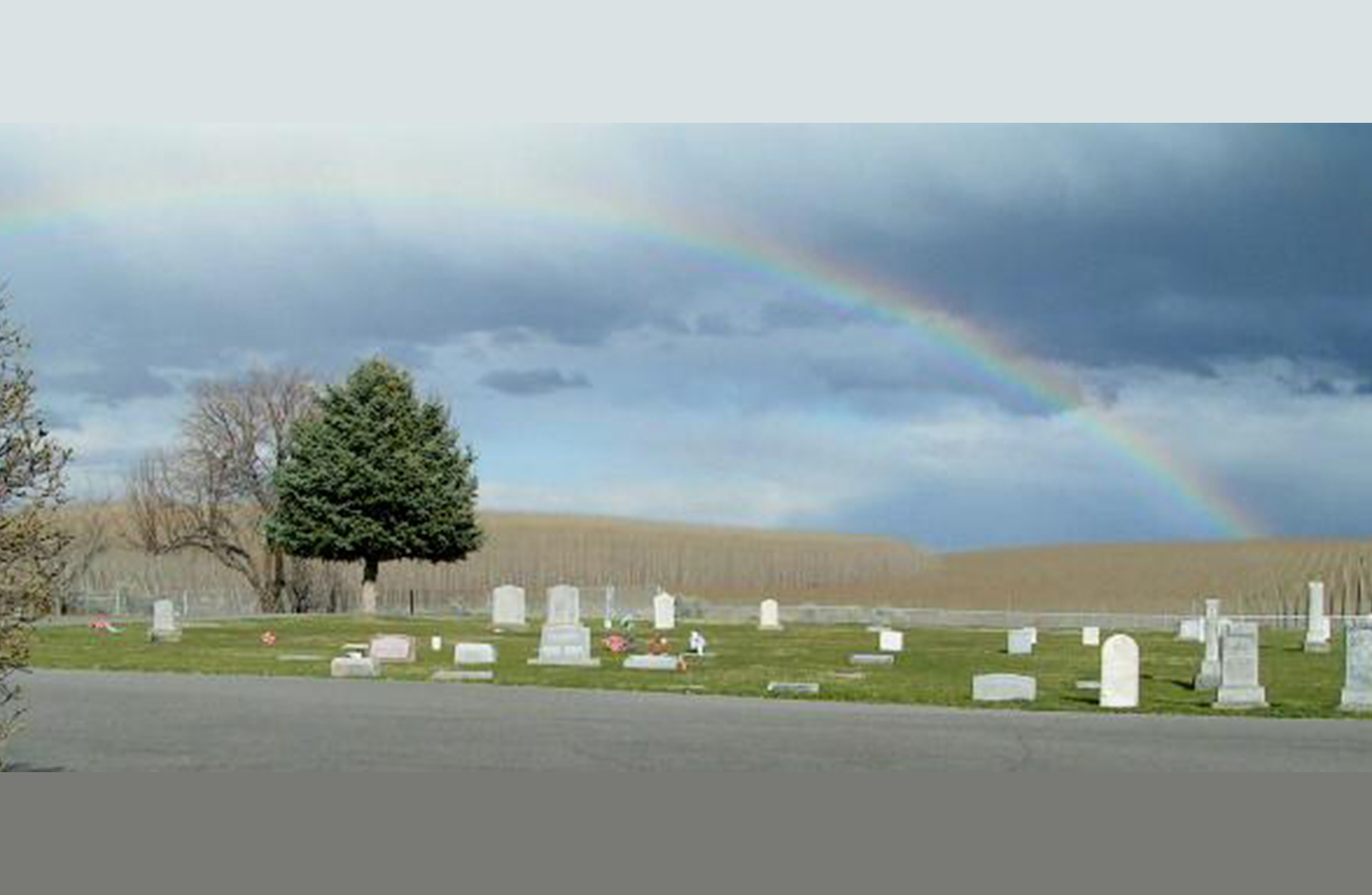
Wallula Cemetery
In 1951 McNary Dam was nearing completion. The Army Corp of Engineers were finishing the plans to alter the landscape of the Mid-Columbia Basin, and evacuating residents living along the shoreline. The town of Wallula was going to be relocated (for the second time), and the Army Corp of Engineers had agreed to move some of the historical buildings and to dig up all the coffins in the cemetery for reburial at the new site.
The work was not for the faint of heart, and the people involved were informed about the nature of the dig and what they may or may not see during their work. Digging up the dead was not an easy task, and very careful records needed to be kept to ensure families stayed together. One by one, each coffin was brought up, verified, and recorded. Many coffins were aged and rotting, and the bodies had to be placed into new coffins. For these remains, each bone was removed and placed in its new coffin, ready for transport to their new home.
Nothing seemed out of the ordinary as they moved through the cemetery that had been used since the 1870s. That is, until the Ferguson sisters’ remains were discovered.
Mary, Mandy, and Florence Ferguson all died around the same time when an epidemic swept through the area (probably smallpox or measles). The girls’ grandparents had raised them and their two younger sisters since their parents died in 1890 and 1891. The two youngest sisters were removed from the home for their safety, while the grandparents nursed Mary, Mandy, and Florence till their deaths. They laid their three eldest granddaughters to rest in 1894, only a few years after their parents had died.
As members of the Corp lifted Florence’s decaying coffin from the ground, it cracked, and the team started the task of preparing her for transport. When they opened the lid they found Florence’s body twisted and not lying flat as she had been placed, as if her body had moved after her death. Her fingers had strands of hair wound through them, suggesting that she was alive to pull the hair out of her head.
In an era before embalming fluid and heart monitors, a coma could look very much like death. Victorian era folk sometimes added a bell with a string to their coffins, so the seemingly dead could warn the living they were in fact alive, but this was costly. It’s unlikely the family would have had the means to afford it in such a rural location. And so, it appears that when Florence awoke, she found herself sealed underground and tried to get out, ultimately failing.
Bernice Cummings, when writing History of the Three Wallulas and Area, asked the last surviving sister, Ida, about what had happened to Florence. According to Cummings, Ida responded that she had always had a feeling that her sister wasn’t really dead when she was buried.
The only other things known about the sisters was that they were the nieces of Robert L. Foster, who paid for the grave site and headstone; and that it’s likely that they were in their teens at the time of their deaths. No further details of their lives are available.
Ashleigh Malin is a historian, folklorist, and cosplayer, living her best life.
Bibliography:
- Cummings, Bernice. History of the Three Wallulas and Area, 1811-1988.
- Gleaton, Rella. “Wallula Cemetery.” Wallula Cemetery - Walla Walla County, Washington, https://www.interment.net/data/us/wa/wallawalla/wallula/wallula.htm
